What is a Foam Pump Bottle? The Ultimate Guide

Founder of UKPACK, chief packaging engineer and designer with 18 years of experience, and Red Dot Award winner. I work on cosmetic packaging structure, material selection, mold feasibility, decoration processes, and leak-risk control, helping brands turn packaging ideas into reliable production-ready solutions. See my senior packaging engineer qualification.

Foam pump bottles are an essential packaging choice in cosmetics, personal care, and cleaning products. They let you deliver rich foam with ease while creating a better experience for your customers.
To succeed with this packaging, you need to understand how foam pumps work, what affects their performance, and how to secure the right supplier for your needs.
In this guide, you will find everything you need to know about foam pump bottles, from their inner mechanics and key components to quality standards and market insights.
How Does a Foam Pump Bottle Work?
At its core, a foam pump bottle is designed to mix liquid and air inside the pump chamber to create foam before dispensing. This makes it different from regular pumps, which simply push liquid out of the container.
Here’s how the process works:
- Pressing the pump: When you push down on the actuator, it activates both the liquid pump and the air pump.
- Air–liquid mixing: The liquid formula moves up through the dip tube while air is drawn into the chamber. Both meet inside a mixing system.
- Foaming mesh: The combined air and liquid are forced through a fine mesh screen that breaks them into small, uniform bubbles.
- Dispensing: What comes out is ready-to-use foam, with consistent texture and volume.
Because the foam is pre-formed in the pump, users don’t need to rub or shake the product to generate bubbles. This makes foam pump bottles particularly effective for water-based formulas like facial cleansers, hand soaps, and sanitizers. If you want a more detailed technical explanation, see our article on how do foam pump bottles work.
Key Components of a Foam Pump Bottle
A foam pump bottle is made up of several precision-engineered parts that work together to transform liquid into a fine, stable foam. The diagram below highlights the key components, numbered for clarity:

- 1. Actuator (Press Head) – The top part that users press to activate the pump and dispense foam.
- 2. Mesh Screen – The critical element that mixes air and liquid, breaking them into uniform bubbles to form foam.
- 3. Large Piston – Provides the main pumping force when the actuator is pressed.
- 4. Threaded Closure (Screw Neck) – Secures the pump to the bottle and ensures a tight fit.
- 5. Gasket – Prevents leakage by sealing the closure area.
- 6. Small Piston – Assists in controlling the precise movement of liquid during pumping.
- 7. Needle Column (Plunger Rod) – Guides the piston’s movement and maintains alignment.
- 8. Valve – Controls liquid flow and prevents backflow, ensuring consistent foam output.
- 9. Pump Housing (Body) – The main body of the pump that holds the internal mechanism.
- 10. Spring – Restores the actuator to its original position after each press and stabilizes pumping force.
- 11. Sub-column – Supports the inner piston structure and helps regulate liquid movement.
- 12. Ball Valve – Acts as a one-way valve at the base, allowing liquid to move upward while preventing it from flowing back.
- 13. Dip Tube – Extends into the liquid formula inside the bottle and delivers it upward into the pump system.
Each of these components plays an essential role. For example, the mesh screen (2) is what determines the fineness and density of the foam, while the spring (10) and valve system (8, 12) control precision and prevent leaks. When combined, they create a reliable dispensing mechanism that works consistently across thousands of cycles.
Applications of Foam Pump Bottles
Foam pump bottles are widely used across industries because they combine user convenience, cost efficiency, and branding potential. Below are the main sectors where you can apply this packaging solution.
1. Cosmetics
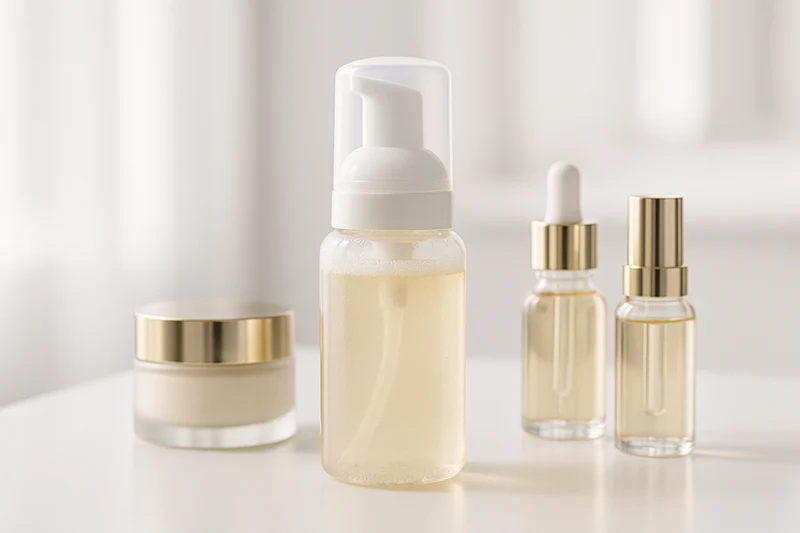
Foam pumps are a natural fit for cosmetic formulations that require gentle yet effective delivery.
- Facial cleansers and make-up removers often use foam pumps to provide soft lather without the need for heavy surfactants.
- Skincare mousses and sunscreen foams are gaining popularity, offering light textures that are easy to spread evenly.
For your cosmetic line, a foam pump bottle helps you improve the customer’s skincare routine while reducing waste per use.
2. Personal Care
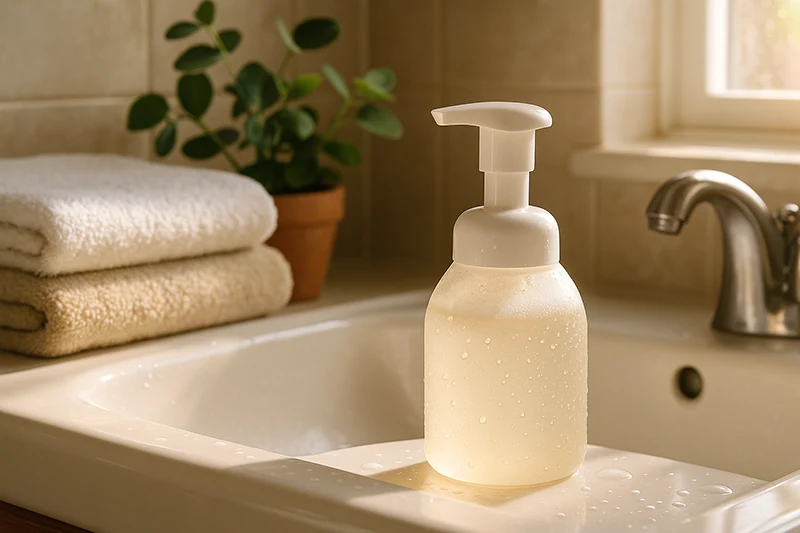
In personal care, foam pumps have become standard for products that families use every day.
- Foaming hand soaps, especially antibacterial formulas, deliver controlled doses and improve hygiene.
- Shower foams and baby cleansers benefit from their mild, cushiony texture.
- Shaving foams and even oral care foams use this packaging to deliver comfort and precision.
By choosing foam pumps for personal care products, you make your packaging more user-friendly and accessible to all age groups.
3. Household Cleaning
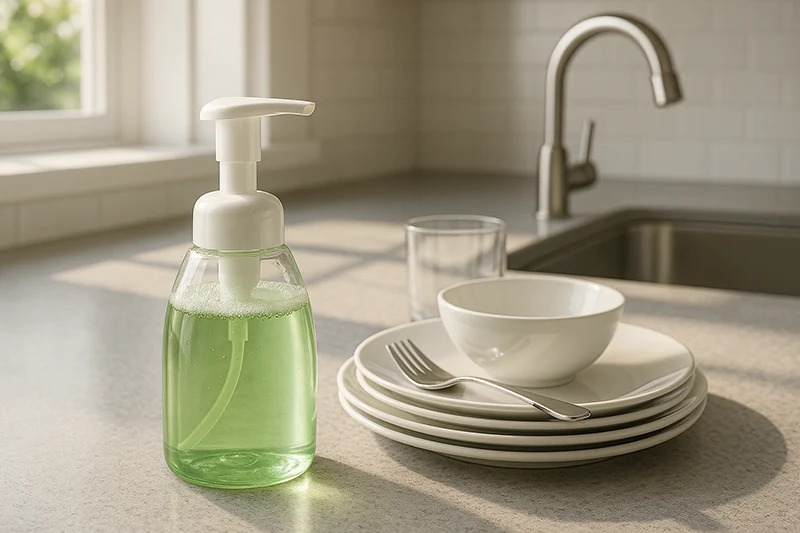
Foam pumps are increasingly used in home cleaning because they help cover large surfaces with less liquid.
- Kitchen dishwashing foams spread more effectively and rinse off faster than thick liquids.
- Multi-surface cleaners benefit from the foam’s ability to cling to vertical surfaces like tiles or glass.
- Pet cleaning products also adopt foam pumps, allowing even application and minimal waste.
If your product line includes home care, foam pumps can differentiate your brand with efficiency and convenience.
4. Pharmaceuticals
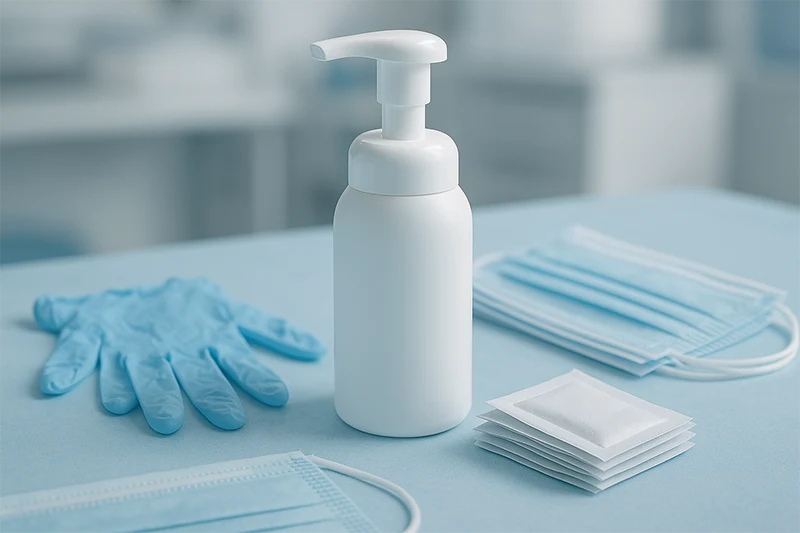
Medical and pharmaceutical products rely on foam pumps for their precise dosing and hygienic delivery.
- Disinfecting foams are widely used in healthcare settings, often as alcohol-based or alcohol-free formulas.
- Post-surgery cleansing foams and dermatology treatments provide controlled application without irritating the skin.
- Dental foams use the same mechanism to ensure safe, measured dosing.
Foam pump packaging adds value in healthcare by improving compliance, safety, and patient comfort.
Advantages of Foam Pump Bottles
Foam pump bottles offer more than just a neat way to dispense liquid. They bring practical, branding, and sustainability benefits that make them one of the most attractive packaging choices in today’s market.
1. Enhanced User Experience
Customers value convenience, and foam pumps make every use easy and satisfying.
- Instant foaming: The liquid turns into rich foam as soon as the pump is pressed.
- Gentle application: The foam feels soft on skin, making it ideal for sensitive care products.
- Controlled dosing: Each press delivers a consistent amount, reducing overuse and waste.
For your end users, this means better product performance and higher satisfaction.
2. Strong Brand Differentiation
Packaging is often the first thing customers notice, and foam pumps help your product stand out.
- Premium look and feel: A foaming dispenser creates a high-end perception.
- Flexible design options: Available in round, square, or custom shapes with multiple finishes.
- Customization potential: Combine with color matching, metallization, or logo embossing to align with your brand identity.
For your brand, foam pumps offer an opportunity to elevate shelf appeal and strengthen customer loyalty.
3. Environmental Value
Foam pumps are a sustainable alternative to traditional aerosol dispensers.
Propellant-free: They don’t require compressed gas, reducing environmental impact and safety concerns.
- Formula efficiency: They use less surfactant while delivering effective foaming, which makes formulas greener.
- Recyclable options: Pumps can be designed with PCR, glass bottles, or mono-material components to improve recyclability.
- Lower carbon footprint: Compared to aerosol packaging, foam pumps reduce energy and resource use during production and disposal.
For your sustainability strategy, foam pumps help you meet eco-friendly goals while appealing to environmentally conscious consumers.
Types of Foam Pump Bottles
Foam pump bottles may look similar from the outside, but they can be classified in several ways depending on the material, function, and market segment. Understanding these categories will help you choose the right option for your product line.
1. By Material
- PET (Polyethylene Terephthalate): Lightweight, transparent, and widely used in cosmetics and personal care. PET bottles showcase the product inside, making them ideal for facial cleansers or hand soaps.
- PP (Polypropylene): Known for its excellent chemical resistance. PP bottles are suitable for stronger formulations such as medicated cleansers or household cleaning solutions.
- HDPE (High-Density Polyethylene): Durable and impact-resistant. HDPE bottles are opaque and often chosen for industrial or home care applications where strength and safety matter.
- Glass: A premium choice for high-end skincare or niche cosmetic products. Glass foam pump bottles enhance brand image but are heavier and more fragile compared to plastic.
In short, plastic vs glass packaging is often a trade-off between cost efficiency and brand positioning.
2. By Function
- Lock / Non-lock Pumps: Locking pumps include a twist or clip mechanism that prevents accidental pressing during transport, while non-lock pumps are easier to use for everyday consumer products.
- Refillable vs Disposable: Refillable foam pump bottles are gaining popularity as part of sustainable packaging strategies. They allow customers to keep the bottle and only replace the contents. Disposable bottles, on the other hand, are cost-effective for large-scale, fast-moving consumer goods.
If sustainability is a priority, investing in refillable foam bottles can reduce waste and strengthen your eco-friendly positioning.
3. By Market Segment
- Cosmetics: Used for facial cleansers, make-up removers, and light-texture skincare foams.
- Personal Care: Common in hand soaps, baby care products, and shaving foams.
- Household: Adopted for dishwashing foams, surface cleaners, and even pet care formulas.
Each market segment requires different specifications. For example, cosmetic brands often demand clear PET bottles for visual appeal, while household cleaning brands may prioritize HDPE bottles for durability.
Foam Pump Development History
The concept of foam packaging did not begin with today’s pump bottles. Before the foam pump was invented, most foaming products relied on aerosol technology or post-foaming agents.
1. Before Foam Pumps
Aerosol cans dominated the market for decades. They worked by using liquefied gas propellants that expanded the product into foam as it left the can. Another common approach was to add post-foaming agents to liquid formulas, which created foam only after the product was dispensed.
While effective, these methods had clear drawbacks. Aerosols required propellants, which were often flammable and posed explosion risks. They also released volatile organic compounds (VOCs), contributing to air pollution and stricter regulatory scrutiny. The packaging itself—metal cans with crimped seals—was costly to produce and not easily recyclable.
2. The Breakthrough in 1995
In 1995, the Dutch company Airspray introduced the first finger pump foamer, a milestone in packaging innovation. Unlike aerosols, this design combined an air pump and a liquid pump inside one mechanism. When the actuator was pressed, air and liquid mixed inside the pump chamber and passed through a mesh screen, creating a stable, pre-formed foam.
This breakthrough offered several advantages:
- Environmentally friendly: No need for chemical propellants, eliminating VOC emissions.
- Safe and reliable: Non-pressurized containers removed the risk of fire or explosion.
- Cost-efficient: No requirement for metal cans or specialized filling equipment.
- Versatile: Compatible with a wide range of bottle shapes and materials, from PET and PP to glass.
3. Industry Impact
The introduction of the finger pump foamer quickly reshaped the personal care and cosmetics industries. Foam pumps replaced aerosols in many applications, from facial cleansers to hand soaps, due to their safety and sustainability benefits.
More importantly, Airspray’s design laid the foundation for today’s foam pump industry. It opened the door to refillable systems, eco-friendly packaging, and innovative container designs that continue to evolve.
In short, the history of foam pumps shows how one invention—the Airspray 1995 finger pump foamer—transformed not only packaging design but also how brands approach sustainability and user experience.
Market Insights and Trends
The foam pump bottle market has grown from a niche packaging format into a global standard across cosmetics, personal care, and household cleaning. Its success is driven by shifting consumer habits, stricter environmental regulations, and ongoing packaging innovation.
1. Global Market Size
According to Future Market Insights, the global foamer pump market is projected to grow from USD 173.4 million in 2025 to USD 260.7 million by 2035, registering a CAGR of 4.1%. Demand is led by personal care and hygiene applications, with hand sanitizers expected to account for 38.6% of the market in 2025. Squeeze foamer pumps will remain the dominant type, holding nearly 46.8% share thanks to their simplicity and cost efficiency. Growth is especially strong in East Asia, where Japan is forecast to post a 7.6% CAGR.
2. Market Drivers
E-commerce growth – Foam pumps are lightweight, shatter-resistant, and easier to ship compared to aerosols, making them a natural choice for online sales.
Upgraded consumer experience – Customers expect convenience and premium packaging. The ability to dispense smooth, ready-to-use foam has become a key selling point.
Environmental regulations – Restrictions on VOCs and propellants have accelerated the shift away from aerosol packaging toward sustainable foam packaging. In the European Union, the Packaging and Packaging Waste Directive sets strict rules on recyclability and waste reduction. In the U.S., the EPA’s National Volatile Organic Compound Emission Standards for Aerosol Coatings (40 CFR Part 59, Subpart E) regulate VOC emissions and propellant use in aerosols, encouraging alternatives like foam pumps.
3. Innovation in Foam Pump Packaging
The next wave of growth is powered by sustainable and performance-driven innovations:
- PCR plastics (Post-Consumer Recycled materials) – Brands increasingly request pumps and bottles made with PCR PET or PP to lower carbon footprint.
- Lightweighting – Reducing material usage while maintaining pump performance helps cut costs and improve sustainability.
- Mono-material pumps – Fully PP or PET pumps designed for easy recycling, in line with circular economy goals.
- Refillable systems – Allowing customers to reuse bottles and refill formulas aligns with eco-friendly consumption habits.
4. Regional Outlook
Asia-Pacific: The largest growth market, driven by skincare demand, expanding e-commerce, and rising disposable income.
Europe: Strong push for recyclable and mono-material packaging due to EU regulations.
North America: High adoption in personal care and household cleaning, with growing interest in refillable packaging.
Technical Requirements and Quality Control for Foam Pumps
For large-scale production, foam pump bottles must meet strict quality standards. Both appearance checks and functional tests are essential to ensure performance, safety, and customer satisfaction.
1. Appearance Inspection
Visual checks are performed under natural light or a 40W lamp at a distance of about 40 cm.
- The pump surface should be clean and free from scratches, cracks, or defects.
- The overall assembly must appear complete and well-finished.
- Any contamination or foreign particles in the housing are unacceptable.
2. Functional Inspection
A foam pump is only as good as its performance. Below are the key tests applied during mass production quality control:
| Test Item | Purpose | Acceptance Criteria |
|---|---|---|
| Pull-out Force Test | Ensures pump head and closure remain securely attached. | Pump head must not detach during use or shipping. |
| Leakage Test | Verifies sealing integrity under stress. | No leakage after 24h upside-down or under negative pressure. |
| Priming Test | Confirms ease of use and startup efficiency. | Foam dispensed within ≤7 strokes. |
| Dosage Accuracy | Ensures consistency in dispensing volume. | Each actuation within ±15% of target dosage. |
| Foaming Effect Test | Evaluates quality of foam produced. | Foam must be fine, uniform, and free from large bubbles. |
| Fatigue Resistance Test | Tests long-term durability of pump mechanism. | Maintains performance after 1,000 continuous cycles. |
| Temperature Resistance Test | Simulates product storage and transport conditions. | No deformation or malfunction at -10°C / 50°C. |
| Drop Test | Assesses robustness of pump and container under impact. | No leakage or functional damage after 0.7 m drop. |
3. Common Problems and Troubleshooting
Even with strict quality control, foam pumps can sometimes develop issues during production, shipping, or end-user use. Below are the most common problems, their likely causes, and practical solutions.
| Problem | Possible Causes | Solutions & Prevention |
|---|---|---|
| Inconsistent Foaming (foam quality uneven or large bubbles) | – Clogged or deformed mesh screen – Weak or fatigued spring – Formula viscosity too high or too low | – Test formula compatibility before mass production – Clean or replace mesh screen regularly – Use springs with higher resilience |
| Slow or Sticking Return (pump head does not bounce back smoothly) | – Low-quality or inaccurate spring – Insufficient lubrication causing friction – Assembly tolerance errors between plunger and housing | – Use high-grade stainless-steel springs – Add lubrication at friction points – Improve mold precision and assembly quality |
| Leakage Issues (liquid seeping at pump or neck) | – Poor valve sealing – Loose or imprecise bottle thread – Deformation from drops or pressure | – Upgrade sealing ring and valve design – Ensure high-precision neck threading – Conduct drop and transport simulation tests |
Common Problems and Troubleshooting
Even with strict quality control, foam pumps can sometimes develop issues during production, shipping, or end-user use. Below are the most common problems, their likely causes, and practical solutions.
| Problem | Possible Causes | Solutions & Prevention |
|---|---|---|
| Inconsistent Foaming (foam quality uneven or large bubbles) | – Clogged or deformed mesh screen – Weak or fatigued spring – Formula viscosity too high or too low | – Test formula compatibility before mass production – Clean or replace mesh screen regularly – Use springs with higher resilience |
| Slow or Sticking Return (pump head does not bounce back smoothly) | – Low-quality or inaccurate spring – Insufficient lubrication causing friction – Assembly tolerance errors between plunger and housing | – Use high-grade stainless-steel springs – Add lubrication at friction points – Improve mold precision and assembly quality |
| Leakage Issues (liquid seeping at pump or neck) | – Poor valve sealing – Loose or imprecise bottle thread – Deformation from drops or pressure | – Upgrade sealing ring and valve design – Ensure high-precision neck threading – Conduct drop and transport simulation tests |
Why Choose UKPACK for Your Foam Pump Bottle?
At UKPACK, we go beyond supplying standard packaging. We design and manufacture foam pump bottles tailored to your brand, with options in PET, PP, HDPE, and glass. Our quality control covers every step from mold to shipment, ensuring consistent performance at scale. With sustainable choices such as PCR plastics and refillable systems, we help you meet eco-friendly goals while keeping costs under control.
Conclusion
Foam pump bottles have evolved into a versatile, sustainable, and user-friendly packaging choice for cosmetics, personal care, household, and pharmaceutical products. Understanding what is a foam pump bottle, how it works, and the standards behind it can help you make smarter sourcing decisions. If you are looking for a trusted partner, UKPACK is here to provide custom solutions that match your brand and market goals.
Frequently Asked Questions
Q1: Can foam pump bottles be used with alcohol-based formulas?
Yes, but the compatibility depends on the pump material and spring type. For high-alcohol formulas, pumps with stainless-steel springs and chemical-resistant housing are recommended.
Q2: What is the typical lifespan of a foam pump mechanism?
A standard pump is tested to perform over 1,000 cycles. With proper use, this usually covers the entire life of the packaged product.
Q3: Are foam pump bottles suitable for travel packaging?
Yes, especially if you choose lockable pumps or smaller capacities (30–100 ml). This prevents accidental dispensing during transport.
Q4: Can I order foam pumps in custom colors or finishes?
Absolutely. Foam pumps can be customized with color matching, metallization, matte or glossy finishes, and even logo embossing.
Q5: What is the usual MOQ for custom foam pump bottles?
It depends on the design complexity and material. Standard MOQ ranges from 10,000 to 30,000 units for most custom projects.