What is a Fine Mist Sprayer: The Ultimate Guide

Founder of UKPACK, chief packaging engineer and designer with 18 years of experience, and Red Dot Award winner. I work on cosmetic packaging structure, material selection, mold feasibility, decoration processes, and leak-risk control, helping brands turn packaging ideas into reliable production-ready solutions. See my senior packaging engineer qualification.

A fine mist sprayer precisely transforms liquid into a soft, even cloud of droplets, delivering consistent dosage, uniform coverage, and controlled spray patterns. Unlike traditional pumps that create streams or splashes, this engineered component optimizes product absorption and reduces waste, enhancing user experience across cosmetics, pharmaceuticals, and household applications. For brands, selecting the right sprayer is a critical decision that directly impacts product performance, perceived value, and brand image.
This ultimate guide delves into what a fine mist sprayer is, how it functions, the diverse types available, and the key factors for selection. Whether you are a packaging engineer, a brand owner, or simply curious about the innovation behind your daily products, this resource provides comprehensive answers and insights.
What is a Fine Mist Sprayer? (Definition & Basics)
A fine mist sprayer is a dispensing system designed to deliver liquid in the form of a lightweight mist. Instead of producing a heavy stream, it atomizes the liquid into micro-droplets that spread evenly over a surface, skin, or hair. This makes it ideal for products where precision, comfort, and absorption matter.
At its core, a fine mist sprayer consists of five main parts:
- Actuator (spray head): the button or cap that users press.
- Nozzle insert: a micro-engineered component that controls droplet size and spray angle.
- Pump engine: a chamber and piston system that builds pressure to push liquid upward.
- Dip tube: a thin plastic tube that carries liquid from the bottle to the pump.
- Closure and cap: the threaded or crimped connection that seals the sprayer to the container.

This compact design allows the sprayer to dispense consistent doses, usually between 0.12 ml and 0.18 ml per stroke, depending on the model. The resulting droplet size typically falls within 30–80 microns, which feels soft and evenly distributed when applied to skin or surfaces.
Fine mist sprayers are commonly used in perfume, facial mists, setting sprays, sanitizers, and cleaning products. Their role is not just functional but also experiential. A poorly designed sprayer can cause uneven coverage, dripping, or wasted formula, while a well-designed one creates a premium feel that enhances brand perception.
From a packaging perspective, a fine mist sprayer is both a technical component and a marketing tool. It bridges the gap between product formulation and consumer experience, making it one of the most important elements of modern liquid packaging.
History and Evolution of Fine Mist Sprayers
The idea behind the fine mist sprayer goes back to the late 19th century when atomizers were first used in medicine. Early devices were glass and metal constructions that doctors used to deliver anesthetics or treat respiratory conditions. These atomizers relied on simple mechanical pressure or airflow to break liquids into small droplets.
By the mid-20th century, sprayers moved beyond the medical field. Perfume brands were among the first to adopt mist technology to elevate the user experience. A controlled spray made fragrances feel more elegant and prevented waste compared to splash bottles. This shift established mist sprayers as an essential part of cosmetic packaging.
In the 1970s and 1980s, plastic injection molding transformed the industry. Lightweight, affordable, and mass-producible parts allowed sprayers to be used in everything from facial toners to household cleaners. Standardized neck sizes and closures also made it easier for packaging suppliers to design compatible systems for a wide range of bottles.
The modern fine mist sprayer is the result of decades of refinement. Today’s designs use micro-engineered nozzles for precise droplet size, stainless steel springs for durability, and advanced sealing systems to prevent leaks. They are also available in continuous-spray formats that deliver a long, even mist, replacing traditional aerosols in some markets.
Sustainability has become the latest driver of innovation. Brands are now looking for sprayers made from recyclable plastics, PCR materials, or refillable systems that reduce waste. What started as a medical tool has evolved into a packaging technology that combines science, design, and sustainability to shape the way consumers experience liquid products every day.
How a Fine Mist Sprayer Works: Inside the Technology
A fine mist sprayer may look simple, but it is a precision-engineered system. Inside, multiple parts work together to transform liquid into a soft mist that feels light and evenly distributed.
Step-by-Step Working Principle
1. Pressing the actuator
When the user presses the actuator (the spray head), the piston moves downward and compresses the spring inside the pump chamber.
2.Building pressure
The chamber volume decreases, air or liquid is pressurized, and the one-way valve closes to prevent backflow into the dip tube.
3. Drawing liquid upward
When the actuator is released, the spring expands and creates a near-vacuum in the chamber. This suction opens the valve and pulls liquid from the bottle through the dip tube into the chamber.
4. Discharging the liquid
On the next press, the chamber is already filled with liquid. The downward motion forces liquid through the nozzle insert, where it is broken into fine droplets.
5. Reset
The spring resets the piston, the chamber refills, and the cycle repeats.
Atomization Principle
The misting effect comes from fluid dynamics. The nozzle orifice is extremely small, so when liquid is forced through at high velocity, it breaks into tiny droplets. Airflow around the nozzle reduces local pressure (Bernoulli effect), drawing air into the spray stream and mixing it with the liquid. The result is atomization: large droplets are continuously broken into smaller ones, producing a uniform, soft mist. (Source: ScienceDirect – Atomization Principles)
Performance Parameters
The performance of a fine mist sprayer can be measured by several technical metrics:
Droplet size (D50):
- Perfume and facial sprays: 30–50 μm for elegance and skin absorption
- Agricultural sprays: 80–150 μm for coverage and reduced drift
(Source: ScienceDirect – Droplet Size in Sprays)
Spray output:
- Manual pumps: 0.05–0.2 ml per stroke
- Electric sprayers: 10–100 ml per minute
Atomization efficiency:
- Energy conversion rate typically ≥70%, which minimizes waste and ensures consistent spray patterns.
Types of Fine Mist Sprayers
Not all fine mist sprayers are the same. Different designs are engineered for specific uses, from perfumes to household cleaners. Understanding the main types helps both consumers and brands choose the right option for their product.
1. Standard Fine Mist Sprayer

The most common version used in perfumes, facial mists, toners, and sanitizers.
Delivers 0.12–0.18 ml per stroke with a droplet size of 30–80 microns.
Available in ribbed, smooth, or aluminum-shelled closures for different aesthetic needs.
2. Continuous Fine Mist Sprayer

Popular in hair care, cosmetics, and cleaning products.
Designed with a special pump mechanism that allows for a long, continuous spray rather than short bursts.
Often used as a sustainable alternative to aerosol sprays.

A hybrid between a traditional trigger sprayer and a fine mist pump.
Larger actuator with an ergonomic grip, designed for higher-output applications.
Common in household cleaning and plant care where wider coverage is needed.
4. Mini and Travel-Size Fine Mist Sprayer

Compact versions designed for portability.
Typically used in travel-size perfumes, pocket sanitizers, or sample packaging.
Output is smaller but still delivers a fine mist experience.
5. Specialty Fine Mist Sprayers
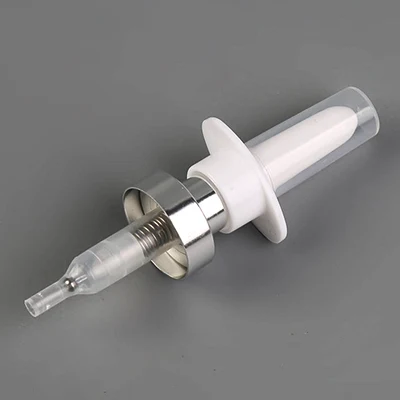
Nasal spray pumps for medical applications with precise dosing.
Powder sprayers designed for dry formulations like deodorant powders.
UV-resistant sprayers for sun care products that require stability against light exposure.
Comparison: Fine Mist Sprayer vs Regular Sprayer
| Feature | Fine Mist Sprayer | Regular Pump Sprayer |
|---|---|---|
| Droplet Size | 30–80 microns (soft mist) | >150 microns (larger drops) |
| Output per Stroke | 0.12–0.18 ml | 0.2–0.5 ml |
| Coverage | Even, lightweight, premium feel | Heavier, uneven splash |
| Applications | Perfume, skincare, sanitizers, hair care | Lotions, gels, thicker liquids |
| User Experience | Comfortable, elegant, waste-reducing | Functional but less refined |
Materials and Design Considerations
The performance and durability of a fine mist sprayer depend heavily on the materials used and the way it is designed. Every component, from the actuator to the dip tube, is selected to balance function, safety, and cost.
Common Materials
Polypropylene (PP): Widely used for closures, actuators, and housings because it is lightweight, cost-effective, and resistant to most cosmetic formulas.
Polyethylene (PE, LDPE, HDPE): Used for dip tubes and gaskets due to flexibility and chemical resistance.
Polyoxymethylene (POM): Often used for nozzle inserts because of its precision molding capability and durability.
Stainless Steel (SUS304): The standard choice for springs, ensuring long-lasting elasticity and resistance to corrosion.
Glass Ball Valve: Provides precision in one-way liquid flow, more stable and reliable than plastic alternatives.
Design Factors That Matter
1. Chemical compatibility
Alcohol-based sanitizers, essential oils, and acidic skincare formulas require materials resistant to swelling or cracking.
Compatibility testing ensures that sprayers do not degrade or contaminate the product.
2. Spray performance
Nozzle geometry affects droplet size, spray angle, and coverage.
Smooth actuation and consistent output improve the user experience.
3. Closure styles
Ribbed closures provide grip and practicality.
Smooth closures offer a premium look for beauty products.
Metal overshells (aluminum-coated) enhance aesthetics for luxury packaging.
4. Sustainability considerations
PCR plastics (post-consumer recycled) reduce reliance on virgin resin.
Mono-material sprayers make recycling easier since they eliminate mixed materials.
Refillable systems allow consumers to reuse the sprayer, cutting plastic waste.
5. Ergonomics and design aesthetics
The feel of the actuator influences how customers perceive quality.
Color matching, surface finishes, and branding elements such as embossing or hot stamping turn a technical part into a marketing tool.
Manufacturing Process & Quality Control
The performance and durability of a fine mist sprayer depend heavily on the materials used and the way it is designed. Every component, from the actuator to the dip tube, is selected to balance function, safety, and cost.
Step 1: Material Selection
High-quality resins such as PP, PE, and POM are chosen for durability and chemical resistance.
Stainless steel springs and glass ball valves are selected for performance stability.
For sustainable solutions, PCR plastics or bio-based materials may be used.
Step 2: Injection Molding
Components like actuators, closures, pistons, and dip tubes are produced through precision injection molding.
Micro-tolerances are critical, especially for nozzle inserts where even a 0.01 mm deviation can change droplet size.
Step 3: Surface Treatment & Decoration
Depending on brand requirements, components can undergo vacuum metallization, aluminum overshell coating, silk-screen printing, or hot stamping.
These processes turn technical parts into branded packaging elements that support premium positioning.
Step 4: Assembly
Automated assembly machines fit together actuators, pumps, springs, valves, and dip tubes.
Ultrasonic welding or press-fit technology ensures strong seals and leak prevention.
Robotics and vision systems verify alignment and assembly accuracy.
Step 5: Quality Control & Testing
Fine mist sprayers go through strict quality assurance before shipment. Common tests include:
- Leakage Test: Ensures no fluid escapes under pressure.
- Spray Output Test: Confirms consistent dosage per stroke (0.12–0.18 ml).
- Droplet Size Analysis: Measured with laser diffraction to verify droplet range (30–80 μm).
- Fatigue Test: Simulates thousands of actuations to check durability.
- Chemical Compatibility: Sprayers are soaked in alcohol or essential oils to confirm resistance.
Step 6: Certification & Compliance
Reputable suppliers manufacture under ISO 9001 and GMP standards. Many products are also designed to comply with FDA, EU REACH, and RoHS regulations, depending on the market. For brands targeting sustainability, certifications like GRS (Global Recycled Standard) validate the use of recycled materials.
Performance Metrics: What Makes a Good Fine Mist Sprayer?
Not every fine mist sprayer delivers the same user experience. The difference between a poor-quality pump and a high-performing sprayer can decide whether a product feels cheap or premium. To evaluate quality, brands and engineers rely on several measurable performance metrics.
Droplet Size Distribution
The most critical factor for mist quality.
A good sprayer produces droplets in the range of 30–80 microns, with a narrow distribution.
Perfumes and facial mists need smaller droplets (30–50 μm) for elegance and better skin absorption.
Household and agricultural sprays may require larger droplets (80–150 μm) for surface coverage.
Spray Output per Stroke
Standard fine mist sprayers deliver 0.12–0.18 ml per actuation.
Too low: the mist feels weak and ineffective.
Too high: it wastes product and feels heavy.
Consistency across every press is key to user satisfaction.
Spray Angle and Coverage
Defines how wide the mist spreads.
Typical angles range from 30° to 90°, depending on the product.
A facial mist might use a wider angle for full-face coverage, while a hair or sanitizer spray might require a more focused stream.
Actuation Force and Smoothness
The pressure required to press the actuator should feel comfortable.
Smooth, low-resistance action improves usability.
High-quality sprayers avoid sputtering or sudden resistance during use.
Priming and Retention
Priming strokes: how many times you need to pump before the first spray.
Prime retention: how long the pump holds liquid between uses without losing function.
Good fine mist sprayers require 1–2 strokes for priming and maintain prime for weeks.
Leak Prevention
Proper seals and gaskets ensure the sprayer does not leak when stored or shipped.
Leakage not only wastes formula but also damages customer trust in the product.
Durability and Fatigue Resistance
A fine mist sprayer should withstand at least 3,000–5,000 actuations without losing performance.
Springs and pistons must hold up under repeated use without deformation or breakage.
Applications Across Industries
A fine mist sprayer is one of the most versatile dispensing technologies. Its ability to transform liquid into a controlled, lightweight mist makes it useful across a wide range of industries. From luxury beauty products to agricultural treatments, the same basic mechanism adapts to very different needs.
Beauty and Personal Care
- Perfume and Body Mists: Deliver an elegant, even spray that enhances fragrance projection without wasting formula.
- Facial Mists and Toners: Fine droplets improve skin absorption and provide a refreshing user experience.
- Hair Care Sprays: Styling products and heat-protection sprays require wide-angle misting for full coverage.
- Sun Care Sprays: A broad spray angle ensures even application of sunscreen with minimal gaps.
Pharmaceuticals and Medical Use
- Nasal Sprays: Metered fine mist sprayers deliver precise doses of medication with an accuracy margin of ±3%.
- Antiseptic and Wound Care Sprays: Non-contact application reduces contamination risk while providing uniform coverage.
- Oral and Inhalation Sprays: Specialized sprayers atomize medicine for targeted delivery in respiratory treatments.
Household and Cleaning Products
- Air Fresheners: Continuous fine mist sprayers release fragrance evenly into the air, replacing aerosol cans.
- Surface Cleaners: Deliver fine droplets for effective coverage while minimizing dripping and over-saturation.
- Disinfectant Sprays: Provide controlled application for sanitizing surfaces in homes, offices, and public spaces.
Agriculture and Plant Care
- Pesticide and Fertilizer Sprayers: Fine droplets improve leaf coverage and absorption while reducing drift.
- Hydration Sprays for Plants: Consistent misting prevents overwatering and supports delicate seedlings.
- Greenhouse and Aeroponic Systems: Fine atomization supports humidity control and nutrient delivery.
Food and Culinary Applications
- Oil Sprayers: Provide controlled dosing for cooking and grilling with less waste.
- Cocktail and Culinary Mists: Chefs and bartenders use sprayers to add aromas, flavors, or decorative finishes.
- Vinegar and Seasoning Sprays: Allow precise flavoring without overpowering dishes.
Trends and Innovations
The fine mist sprayer has evolved far beyond its original role as a perfume accessory. Today, brands and manufacturers are pushing innovation to meet consumer expectations, sustainability goals, and regulatory requirements. Several key trends are shaping the future of this technology.
Sustainable and Eco-Friendly Designs
- PCR (Post-Consumer Recycled) Plastics: Increasing demand for sprayers made with recycled resins to reduce virgin plastic usage.
- Mono-Material Sprayers: Designed with fewer mixed materials to improve recyclability.
- Refillable Systems: Encouraging consumers to reuse the same sprayer, reducing overall waste.
- Biodegradable and Bio-Based Materials: Early research is exploring alternatives like plant-based plastics for certain components.
Continuous and Aerosol-Free Sprayers
Continuous fine mist sprayers have become a preferred alternative to traditional aerosols.
They provide a long, even spray without propellants, making them safer and more eco-friendly.
Widely adopted in hair care, cleaning, and sun care where extended coverage is essential.
Smart and High-Precision Spraying
Integration of micro-nozzles and advanced inserts for even tighter droplet size control.
Development of metered-dose sprayers for pharmaceuticals, ensuring precise dosage with every press.
Future potential for sensor-enabled packaging that tracks usage or adjusts spray output automatically.
Premiumization and Aesthetic Innovation
Brands increasingly use metal overshells, color-matched closures, and custom finishes to elevate packaging design.
Sprayers are seen not only as functional components but as part of the brand’s luxury identity.
Smooth actuation and ergonomic shapes enhance perceived value.
Expansion into New Applications
Culinary sprays in fine dining and mixology are gaining popularity.
Wellness products such as aromatherapy and CBD sprays are tapping into mist technology.
Agricultural and industrial systems are experimenting with fine misting for efficient liquid delivery and cooling.
Common Problems and Troubleshooting
Even a well-designed fine mist sprayer can face issues during use. Understanding common problems and knowing how to fix them helps both consumers and brands reduce frustration, protect formulas, and extend product life.
1. Clogged Nozzle
Problem: The sprayer stops releasing mist or only sputters due to dried residue or thick formulations blocking the nozzle.
Solution:
- Soak the nozzle in warm water or alcohol to dissolve residue.
- Pump several times in clean water to flush the system.
- For oil-based or viscous formulas, consider a sprayer with a larger orifice size.
2. Weak or Uneven Spray
Problem: The mist feels weak, irregular, or comes out in streams instead of a fine cloud.
Solution:
- Check if the dip tube is fully submerged.
- Ensure the sprayer has been primed (press a few times until the chamber fills).
- Replace low-quality pumps with models designed for consistent droplet size.
3. Leakage Around the Closure
Problem: Liquid seeps out from the neck area, especially during transport or when the bottle is tilted.
Solution:
- Make sure the closure is tightly fastened to the container.
- Use sprayers with high-quality gaskets and sealing systems.
- For brands, request leak-testing during production to prevent batch issues.
4. Pump Not Returning to Position
Problem: The actuator gets stuck or does not spring back after pressing.
Solution:
- Check for dirt or dried product blocking the piston.
- Clean the actuator and spring with warm water.
- In low-cost pumps, the spring may deform; upgrading to stainless steel springs can prevent this.
5. Loss of Prime
Problem: After storage, the sprayer no longer sprays immediately and requires several pumps to work.
Solution:
- Choose sprayers with strong prime retention design.
- Keep bottles upright during storage to avoid air entering the chamber.
- For frequent-use products, select continuous fine mist sprayers with higher retention.
6. Compatibility Issues
Problem: Certain formulas (alcohol, essential oils, acids) cause swelling, cracking, or discoloration of components.
Solution:
- Use sprayers made with chemically resistant materials like POM inserts, PE dip tubes, and stainless steel springs.
- Run compatibility tests before scaling production.
Procurement Guide for B2B Buyers
For brand owners, packaging managers, and procurement specialists, choosing the right fine mist sprayer supplier is as important as selecting the formula itself. A sprayer that fails in performance or quality can harm customer experience and brand reputation. This guide outlines the key factors to consider when sourcing wholesale fine mist sprayers.
1. Define Your Requirements
- Dosage and Droplet Size: Decide the output per stroke (e.g., 0.12–0.18 ml) and the droplet range based on your product.
- Neck Size Compatibility: Match the sprayer closure (e.g., 18/410, 20/410, 24/410) to your bottles.
- Formula Compatibility: Ensure the materials can handle alcohol, essential oils, or acids without degradation.
- Aesthetic Needs: Choose ribbed, smooth, or metal-shelled closures to align with brand identity.
2. Minimum Order Quantities (MOQ) and Lead Times
Sprayers are usually sold in bulk, with MOQs ranging from 10,000–50,000 pieces depending on customization.
Standard items have shorter lead times, while custom molds and finishes take longer.
3. Quality Assurance and Testing
Confirm that the supplier provides spray output tests, leakage tests, droplet size analysis, and fatigue testing.
Look for compliance with ISO, GMP, FDA, or EU REACH standards depending on your target market.
Request test reports and samples before committing to bulk orders.
4. Customization Options
Leading suppliers offer color matching, hot stamping, metallization, silk-screen printing, and logo engraving.
For sustainability, explore PCR plastic sprayers or mono-material designs.
Customization allows the sprayer to serve as a brand asset, not just a functional part.
5. Cost vs Value
The cheapest option is not always the best.
Balance cost with durability, spray consistency, and design.
High-quality sprayers reduce product returns and increase customer satisfaction, saving money long term.
6. Supplier Reliability
Choose suppliers with stable production capacity, strong R&D, and global shipping experience.
Check their track record with other brands.
Look for suppliers who can provide full packaging solutions, not just sprayers, to streamline sourcing.
UKPACK’s Expertise in Fine Mist Sprayers
At UKPACK, we understand that a fine mist sprayer is more than a simple dispensing tool. It is a vital part of packaging that defines product performance, user experience, and brand image. With years of experience in cosmetic and personal care packaging, we provide tailored solutions that combine engineering precision with design innovation.
1. Full Customization Capabilities
- Design Flexibility: Ribbed, smooth, aluminum overshell, and color-matched closures to fit brand aesthetics.
- Branding Options: Logo engraving, silk-screen printing, hot stamping, and custom decoration.
- Formula-Specific Solutions: Compatibility with alcohol-based sanitizers, essential oils, and active skincare formulations.
2. Commitment to Quality
Manufactured in ISO 9001 and GMP-certified facilities.
Every batch goes through leak tests, spray output testing, droplet size analysis, and fatigue resistance checks.
Use of stainless steel springs and glass ball valves for long-lasting performance.
3. Sustainability Leadership
- PCR Plastics: Incorporating post-consumer recycled materials to reduce environmental impact.
- Mono-Material Sprayers: Easier recycling and lower carbon footprint.
- Refillable Options: Supporting circular economy initiatives for global brands.
4. Trusted by Global Brands
Over 2,000 clients worldwide, ranging from indie beauty startups to multinational companies.
Experience across cosmetics, skincare, pharma, household, and food sectors.
Proven track record of delivering packaging that elevates both function and brand identity.
5. 3F Service: Free Design, Free 3D Renders, Free Mockups
We make development easier for brands by offering design support, rapid prototyping, and realistic visualization before production. This ensures faster decision-making and reduces the risk of costly design errors.
Why Choose UKPACK
Working with UKPACK means more than sourcing a fine mist sprayer supplier. It means partnering with a packaging innovator that aligns technical precision with brand strategy. We deliver packaging that protects formulas, engages customers, and supports long-term growth.
FAQs about Fine Mist Sprayers
1. What is a fine mist sprayer used for?
2. How does a fine mist sprayer work?
When you press the actuator, the piston compresses the spring inside the pump chamber. This builds pressure that forces liquid upward through the dip tube and out through a micro-nozzle. The nozzle atomizes the liquid into fine droplets, creating a lightweight mist.
3. Can fine mist sprayers handle alcohol or essential oils?
4. What is the typical output of a fine mist sprayer?
Standard outputs range from 0.12–0.18 ml per stroke. Continuous fine mist sprayers deliver a longer, aerosol-like spray, while specialized versions can be designed for precise dosing in pharmaceuticals.
5. Why does my fine mist sprayer stop working?
Common reasons include a clogged nozzle, loss of prime, or spring fatigue. Cleaning the nozzle with warm water or alcohol usually restores function. For B2B buyers, choosing high-quality pumps with tested durability prevents these issues.
6. Are fine mist sprayers recyclable?
Traditional sprayers use mixed materials, which makes recycling difficult. However, mono-material sprayers and PCR plastic sprayers are now available, offering more eco-friendly options for brands.
7. What neck sizes are available?
Fine mist sprayers are usually available in standard sizes like 18/410, 20/410, 24/410, making them compatible with a wide range of bottles in the beauty, personal care, and household industries.
8. Can I customize fine mist sprayers for my brand?
Absolutely. Customization options include color matching, surface finishes, hot stamping, silk-screen printing, aluminum overshells, and logo engraving. At UKPACK, we also provide Free Design, Free 3D Renders, and Free Mockups (3F Service) to help brands develop packaging that reflects their identity.
9. How many times can a fine mist sprayer be used?
High-quality sprayers are tested for 3,000–5,000 actuations without performance loss. Durability depends on spring quality, piston design, and assembly precision.
10. Where can I buy wholesale fine mist sprayers?
For bulk orders, it is best to work with a reliable supplier like UKPACK, which offers ISO-certified production, global shipping, and sustainable solutions tailored for beauty, pharma, household, and food industries.