NDA & Confidentiality Policy

UKPACK’s NDA & Confidentiality Policy explains how we protect your packaging concepts, technical drawings, CAD files, prototypes, tooling, and commercially sensitive information throughout product development and manufacturing. We also support customer-provided NDA and NNN agreements for confidential packaging projects.
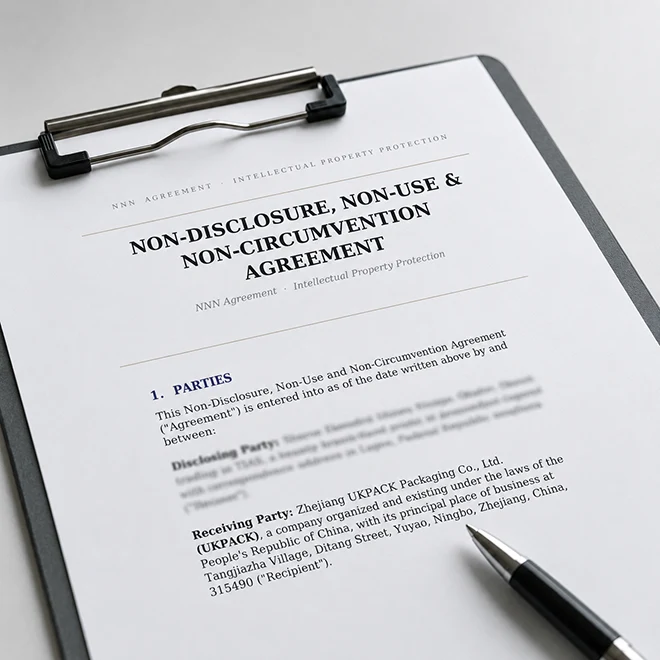

  • NDA & NNN Agreements Supported
  • CAD, Drawings & Design Files Protected
  • Restricted Access to Confidential Projects
  • Custom Tooling & Mould Information Protected
nda-confidentiality-policy-ukpack
Trusted by companies like
JouvianceLVIORSBerlin Packaging3MYuthikaKaoFabbriProfarmaVirtueEco by Sonya

What We Treat as Confidential

From early concepts to production assets, project-specific information may remain confidential throughout quotation, engineering, sampling, tooling, and manufacturing. This includes both technical packaging information and commercially sensitive project details.

Product Concepts & Unreleased Designs

Early sketches, reference images, structural concepts, design sheets, and unreleased packaging ideas are treated as project-specific information. These materials are used only to understand your requirements, assess feasibility, and support the agreed development process.

CAD, Drawings & Technical Specifications

2D drawings, CAD models, STEP/STP files, dimensions, tolerances, assembly details, and engineering specifications may contain proprietary product information. When these files are used as part of our cosmetic packaging design services, access should remain limited to personnel directly involved in the project.

Mechanisms & Engineering Details

Custom dispensing systems, refill structures, closures, hinges, actuators, pumps, locking systems, and other functional mechanisms can represent valuable product know-how. These technical details are handled within the scope of the specific customer project.

BOM & Material Specifications

Bills of materials, resin selections, component specifications, construction details, sourcing requirements, and performance criteria may also be confidential. They are used to evaluate manufacturability, material compatibility, costing, and production requirements.

Prototypes, Samples & Tooling

Engineering samples, 3D-printed prototypes, test parts, moulds, inserts, fixtures, and other project-specific physical assets may contain confidential design or engineering information. These assets are handled as part of the confidential customer project and are not intended for unrelated display, distribution, or use.

Commercial & Launch Information

Confidentiality can also extend beyond packaging engineering. Product launch timing, target markets, forecast volumes, pricing information, brand plans, supplier strategies, and other non-public commercial information may be protected when shared during project development.

How UKPACK Handles Confidential Projects

Confidentiality is managed throughout the project workflow, not only when files are first received. As a project moves through our packaging manufacturing process — from engineering and DFM to tooling, sampling, quality control, and production — access, file handling, physical assets, and project use remain subject to the confidentiality requirements agreed for that customer project.

01

Need-to-Know Project Access

Confidential project information is limited to employees and key personnel who need it for quotation, engineering, tooling, production, or quality control. Sensitive files are not intended for general internal circulation.

02

Restricted File Handling

CAD files, technical drawings, specifications, BOMs, and other digital project documents are handled through access-restricted project workflows. File access is kept aligned with the personnel directly involved in the work.

03

Controlled Samples & Tooling

Physical prototypes, test parts, mould components, tooling samples, and other project assets are handled within the relevant development or production workflow. Access is limited to personnel involved in the project, and the handling of these assets follows the confidentiality requirements applicable to the project.

04

Project-Specific Use

Customer designs, mechanisms, technical data, and other confidential information are used only for the agreed quotation, development, testing, or manufacturing activities. Any broader use is subject to the applicable agreement.

05

Controlled External Disclosure

Confidential project information is not intended to be shared with unrelated third parties. Where outside involvement is necessary for a project, disclosure requirements should follow the applicable NDA, NNN, or customer-approved confidentiality terms.

06

Confidentiality Issue Response

If an actual or suspected unauthorized disclosure or use is identified, the issue should be escalated promptly and handled according to the applicable confidentiality agreement and project requirements.

We Can Work Under Your NDA or NNN Agreement

For projects involving proprietary packaging structures, custom mechanisms, tooling, or unreleased product concepts, confidentiality terms can be established before detailed technical information is exchanged. This allows sensitive project information to be reviewed within an agreed confidentiality framework from the beginning.

UKPACK NDA

If you require a confidentiality agreement before sharing sensitive project information, an NDA can be completed before drawings, specifications, or other proprietary files are submitted. The agreement can define how confidential information is accessed, used, and handled during the project.

Customer-Provided NDA / NNN

If your company already uses its own NDA, NNN agreement, or supplier confidentiality agreement, you can submit it to UKPACK for review. This is particularly relevant for projects involving proprietary mechanisms, custom packaging structures, tooling, or intellectual property that has not yet entered the public domain.

Establish Confidentiality Before Sharing Sensitive Files

We recommend completing the applicable confidentiality agreement before sending sensitive CAD or STEP files, proprietary mechanisms, detailed engineering drawings, BOMs, or unpublished product designs. Initial project discussions can begin without disclosing the most sensitive technical information.

NDA or NNN: What Can a Project Require?

Different packaging projects may require different levels of confidentiality protection. An NDA generally focuses on keeping confidential information from being disclosed, while an NNN agreement may also address how that information can be used and whether business relationships identified through the project can be approached directly.

Non-Disclosure

Confidential drawings, CAD files, technical specifications, product concepts, commercial information, and other protected project materials must not be disclosed to unauthorized third parties. Access should remain limited to personnel who need the information for the agreed project.

Non-Use

Confidential information should only be used for the purpose defined in the agreement. Proprietary packaging designs, mechanisms, technical data, and tooling information must not be reused, copied, replicated, or applied to unrelated projects where such restrictions have been contractually agreed.

Non-Circumvention

Where included in the signed agreement, non-circumvention provisions may restrict the use of customer relationships, suppliers, logistics partners, or other commercial contacts identified through the project to bypass the customer or pursue an unauthorized transaction.

The exact scope of Non-Disclosure, Non-Use, and Non-Circumvention obligations depends on the NDA or NNN agreement signed for the individual project.

Protecting Your Packaging Intellectual Property

Confidentiality protects sensitive information from unauthorized disclosure or use, while intellectual property ownership determines who holds the rights to a design, mechanism, tooling asset, or development result. For custom packaging projects, these issues should be defined clearly before significant engineering or tooling work begins.

Customer-Supplied Designs

Original concepts, drawings, CAD files, structures, mechanisms, and other intellectual property supplied by the customer remain subject to the ownership and usage rights defined in the applicable project agreement. Receiving these materials for evaluation or manufacturing does not by itself grant broader rights to use them.

Custom Engineering & Development

Packaging development may involve DFM adjustments, structural changes, component optimization, tolerance revisions, or other engineering work. Ownership and permitted use of project-specific developments should be defined in the NDA, development agreement, or other applicable contract.

Tooling & Mould Rights

Custom moulds, inserts, fixtures, and other tooling can involve both physical ownership and intellectual property considerations. These rights should be defined separately in the applicable tooling, development, or purchase agreement before tooling production begins.

Project-Specific IP Terms

Different projects may require different ownership structures. Customer-owned designs, jointly developed solutions, patented mechanisms, proprietary structures, or exclusive packaging may each require specific contractual terms rather than a single standard rule.

Confidentiality does not automatically determine intellectual property ownership. IP rights, tooling ownership, exclusivity, and development rights should be defined in the applicable NDA, tooling agreement, development agreement, purchase contract, or other project-specific agreement.

Custom Moulds & Tooling Protection

Custom packaging projects may require dedicated moulds, inserts, fixtures, or other production tooling. Ownership, authorized manufacturing use, identification, storage, maintenance, and transfer requirements should be agreed before tooling production begins.

Tooling Ownership

Ownership of customer-funded moulds and other dedicated tooling should be clearly defined in the applicable tooling agreement, development agreement, or purchase contract. The agreement can also specify the customer’s rights in relation to the physical tooling.

Authorized Manufacturing Use

Project-specific tooling is used within the manufacturing scope agreed for the customer project. Any restrictions on using dedicated moulds, inserts, or fixtures for other products or customers should be documented in the applicable agreement.

Tooling Identification & Records

Where required by the project agreement, dedicated tooling can be identified and recorded against the relevant customer project. This helps distinguish project-specific moulds and tooling from general production assets used across standard packaging programs.

Storage, Maintenance & Transfer

Tooling storage, maintenance, modification, and transfer terms should be defined in the project agreement. For new mould development, see our injection molding capabilities and production workflow.

Tooling terms should be confirmed before mould fabrication begins so that ownership, permitted use, and future handling are clear to both parties.

Contract-Specific Terms & Confidentiality Exceptions

This NDA & Confidentiality Policy describes UKPACK’s general approach to confidential packaging projects. Specific legal obligations, ownership rights, confidentiality periods, and remedies may vary by project and should be defined in the agreement signed between the parties.

Confidentiality Exceptions

Confidentiality restrictions may not apply where the receiving party can demonstrate that the information:

  • was already publicly available through no unauthorized disclosure;
  • was lawfully known before it was provided for the project;
  • was independently developed without reference to the confidential information; or
  • must be disclosed under applicable law, regulation, court order, or other legal requirement.

Where legally permitted, the applicable agreement may require prior notice before a legally required disclosure is made.

Terms Defined by the Signed Agreement

Certain requirements should be addressed on a project-specific basis rather than assumed from this website policy. Depending on the project, these may include:

  • confidentiality duration and survival obligations;
  • intellectual property and development rights;
  • mould and tooling ownership;
  • exclusivity or non-circumvention restrictions;
  • permitted manufacturing and use rights;
  • governing law and dispute resolution;
  • remedies for unauthorized disclosure or use; and
  • tooling release, transfer, or other project-specific requirements.

The NDA, NNN agreement, tooling agreement, development agreement, purchase contract, or other signed project agreement governs the specific rights and obligations applicable to that project.

NDA & Confidentiality FAQs

Yes. Confidentiality terms can be established before sensitive technical information is exchanged. For projects involving proprietary packaging structures, unreleased designs, custom mechanisms, or other valuable intellectual property, we recommend completing the applicable NDA or NNN agreement before detailed files are submitted.
Yes. If your company uses its own NDA, NNN agreement, supplier confidentiality agreement, or similar document, you can submit it to UKPACK for review before sharing sensitive project information. Project-specific legal and commercial terms can then be addressed through the applicable agreement.
Confidential project information may include product concepts, CAD and STEP files, engineering drawings, dimensions, tolerances, mechanisms, BOMs, material specifications, prototypes, tooling information, pricing, forecast volumes, launch plans, and other technical or commercial information that has not been made public.
Confidential customer designs and project information are intended to be used within the scope of the agreed project. Where a project requires specific restrictions on reuse, exclusivity, similar structures, or manufacturing for other parties, those requirements should be clearly defined in the signed NDA, NNN, or development agreement.
Sensitive engineering files are handled within restricted project workflows and access is limited to personnel who require the information for quotation, engineering, tooling, production, or quality control. Additional handling requirements can also be defined in the confidentiality agreement for the individual project.
Tooling ownership should be defined in the applicable tooling agreement, development agreement, or purchase contract before mould production begins. The agreement can also specify permitted manufacturing use, identification, storage, maintenance, modification, release, and transfer requirements.
The duration depends on the agreement signed for the project. Different terms may apply to general confidential information, trade secrets, proprietary mechanisms, tooling information, or other intellectual property. The applicable NDA or NNN agreement should define both the initial term and any obligations that survive termination.
No. Confidentiality and intellectual property ownership are separate issues. An NDA may restrict disclosure or use of information, but ownership of designs, engineering developments, tooling, mechanisms, or other intellectual property should be defined separately in the relevant project agreements.
Send Your Inquiry

    Have a Confidential Packaging Project?

    Send us your NDA or an initial project brief before sharing sensitive technical information. Confidentiality terms can be established before detailed CAD files, engineering drawings, proprietary mechanisms, tooling information, or unreleased packaging designs are exchanged.