Types of Packaging: Types of Packaging: The Ultimate 2025 Guide

Founder of UKPACK, chief packaging engineer and designer with 18 years of experience, and Red Dot Award winner. I work on cosmetic packaging structure, material selection, mold feasibility, decoration processes, and leak-risk control, helping brands turn packaging ideas into reliable production-ready solutions. See my senior packaging engineer qualification.

Packaging is more than just a box or a wrapper. It is the first thing customers see, the shield that protects your product, and a major driver of logistics costs. Whether you are in food and beverage, cosmetics, or e-commerce, the type of packaging you choose can make or break the success of your product.
Understanding the different types of packaging is essential for businesses today. It impacts product safety, shipping efficiency, brand perception, and even sustainability goals. The global packaging market was valued at USD 1,080.13 billion in 2024 and is projected to grow to USD 1,452.86 billion by 2032, at a CAGR of 3.93%. Asia Pacific led the market with 38.43% share in 2024 (Fortune Business Insights). Knowing your options has never been more important.
In this guide, we will break down packaging from every angle. You will learn about the three functional levels of packaging (primary, secondary, tertiary), explore common packaging formats and materials, see how different industries apply them, and discover future trends shaping 2025 and beyond. By the end, you will have a clear roadmap to choose the right packaging for your product and business needs.
Types of Packaging by Function (The 3 Levels of Packaging)
Packaging is often categorized into three functional levels: primary, secondary, and tertiary packaging. Each level plays a unique role in protecting the product, moving it through the supply chain, and shaping the customer experience. Understanding these levels helps businesses optimize costs, ensure safety, and deliver a better brand impression.
Primary Packaging
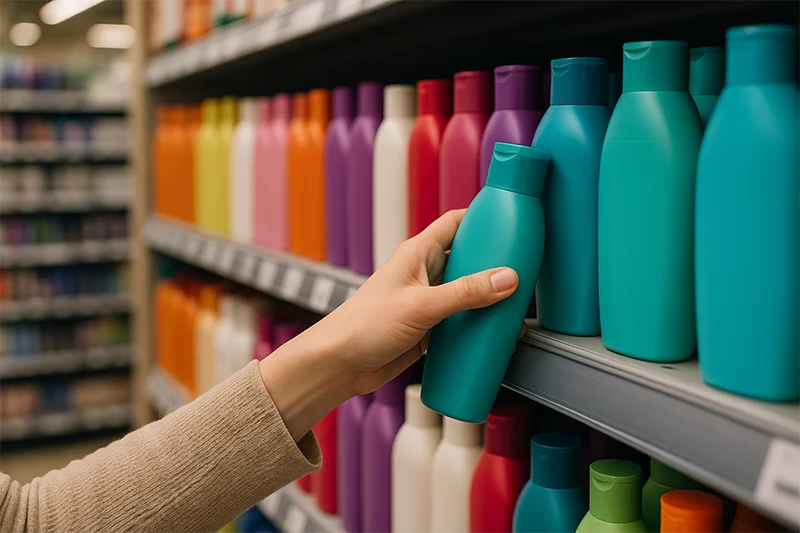
This is the first layer of protection and the packaging that comes in direct contact with the product. It is also called retail packaging because it is what the customer sees on the shelf.
Examples: bottles for shampoo, blister packs for tablets, pouches for snacks, jars for creams.
Functions:
- Protect the product from damage, contamination, or spoilage.
- Provide convenience in handling and use (resealable pouches, pump bottles).
- Communicate brand identity through design, labeling, and graphics.
Key Considerations: safety standards (especially for food and pharma), shelf appeal, ease of use, and recyclability.
Secondary Packaging

Secondary packaging groups multiple units of primary packaging. It is often the packaging that helps retailers and distributors handle products more efficiently.
Examples: corrugated cartons that hold 24 bottles of water, shrink-wrapped multipacks of soda cans, branded gift boxes.
Functions:
- Facilitate shipping, stacking, and storage.
- Provide extra protection during distribution.
- Serve as a marketing tool when used as branded display boxes in retail.
Key Considerations: durability, cost efficiency, space optimization, and whether the packaging needs to double as a retail display.
Tertiary Packaging

This is the outermost layer used for bulk handling and transport. It ensures that large quantities of goods can be shipped safely and efficiently across long distances.
Examples: wooden pallets, plastic stretch wrap, shipping containers.
Functions:
- Protect large volumes of products during long-haul transportation.
- Standardize dimensions for containerization and warehouse storage.
- Reduce labor and time in loading and unloading.
Key Considerations: compliance with transport regulations, sustainability of bulk packaging materials, and opportunities for cost savings through standardization.
Comparison Table: The 3 Levels of Packaging
| Level | Definition | Common Examples | Key Functions | Considerations |
|---|---|---|---|---|
| Primary | First layer, direct product contact | Bottles, jars, pouches, blister packs | Protection, branding, usability | Safety, shelf appeal, recyclability |
| Secondary | Groups primary packages | Cartons, shrink wrap, display boxes | Shipping, storage, retail display | Durability, cost, space optimization |
| Tertiary | Bulk handling and transport | Pallets, stretch wrap, containers | Logistics, long-distance protection | Standardization, compliance, cost |
Each level serves a distinct role from product safety to logistics flow.
- See the formal definitions in the ISO 21067-1 packaging vocabulary.
- For supply chain hierarchy and identification across levels, follow the GS1 GTIN Management Standard.
- For foundational design guidance, this WPO Packaging Design PDF is a solid primer.
Types of Packaging by Form/Format
Packaging can also be classified by its form or format. These are the physical shapes and structures used to contain, protect, and present products. Different forms serve different purposes, and choosing the right one depends on product type, logistics, and branding goals.
Boxes and Cartons
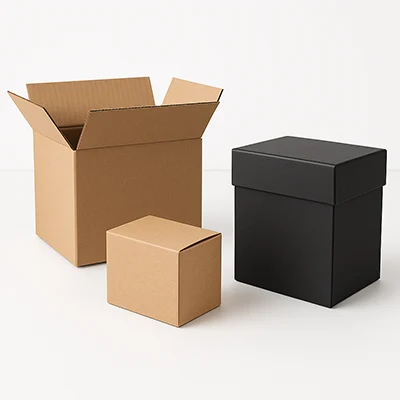
Examples: corrugated boxes, folding cartons, rigid boxes.
Functions: versatile, strong, easy to print and brand, widely used in e-commerce and retail.
Best For: electronics, cosmetics, food shipping, luxury products.
Note: Corrugated boxes play a major role in packaging — Reel Stock Analysis suggests that corrugated box production accounts for about one third of the world’s paper usage.
Bags and Pouches
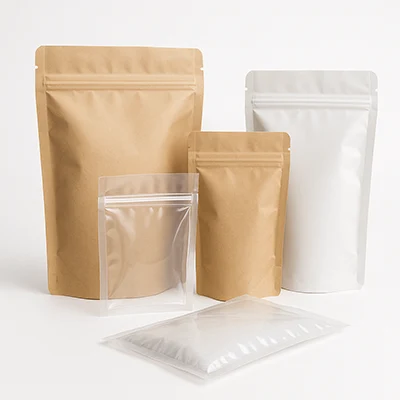
Examples: stand-up pouches, zip-lock bags, vacuum-sealed bags.
Functions: lightweight, flexible, reduces storage space, resealable for convenience.
Best For: snacks, coffee, frozen food, refills for personal care products.
Trend: The flexible packaging market continues to surge — a Future Market Insights report estimates its value at USD 332.7 billion in 2025.
Bottles and Jars
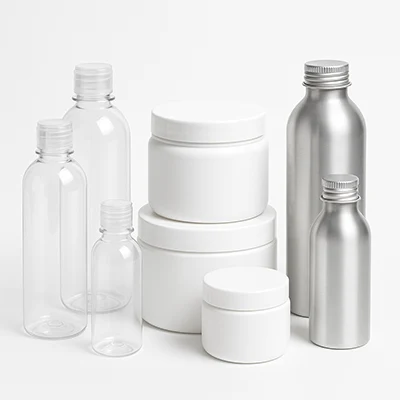
Examples: plastic bottles, plastic jars, aluminum bottles.
Functions: good for liquids and creams, easy to portion and reseal, strong branding potential through shape and design.
Best For: beverages, cosmetics, pharmaceuticals.
Case Insight: Many beverage brands are shifting to lighter PET bottles to improve logistics efficiency and cut emissions. According to the MDPI study, trimming bottle weight by around 20% can reduce energy use in production and blow-molding by ~18%, cutting carbon emissions by ~21%.
Cans and Tins
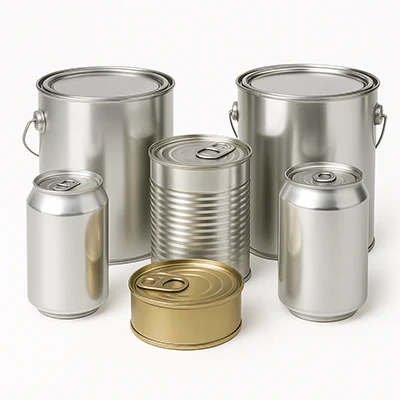
Examples: beverage cans, food tins, paint cans.
Functions: excellent barrier properties, long shelf life, durable and stackable.
Best For: soda, canned foods, paints, aerosols.
Sustainability Fact: Aluminum beverage cans remain one of the most recycled packaging forms. In the United States, the consumer recycling rate was about 43% in 2023, with an industry goal of reaching 70% by 2030 (Aluminum Association KPI Report).
Wrappers and Sleeves
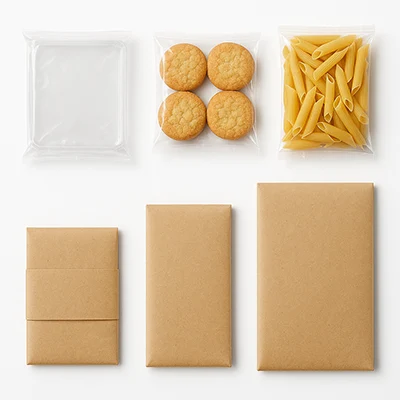
Examples: shrink wrap, film wrap, paper sleeves.
Functions: protect surface, hold items together, add branding.
Best For: confectionery, multipack products, bakery items.
Mailers and Envelopes
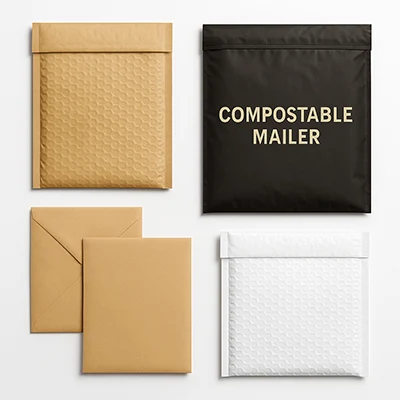
Examples: padded mailers, paper envelopes, compostable e-commerce mailers.
Functions: lightweight, protective, ideal for direct shipping.
Best For: apparel, books, small electronics, e-commerce.
Data Point: Amazon’s push for “frustration-free packaging” has accelerated the adoption of sustainable mailers.
Pallets and Crates
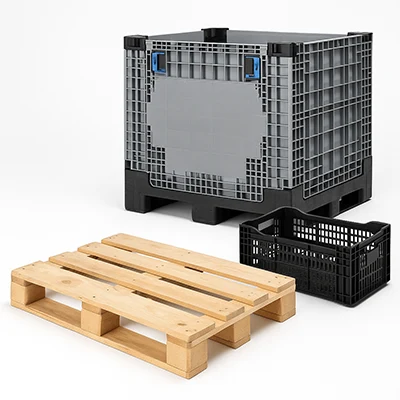
Examples: wooden pallets, plastic crates.
Functions: bulk handling, standardization in shipping and warehousing.
Best For: industrial goods, large shipments, FMCG distribution.
Specialty Packaging
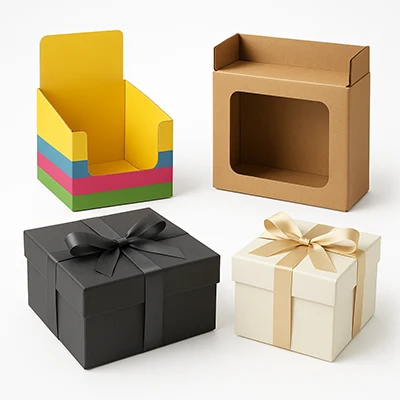
Examples: shelf-ready packaging, display packaging, gift packaging.
Functions: increase visibility in retail, enhance customer experience, support marketing campaigns.
Best For: promotional items, luxury goods, seasonal campaigns.
Comparison Table: Common Packaging Formats
| Format | Best For | Pros | Cons |
|---|---|---|---|
| Boxes & Cartons | Electronics, cosmetics, food, shipping | Durable, stackable, easy to brand | Can be heavy, higher cost |
| Bags & Pouches | Snacks, coffee, refills | Lightweight, space-saving, resealable | Less rigid, limited protection |
| Bottles & Jars | Beverages, cosmetics, pharma | Good sealing, branding potential | Fragile (glass), plastic waste |
| Cans & Tins | Drinks, canned foods, paints | Durable, long shelf life, recyclable | Energy-intensive production |
| Wrappers & Sleeves | Confectionery, bakery, multipacks | Cost-effective, branding option | Limited durability |
| Mailers & Envelopes | E-commerce, books, apparel | Lightweight, protective, postal-friendly | Not suitable for fragile items |
| Pallets & Crates | Industrial, bulk shipping | Standardized, reusable | Bulky, upfront cost |
| Specialty Packaging | Luxury goods, promotions | High shelf impact, custom design | Higher production cost |
Packaging by Material
Choosing the right packaging material is just as important as choosing the right format. Materials determine durability, sustainability, cost, and even how consumers perceive a product. Below are the most common packaging materials, their strengths, and their drawbacks.
Paper and Cardboard
Overview: Lightweight, versatile, and widely used in retail and e-commerce.
Pros: Renewable, recyclable, cost-effective, easy to print and brand.
Cons: Limited moisture resistance, not suitable for all perishables.
Use Cases: corrugated shipping boxes, folding cartons, paper bags.
Fact: The U.S. paper and paperboard recycling rate reached 67.9% in 2022 (EPA, Paper and Paperboard Material-Specific Data).
Plastic
Overview: The most common packaging material due to flexibility and low cost.
Pros: Strong, lightweight, moisture resistant, highly versatile.
Cons: Environmental impact, recycling challenges, regulatory pressure.
Use Cases: bottles, pouches, shrink wrap, trays.
Trend: Many countries are introducing restrictions on single-use plastics, driving companies to innovate with recyclable PET and bioplastics. For example, the EU Single-use Plastics Directive bans items like plastic straws and cutlery, while over 60 nations have enacted similar restrictions worldwide (UNEP, 2018).
Glass
Overview: Premium, inert, and 100% recyclable without loss of quality.
Pros: Excellent barrier against oxygen and moisture, maintains product integrity, high consumer trust.
Cons: Heavy, fragile, higher shipping cost.
Use Cases: beverages, cosmetics, pharmaceuticals.
Sustainability Fact: Glass can be recycled endlessly, but only 31% of glass containers were recycled in the U.S. in 2018 (EPA, Glass: Material-Specific Data).
Metal (Aluminum and Steel)
Overview: Durable, strong, and ideal for long shelf life.
Pros: Excellent protection, tamper-resistant, high recyclability.
Cons: Energy-intensive production, heavier than alternatives.
Use Cases: beverage cans, food tins, aerosol containers, industrial drums.
Data Point: Aluminum cans had a consumer recycling rate of about 43% in the U.S. in 2023, with an industry goal of 70% by 2030 (Aluminum Association, 2024 KPI Report).
Composites and Multi-material Packaging
Overview: Combine layers of paper, plastic, foil, or other materials for barrier performance.
Pros: Strong barrier against moisture, light, and oxygen; extends shelf life.
Cons: Difficult to recycle due to mixed layers.
Use Cases: juice cartons, chip bags, aseptic cartons (Tetra Pak).
Note: Many recycling systems cannot separate multi-layer composites, creating sustainability challenges. According to a review of multilayer barrier films, such films are much harder to recycle than single-layer ones because the layers are tightly bonded (Recycling of Multilayer Polymeric Barrier Films, Wiley Online Library). Another comprehensive review highlights that most mechanical recycling systems cannot process multilayer packaging without costly separation steps (A Comprehensive Review of Recent Challenges, ResearchGate).
Biodegradable and Compostable Materials
Overview: Plant-based plastics (PLA), starch blends, compostable films.
Pros: Reduce reliance on fossil fuels, designed for composting environments.
Cons: Higher cost, performance limitations, require proper composting infrastructure.
Use Cases: compostable mailers, foodservice packaging, bioplastic bottles.
Market Insight: The global bioplastic packaging market was valued at around USD 19.55 billion in 2024 and is projected to reach USD 50.57 billion by 2030. (Grand View Research)
Innovative Materials in 2025
Examples:
- Mushroom packaging – grown from mycelium, biodegradable alternative to styrofoam.
- Seaweed-based film – edible and compostable wrap.
- Nanomaterials – improve barrier properties without extra layers.
Why It Matters: These innovations attract attention from eco-conscious consumers and often generate press coverage, making them both functional and marketing tools.
Comparison Table: Packaging Materials
| Material | Cost | Durability | Recyclability | Common Uses |
|---|---|---|---|---|
| Paper & Cardboard | Low | Medium | High | Boxes, cartons, bags |
| Plastic | Low | High | Low to Medium | Bottles, films, pouches |
| Glass | High | High (fragile) | High | Beverages, cosmetics |
| Metal (Aluminum/Steel) | High | High | Medium to High | Cans, tins, aerosols |
| Composites | Medium | High | Low | Juice cartons, chip bags |
| Biodegradable | Medium | Medium | Compostable | Mailers, pouches, bottles |
Industry-Specific Packaging Applications
Different industries face unique requirements when it comes to packaging. Factors such as product safety, regulations, branding, and logistics vary widely between sectors. Below are some of the most common industries and how packaging is applied within each.
Key Needs: Product freshness, shelf life, tamper evidence, and convenience.
Common Formats: glass bottles, aluminum cans, flexible pouches, corrugated cartons.
Trends: Sustainable alternatives (compostable food containers, lightweight bottles), smart packaging with freshness indicators.
Cosmetics and Personal Care Packaging
Key Needs: Shelf appeal, branding, consumer experience, safety for skin-contact products.
Common Formats: glass jars, PET bottles, airless pumps, luxury cartons.
Trends: Refillable systems, eco-friendly designs, lightweight tubes.
Pharmaceutical and Healthcare Packaging
Key Needs: Product safety, sterility, tamper-evident seals, accurate labeling.
Common Formats: blister packs, pill bottles, sterile sachets, vials.
Trends: Child-resistant closures, smart labels with QR codes for traceability, temperature-sensitive packaging for biologics.
Data Point: Counterfeit and substandard drugs are estimated to cost the pharmaceutical industry around USD 200 billion annually, according to industry analyses (Strategy&/PwC; Pharmaceutical Commerce). The WHO also warns that about 1 in 10 medical products in low- and middle-income countries are substandard or falsified.
Electronics and Technology Packaging
Key Needs: Shock absorption, anti-static protection, theft deterrence, sustainable disposal.
Common Formats: corrugated boxes with custom inserts, molded pulp trays, anti-static pouches.
Trends: Minimalist unboxing design, recyclable molded pulp replacing Styrofoam.
Case Insight: A tech company redesigned its laptop packaging using slimmer corrugated boxes and molded pulp trays to reduce shipping volume. In comparable optimization experiments — such as Amazon’s box size optimization — simply adjusting box dimensions yielded up to 4–10% reduction in shipping volume (arXiv: A decision-tree framework to select optimal box-sizes for product shipments).
E-commerce and Retail Packaging
Key Needs: Durability, cost efficiency, customer experience, branding opportunities.
Common Formats: corrugated mailers, padded envelopes, branded boxes, return-ready packaging.
Trends: Frustration-free packaging, personalized unboxing experiences, compostable mailers.
Data Point: he global e-commerce packaging market was valued at USD 75.3 billion in 2024 and is projected to grow at a CAGR of around 9% through 2029 (Smithers).
Comparison Table: Packaging Applications by Industry
| Industry | Key Needs | Common Formats | Example Trends | Regulation / Standards |
|---|---|---|---|---|
| Food & Beverage | Freshness, shelf life, tamper evidence | Glass bottles, cans, cartons, pouches | Compostable containers, smart packs | FDA, USDA, EFSA |
| Cosmetics | Branding, shelf appeal, consumer safety | Airless pumps, jars, luxury cartons | Refillable, eco-friendly, lightweight | FDA, Cosmetics Europe |
| Pharmaceuticals | Safety, sterility, tamper resistance | Blister packs, vials, pill bottles | Child-resistant, traceable labels | FDA, EMA, WHO |
| Electronics | Protection, anti-static, theft deterrence | Corrugated boxes, molded pulp trays | Minimalist, recyclable pulp inserts | RoHS, WEEE |
| E-commerce | Durability, cost, branding | Mailers, padded envelopes, boxes | Frustration-free, compostable mailers | Carrier guidelines, sustainability rules |
Case Studies
While packaging concepts can seem abstract, real-world applications show how businesses use packaging to solve problems, cut costs, and build stronger brands. Here are several industry examples:
Case Study 1: Coca-Cola’s Lightweight PET Bottles
Challenge: Reducing plastic use while maintaining shelf strength.
Solution: Coca-Cola redesigned its PET bottles by cutting plastic weight and incorporating more recycled PET (rPET).
Result: The company achieved a 20% reduction in plastic per bottle, lowering carbon emissions and shipping costs.
Source: Coca-Cola Sustainability Report.
Case Study 2: Amazon’s Frustration-Free Packaging and SIOC
Challenge: Reduce packaging waste and improve delivery efficiency for e-commerce.
Solution: Amazon expanded its Frustration-Free Packaging (FFP) and Ships-in-Own-Container (SIOC) programs, and applied machine learning to identify items that can ship without extra packaging.
Result: Since 2015, Amazon has avoided using over 4.2 million metric tons of packaging materials, and since 2019, more than 5.5 billion shipments in North America and Europe have been delivered without additional Amazon packaging. In 2024, 12% of global shipments were sent without extra packaging.
Benefits of Choosing the Right Packaging
Packaging isn’t just about holding a product. It can directly influence costs, customer loyalty, regulatory compliance, and even environmental impact. Choosing the right type of packaging creates measurable advantages for businesses:
Cost Efficiency
Lower shipping costs: Optimized packaging reduces dimensional weight (DIM) charges from carriers like UPS and FedEx.
Less material waste: Lightweight or right-sized packaging uses fewer raw materials, lowering procurement costs.
Product Protection and Reduced Returns
Stronger packaging prevents damage during transport, lowering return rates and replacement expenses.
Specialized formats like blister packs, foam inserts, or molded pulp trays provide cushioning for fragile items.
Enhanced Brand Image and Customer Experience
Packaging is the first physical touchpoint with a customer. Premium, sustainable, or personalized designs improve unboxing experiences.
Brand storytelling via graphics, textures, and structural design strengthens consumer connection.
Sustainability and Compliance
Eco-friendly packaging (e.g., recyclable PET, compostable containers, molded pulp) helps companies meet CSR goals.
Regulatory compliance with laws like the EU Packaging Waste Directive and state-level Extended Producer Responsibility (EPR) rules avoids legal risk.
Supply Chain and Logistics Optimization
Right-sized packaging allows more units per pallet or container, reducing fuel use and warehouse space.
Packaging with standardized barcodes or RFID supports better inventory management and traceability.
Common Packaging Mistakes to Avoid
Even the best product can suffer if the packaging is poorly designed. Here are some of the most frequent mistakes businesses make—and how to avoid them.
Overpackaging
Problem: Using excessive layers, oversized boxes, or too much filler increases costs and frustrates eco-conscious consumers.
Impact: Higher shipping fees, more waste, and a negative brand image.
Better Practice: Adopt right-sized packaging and explore sustainable materials like molded pulp or recyclable mailers.
Ignoring Regulatory Compliance
Problem: Overlooking food-contact safety, pharmaceutical tamper-evidence, or labelling rules.
Impact: Risk of product recalls, fines, and reputational harm.
Better Practice: Stay updated with FDA, EU PPWR, and local EPR laws.
Sacrificing Product Protection for Cost Savings
Problem: Cutting corners with thin materials or poor structural design.
Impact: Higher product damage rates, costly returns, and customer dissatisfaction.
Better Practice: Balance lightweighting with protective features like inserts, blister packs, or cushioning.
Neglecting the Customer Experience
Problem: Hard-to-open designs, messy unboxing, or lack of branding.
Impact: Frustrated customers and lost opportunities for brand storytelling.
Better Practice: Test packaging with real users, design frustration-free openings, and add branding elements.
Overlooking Sustainability
Problem: Using non-recyclable plastics, multi-layer composites, or ignoring consumer demand for green solutions.
Impact: Loss of eco-conscious customers, higher landfill contributions, regulatory risks.
Better Practice: Switch to recyclable PET, biodegradable films, or reusable systems.
What UKPACK Can Help Your Business
Packaging isn’t just a container—it shapes product quality, customer perception, and even compliance. With so many choices, it’s not a decision to make lightly.
At UKPACK, we provide end-to-end packaging solutions that balance cost, performance, and sustainability. Whether you need to cut material waste, enhance shelf appeal, or design custom packaging that tells your brand story, our team is here to guide you.
From free design concepts and 3D renders to scalable production and global delivery, we help brands move from idea to shelf with confidence.
Contact us today to explore how UKPACK can make packaging a growth driver for your business.
FAQs About Types of Packaging
Q1. What are the 3 types of packaging?
The three main types of packaging are primary, secondary, and tertiary. Primary packaging is the layer that directly touches the product, like a bottle or blister pack. Secondary packaging groups multiple primary packages, such as cartons or shrink wrap. Tertiary packaging is for bulk transport, including pallets and shipping containers.
Q2. What is primary, secondary, and tertiary packaging?
Primary packaging protects and contains the product itself, such as a jar or pouch. Secondary packaging bundles products for retail display or storage, like boxes or trays. Tertiary packaging ensures safe logistics and bulk shipping, such as stretch-wrapped pallets and crates.
Q3. What are the different types of packaging materials?
The main packaging materials are plastic (PET, HDPE, PP), paper and paperboard, corrugated fiberboard, glass, aluminum, and bioplastics. Each material has unique benefits: plastics offer versatility, paperboard supports printability, glass conveys premium quality, and aluminum is lightweight and highly recyclable.
Q4. What is the difference between rigid and flexible packaging?
Rigid packaging includes solid structures like glass bottles, metal cans, and plastic jars. Flexible packaging includes materials such as pouches, films, and bags that can bend or fold. The key difference is that rigid packaging provides strength and protection, while flexible packaging offers lightweight convenience and reduced shipping costs.
Q5. What are the advantages of sustainable packaging?
Sustainable packaging reduces environmental impact by using recyclable, biodegradable, or compostable materials. It lowers carbon emissions, supports circular economies, and meets consumer demand for eco-friendly products. Businesses adopting sustainable packaging also gain stronger brand loyalty and regulatory compliance.
Q6. Can multilayer packaging be recycled?
Most multilayer packaging cannot be recycled with standard municipal systems because the layers of plastic, foil, or paper are difficult to separate. Specialized technologies exist, but they are limited. Choosing mono-material or easily separable packaging is the best option for recyclability.
Q7. What is an example of active or intelligent packaging?
Active packaging includes oxygen absorbers in food packs that extend shelf life. Intelligent packaging features QR codes or freshness indicators that communicate product status to consumers. Both improve safety, traceability, and user experience.
Q8. What are common mistakes in packaging design?
The most common mistakes are overpackaging, ignoring regulations, weak product protection, poor user experience, and lack of sustainability. Avoiding these mistakes ensures lower costs, stronger branding, and better compliance.