Screen Printing vs Hot Stamping on Cosmetic Packaging: How to Choose

Founder of UKPACK, chief packaging engineer and designer with 18 years of experience, and Red Dot Award winner. I work on cosmetic packaging structure, material selection, mold feasibility, decoration processes, and leak-risk control, helping brands turn packaging ideas into reliable production-ready solutions. See my senior packaging engineer qualification.

When you specify decoration for cosmetic bottles, jars, and caps – for example airless pump bottles – you’re usually choosing between screen printing, hot stamping, or a mix of both.
If you choose poorly, you get unreadable claims, fragile metallic logos, and a cost structure that doesn’t fit your forecast.
If you choose well, the same package looks premium, stays readable, and can be produced at a realistic MOQ.
This article compares screen printing vs hot stamping on cosmetic packaging for plastic and glass, from both a brand/engineering angle and a China-based manufacturer point of view.
Key Facts: Screen Printing vs Hot Stamping at a Glance

Processes:
- Screen printing pushes ink through a mesh stencil onto the package, then cures it with UV or heat.
- Hot stamping uses a heated metal die and a thin foil; heat and pressure transfer a metallic or colored layer onto the surface.
Typical use cases:
- Screen printing: main brand logo, product name, shade name, usage instructions, and regulatory text on bottles and jars.
- Hot stamping: metallic logos, borders, neck rings, cap tops, and small premium accents.
Best materials:
Both processes can be engineered to work on:
- PP, PE, PET, PETG, ABS/AS
- Glass bottles and jars
- Anodized aluminum caps and components
as long as the ink or foil system is matched to the substrate.
Typical MOQ ranges (indicative):
- Screen printing: often from a few thousand pieces per SKU (for example, 3,000–10,000), depending on size, colors, and packing.
- Hot stamping: usually needs higher MOQs than simple one-color screen printing because of die and foil set-up cost.
Main cost drivers:
- Screen printing: number of colors, print positions, coverage, special inks, and changeovers.
- Hot stamping: die cost, foil type/color, coverage, changeovers, and scrap risk on complex shapes.
Where a China-based manufacturer like UKPACK adds value:
- Suggesting smart combinations (for example, 1–2 colors of screen printing + small hot stamp accents) to balance look, MOQ, and cost.
- Handling artwork review, color matching, sampling, and mass production under one roof.
- Shipping decorated packs from Yuyao, Zhejiang, China via Ningbo or Shanghai ports to North America, Europe, and Australia.
Typical Uses on Cosmetic Bottles, Jars and Caps
On most cosmetic projects:
- Screen printing carries the main brand colors and text: logo, product name, line name, usage instructions, and key claims.
- Hot stamping adds the premium metallic highlights: a gold or silver logo, a shoulder ring, a fine line on the cap, or a small emblem on the jar lid.
A realistic configuration for a skincare bottle might be:
- One or two colors of screen printing on the body for logo and text.
- A small hot-stamped metallic logo or ring on the shoulder or on the cap.
Side-by-Side Comparison Table
Screen Printing vs Hot Stamping on Cosmetic Packaging
| Attribute | Screen Printing | Hot Stamping |
|---|---|---|
| Process | Ink pushed through a mesh screen and cured | Heated metal die transfers a thin foil layer |
| Typical use on pack | Main logo, product name, text, icons | Metallic logos, borders, neck rings, cap tops, small areas |
| Appearance / finish | Opaque, semi-opaque, or transparent inks; can be matte or glossy | High-gloss metallic, mirror, matte metallic, or pigmented foils |
| Color capability | Multi-color (each color = one screen) | One foil color per pass; multi-color requires multiple passes |
| Durability | Very durable when ink and cure match the material | Very durable; can chip or crease on difficult curves |
| Artwork complexity | Handles moderate detail; needs minimum line weight and type size | Best for bold shapes and text; ultra-fine detail can break |
| Coverage | Can cover larger areas and wraps | Best for small to medium areas; large coverage raises risk and cost |
| MOQ (typical) | Lower; often a few thousand pieces per SKU | Higher, because of die and foil set-up |
| Cost per unit | Low to medium, depending on colors and positions | Medium to high, especially for new dies and specialty foils |
| Lead time impact | Adds time for screens, set-up, and curing | Adds time for die making, foil ordering, and set-up |
| Sustainability notes | Heavy coverage may impact sorting; moderate coverage usually acceptable | Very thin foil layers; moderate coverage is usually compatible with many recycling streams, but high coverage is discouraged |
| Best use case | Core branding, information, and color blocking | Premium accents, prestige lines, and gift sets |
Quick Recommendations by Scenario
- If you need bold brand colors and readable text on bottles or jars, start with screen printing.
- If you want a small, high-impact metallic logo or ring, add hot stamping in a limited area.
- If your MOQ is tight and the design is simple, one or two colors of screen printing is usually the most efficient choice.
- If you’re launching a prestige or limited-edition line, combining screen printing + hot stamping can justify the extra cost.
One-Sentence Facts
For most cosmetic bottles and jars, hot stamping is used for small metallic logos and accents, while screen printing carries the main brand colors and regulatory text.
Hot stamping relies on a heated metal die and a thin metallic or colored foil, while screen printing pushes ink through a stencil mesh directly onto the package surface.
Both processes can decorate common cosmetic materials such as PP, PE, PET, PETG, glass, and anodized aluminum closures when the ink or foil system is matched to the substrate.
From a China-based manufacturer’s perspective, hot stamping usually has higher set-up cost and MOQs than simple one-color screen printing on the same bottle.
Modern hot stamping foils are extremely thin, and when used with moderate coverage they generally do not prevent many plastic or paper-based cosmetic packs from being mechanically recycled.
What Is Screen Printing on Cosmetic Packaging?

How Screen Printing Works on Plastic and Glass Packs
In cosmetic packaging, screen printing (often called “silk screening”) transfers ink through a mesh screen onto the surface of the container.
Basic steps:
- A screen is prepared with your artwork as a stencil.
- The bottle, jar, tube, or cap is positioned against the screen.
- A squeegee pushes ink through the open areas of the mesh onto the surface.
- The part is cured – with UV light or heat – so the ink bonds and hardens.
Screen printing can be engineered for most cosmetic materials, including:
- Plastics: PP, PE, PET, PETG, ABS, AS, and similar.
- Glass bottles and jars.
- Some anodized aluminum components, depending on surface finish.
Because the ink forms a relatively thick, tactile layer, screen printing is excellent for:
- High-opacity logos on dark or tinted bottles.
- Solid color blocks or icons.
- Areas that must stay readable even after frequent handling in bathrooms or showers.
When Screen Printing Usually Leads the Decoration
In many projects, screen printing is the primary decoration method. It usually carries:
- Brand logo and line name.
- Product name and variant name.
- Key benefit claims.
- Usage instructions, warnings, and other legal copy (where allowed).
If you need strong legibility, controlled color, and repeatable registration from batch to batch, screen printing is normally the first method to consider.
If you want a deeper dive into inks, adhesion, and more complex layouts, you can refer to our article – a full guide to screen printing on plastic packaging.
What Is Hot Stamping on Cosmetic Packaging?
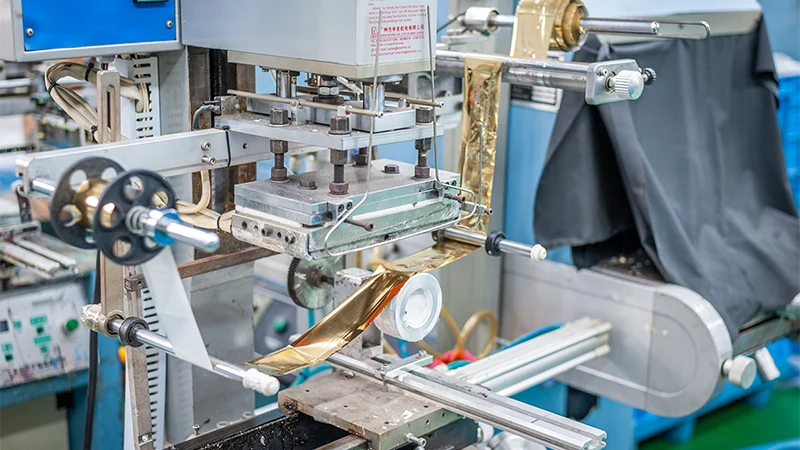
How Hot Stamping Works on Bottles, Jars, Caps and Collars
Hot stamping (or hot foil stamping) uses heat, pressure, and a metal die to transfer a very thin decorative foil layer onto the package.
In simple terms:
- A metal die is engraved with your logo or graphic.
- A roll of foil (metallic, matte, holographic, or pigmented) runs between the die and the component.
- The die is heated and pressed against the foil and the part.
- Heat and pressure cause the foil layer to release and bond only where the die contacts the surface.
Hot stamping is widely used on:
- PP/PE/PET/PETG bottles and jars (often over coatings).
- Caps, lids, shoulder collars, and jar rings.
- Glass bottles and jars, especially for fragrances and prestige skincare.
- Anodized aluminum caps and components, when the surface and foil are well matched.
When Hot Stamping Adds Real Value
Hot stamping is rarely used to carry large blocks of text. Its main value is in premium visual cues:
- Metallic gold, silver, rose gold, or colored foils.
- Mirror, satin, or brushed metallic finishes.
- Holographic or special-effect foils.
- Small icons, borders, and fine rings that catch the light on shelf.
Hot stamping makes the most sense when:
- You’re designing fragrance, prestige skincare, or limited-edition gift sets.
- You want a distinct metallic logo that stands out from printed graphics.
- You can justify the extra tooling cost and lead time for new dies and special foils.
Visual and Brand Impact: Look, Feel and Shelf Presence
Color, Opacity and Metallic Effects
Screen printing gives you:
- Opaque, semi-opaque, or transparent inks.
- Solid, flat color blocks that cover tints or dark substrates.
- Glossy, semi-gloss, or matte looks, depending on ink type and coatings.
It’s ideal for:
- Brand color blocking.
- Creating visual hierarchy between different text elements.
- Matching Pantone colors across multiple materials.
Hot stamping gives you:
- True metallic shine, mirror effects, and strong specular highlights.
- Matte metallic or brushed foils for a more subtle premium feel.
- Strong contrast against matte or frosted backgrounds.
From a branding perspective, you often see:
- Screen printing handling color and information.
- Hot stamping handling light, sparkle, and perceived value.
Clear, Frosted and Opaque Packs
On clear PET, PETG, and glass:
- Screen printing can be tuned so text is opaque and readable, while the consumer still sees the formula.
- Carefully chosen ink colors can appear to float visually above the product, especially with thicker walls.
On frosted or coated bottles:
- Matte coatings paired with high-gloss screen printing or hot stamping create strong contrast.
- Metallic hot stamping looks especially premium against soft, desaturated backgrounds.
On opaque packs:
- Screen printing provides the main structure and information.
- Hot stamping adds small highlights so the pack doesn’t look overloaded or fully covered in metal.
Engineering Differences: Materials, Surfaces and Artwork Limits
Compatible Materials for Each Process
Both screen printing and hot stamping can work on most cosmetic substrates, but not every ink or foil works on every material.
Common combinations:
- Plastics: PP, PE, PET, PETG, ABS, AS, SAN, and similar.
- Glass: clear or colored glass bottles and jars.
- Metals: anodized aluminum caps, collars, and components.
Key engineering points:
- Low-surface-energy plastics like PP and PE often need special inks or pre-treatment (flame or corona) for good screen print adhesion.
- For hot stamping, the foil adhesive system must be chosen to match the plastic or coating; a foil that bonds well to glass may behave differently on PETG or coated PP.
Print Areas, Curves and Coverage Limits
For screen printing:
- Round bottles and jars are generally straightforward if artwork stays within a defined print window.
- Strong shoulders, oval shapes, and heavy tapers reduce usable print area and can challenge registration.
For hot stamping:
- Flat and gently curved surfaces are best.
- On tight radii, sharp shoulders, or recessed areas, foil can fracture, crease, or under-transfer.
- Large, fully wrapped hot-stamped areas carry higher risk of visible defects and higher scrap rates.
Registration, Line Weight and Detail
- Screen printing requires minimum line weight and type size to avoid filling in or blurring. Very fine reverse-out text can become unreadable after curing and handling.
- Multi-color screen printing needs realistic registration tolerances; extremely tight multi-color layouts increase set-up time and reject rates.
- Hot stamping is best for bold logos and shapes. Ultra-fine lines or big reverse-out foil areas are more likely to break or lose detail.
Whenever possible, ask your supplier for minimum line weight and font size guidelines for both processes before you finalize artwork.
Cost, MOQ and Lead Time: What to Expect
Cost Drivers for Screen Printing
For screen printing, the main cost elements are:
- Screens: one screen per color and per print position.
- Set-up and changeover: time to mount screens, align artwork, and dial in squeegee and ink settings.
- Ink system: standard inks vs metallic, fluorescent, or textured inks.
- Coverage and positions: front and back prints, wraps, and large solid areas all add time and ink usage.
- So:
- A simple one-color logo on the front of a PET bottle is relatively cost-effective.
- A four-color wrap with tight registration, printed on both front and back, pushes cost and complexity up.
Cost Drivers for Hot Stamping
For hot stamping, the main cost drivers are:
- Metal dies: engraved dies for each logo, size, and position. Every new logo or size usually needs a new die.
- Foil: standard gold/silver vs custom colors or special finishes.
- Set-up and alignment: time to dial in temperature, pressure, and registration for each SKU.
- Scrap on complex shapes: difficult geometries may increase the number of rejected parts.
Because die cost is fixed, unit cost becomes more attractive when you have higher volumes or long-running SKUs.
Typical MOQ Ranges and When Small Runs Make Sense
In real projects:
- Many decorated cosmetic packs start at a few thousand pieces per SKU. The exact MOQ depends on the component, the number of colors, and process combinations.
- Hot stamping often has a higher effective MOQ than single-color screen printing because you need to amortize die cost and set-up time.
For smaller or test runs, strategies include:
- Limiting decoration to one or two screen print colors on a standard bottle or jar.
- Using a standard hot stamping die (for example, a generic metallic ring or frame) instead of a fully custom logo.
- Moving some information onto labels, while keeping direct decoration simple.
Sustainability and Recyclability Considerations
Ink and Foil Coverage vs Sorting and Recycling
Decoration is only one piece of the sustainability puzzle, but it does affect sorting and recycling:
- Heavy coverage of dark inks or foils can interfere with near-infrared (NIR) sorting, which many recycling facilities use to identify plastic types.
- Moderate coverage, especially in limited areas, is usually more compatible with established recycling streams.
It’s useful to look at independent research on the reusability and recyclability of plastic cosmetic packaging to understand how material structure, decoration, and reuse strategies interact.
Foil Stamping and Recyclability: Myths vs Current Guidance
A common myth is that any hot stamping automatically makes a package non-recyclable. Current guidance from industry groups and test programs is more nuanced:
- Hot stamping foils are very thin layers, often a small fraction of the package weight.
- Many paperboard and some plastic packaging structures with moderate foil coverage can still pass design-for-recycling tests.
- Full-body foil coverage or complex multilayer laminates are far more challenging.
Several recycling and packaging organizations publish design-for-recyclability guidelines for plastic packaging with metallic foils. These resources typically:
- Recommend coverage limits for metallics.
- Share test results for different foil and ink combinations.
- Provide practical design checklists for packaging engineers.
Designing Mono-Material and Recyclable Cosmetic Packs
If your brand is targeting mono-material designs or better recyclability:
- Use PP-only or PET-only structures where possible (for example, mono-material airless bottles or jars).
- Keep overall decoration coverage under control. Leave a reasonable portion of the surface unprinted or lightly printed.
- Limit hot stamping to small, high-impact areas instead of full wraps or very large metallic blocks.
- Check your designs against local EPR and recyclability guidelines in your main markets early in the project.
Choosing the Right Process for Different Project Scenarios
New Brands and Small Launches
When you’re launching a new brand or a small pilot range:
- Budget and MOQ are tight.
- Forecasts can change quickly after first sell-in.
In these situations, consider:
- Using one or two colors of screen printing for logo and core information on a standard bottle or jar.
- Avoiding very complex hot stamping unless it’s key to the positioning.
- If you need metallics, using a simple shared hot-stamped element that works across multiple SKUs.
Core SKUs with Stable Volume
For core items with stable or growing volumes:
- It’s often worth investing in dedicated hot stamping dies and refined decoration.
- A common configuration: Screen printing for base branding, product names, and claims. Hot stamping for a consistent metallic brand mark or neck ring across the range.
This setup balances:
- Strong shelf presence.
- Reasonable cost per unit.
- Efficient production at higher MOQs.
Premium Lines, Limited Editions and Gifting
For premium or limited-edition lines, such as holiday sets or collaborations:
- Consumers expect higher perceived value.
- Retailers often want standout shelf presence.
You can justify:
- More intensive hot stamping (for example, multiple metallic elements or specialty foils).
- Combination approaches like coated bottles + screen printing + hot stamping.
Just remember:
- Very complex decoration can increase lead time and reject rates.
- You still need to align with recyclability and EPR expectations in your target markets.
Multi-SKU Ranges and Line Extensions
When you plan a long-term portfolio with multiple SKUs:
- Use one shared hot stamping die (for example, a logo or band) and vary screen print colors or base coatings to differentiate variants.
- This reduces tooling complexity while keeping a cohesive visual identity across the line.
If you are working on skincare or serum projects that use airless technology, this comparison guide pairs well with our article on what an airless pump bottle is and how it works for a deeper look at the pack itself.
Common Mistakes and Risk Areas to Avoid
Over-Ambitious Hot Stamping Coverage on Curved Packs
One common issue is specifying large hot-stamped areas on:
- Strongly curved shoulders.
- Deep tapers.
- Sharp edges or recessed zones.
This can cause:
- Foil breaks and missing segments.
- Wrinkling or distorted edges.
- Higher scrap rates and longer set-up times.
It also increases the environmental impact of decoration without a clear gain in brand communication.
Ultra-Fine Screen-Printed Artwork and Long Legal Text
Another common mistake is trying to force:
- Very small text and ultra-fine lines into screen printing.
- All legal and multilingual copy directly onto the bottle via screen printing.
In reality:
- There’s a physical limit to how small text can be and still stay crisp and readable after printing and curing.
- Long legal copy is often better handled on a back label or secondary packaging, while screen printing focuses on key brand elements.
Ignoring Interactions with Coatings, Labels and Post-Processes
Decoration doesn’t exist in isolation. You should think about:
- How spray coatings, soft-touch finishes, or UV coatings interact with screen printing and hot stamping.
- Whether labels, shrink sleeves, or future line extensions must visually match the same look.
- The impact of filling, capping, and transport on ink and foil durability – for example, abrasion, alcohol, and climate tests.
Early conversations with your supplier reduce the risk of discovering serious issues only at line trial or launch.
From a China-Based Manufacturer’s Perspective
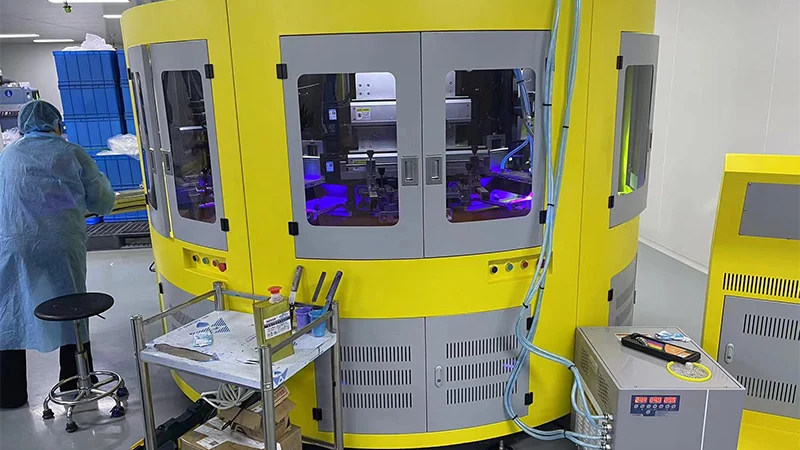
Who UKPACK Serves and Where We Ship From
UKPACK Packaging is a China-based cosmetic packaging manufacturer located in Yuyao, Zhejiang, a long-established plastics and packaging hub.
We are close to Ningbo and Shanghai ports.
We mainly serve North America, Europe, and Australia, working with:
- Beauty and personal care brands.
- OEM/ODM contract manufacturers.
- Distributors and importers.
Decoration – including screen printing and hot stamping – is a standard part of the turnkey service we provide to these markets.
Typical Decoration MOQs and Combined Process Strategies
While the exact MOQ depends on the specific component and design, in many cases:
- Decorated MOQs start from a few thousand pieces per SKU.
- Combining screen printing + hot stamping on the same pack is common for mid- to high-end projects.
From our side, we typically:
- Review your range and suggest shared print windows and shared dies where possible.
- Match decoration options to your volume forecasts, so tooling and unit cost remain realistic.
- Propose phased strategies: start with simpler screen printing while you validate demand, then upgrade decoration once volumes justify it.
Artwork, Sampling and Color Matching Workflow
For overseas clients, a typical workflow with UKPACK is:
- You share 3D drawings, dielines, and artwork files (ideally vector formats).
- Our engineering and decoration teams check print windows, line weights, and text sizes for feasibility.
- We align on Pantone references and foil or metallic specifications.
- We provide pre-production samples – pilot runs or hand samples, depending on the project.
- After you approve samples, we move to mass production with agreed tolerances and QC checks.
We’re used to working across time zones and can factor your regulatory, marketing, and sustainability requirements into the decoration plan.
Lead Times, Ports and Logistics to US/EU/AU
Adding screen printing or hot stamping will extend lead time compared with plain bottles:
- Tooling and set-up: screens, dies, foils, and line configuration.
- Sampling: producing and shipping approval samples.
- Production and QC: extra steps to control print and foil quality.
From Yuyao, finished packs typically ship via:
- Ningbo port or Shanghai port for sea freight.
- Express or air freight for urgent smaller batches.
When planning launches in North America, Europe, or Australia, it’s smart to:
- Build artwork freeze dates into your project plan.
- Allow time for sample approval before committing to full-scale production.
How to Brief Your Cosmetic Packaging Supplier
Information to Prepare Before You Ask for Quotes
To get accurate proposals for screen printing and hot stamping, prepare a brief that covers:
- Pack type and capacity (for example, 50 ml airless bottle, 200 ml shampoo bottle, 30 ml glass serum bottle).
- Material (PP, PET, PETG, HDPE, glass, aluminum cap, etc.).
- Formula type and key traits (high alcohol, essential oils, low pH, etc.).
- Target markets (US, Canada, UK, EU, Australia, etc.).
- Annual volume and first order quantity per SKU.
- Sustainability goals (mono-material, recyclability targets, refillable strategy).
- Decoration concept: Approximate artwork, number of screen print colors, and print locations. Desired metallic accents and potential hot-stamped areas.
The clearer the brief, the easier it is for a manufacturer to suggest practical decoration options and realistic MOQs.
Questions to Ask About Screen Printing vs Hot Stamping
When you talk with your supplier or with UKPACK, it helps to ask:
- What minimum line weight and font size do you recommend for screen printing and hot stamping on this specific component?
- How do you test ink and foil durability (for example, alcohol rub, abrasion, and climate tests)?
- Which ink and foil systems do you use, and do they have data on recyclability and de-inking performance?
- Are there any coverage limits or areas on this bottle/jar/cap where you advise avoiding decoration?
To keep decoration aligned with regulations, you can review the US FDA cosmetic labeling requirements for the US market and the EU Regulation 1223/2009 Article 19 labeling rules for EU/UK. Both explain what information must appear on the primary package and how legible it should be.
If you want to explore decoration methods beyond screen printing and hot stamping – such as coatings, metallization, or labeling – you can also check our in-house decoration and surface finishing capabilities for more detail.
FAQs: Screen Printing vs Hot Stamping on Cosmetic Packaging
Q1. Is hot stamping always more expensive than screen printing on cosmetic bottles?
Not always, but it usually is. Hot stamping has extra fixed costs for metal dies and specialty foils, plus longer set-up time. That means the unit price is often higher than a simple one-color screen print, especially on small runs or when you need custom dies and non-standard foils.
On higher volumes and stable SKUs, the cost gap can narrow because you spread the die cost over more units. But as a rule of thumb, if you are very cost-sensitive, start with screen printing and add hot stamping only where it clearly adds value.
Q2. Can I use both screen printing and hot stamping on the same cosmetic package?
Yes, and in practice that’s exactly what many brands do. A common approach is:
- Use screen printing for the main logo, product name, and readable information.
- Use hot stamping for a small metallic logo, border, ring, or icon that adds a premium touch.
Combining the two processes lets you keep the core graphics clear and flexible, while using hot stamping selectively where it has the biggest visual impact.
Q3. What is the typical MOQ for hot stamping compared with screen printing?
Exact numbers depend on the component and the supplier, but in general:
- Screen printing MOQs are often in the range of a few thousand pieces per SKU.
- Hot stamping MOQs are usually higher, because you need to pay for dies and set-up and you want to spread that fixed cost across more units.
If you’re planning a very small or test run, it’s more realistic to limit hot stamping or avoid it altogether, and rely mainly on one or two colors of screen printing or on labels. Once volumes stabilize, hot stamping becomes easier to justify.
Q4. Does hot stamping affect the recyclability of plastic cosmetic packaging?
Decoration always plays some role in recyclability, but hot stamping does not automatically make a package non-recyclable. Hot stamping foils are very thin layers, and at moderate coverage levels many plastic and paperboard structures can still be sorted and recycled in existing systems.
The bigger issues are:
- Very large metallic areas that may interfere with NIR sorting.
- Complex multilayer structures where foil is combined with heavy coatings or laminates.
If recyclability is important for your project, keep metallic coverage under control and check your design against local design-for-recyclability guidelines in your key markets.
Q5. Which process is better for small brands or test launches: screen printing or hot stamping?
For most small brands and test launches, screen printing is the safer starting point. It offers lower entry cost and simpler tooling, more flexibility if you need to adjust artwork after the first run, and good readability and color control even at relatively low MOQs.
Hot stamping is best introduced once you’ve confirmed the design and volumes, or when a specific SKU clearly needs a premium metallic accent to match its positioning.
Conclusion and Next Steps
Choosing between screen printing and hot stamping on cosmetic packaging is not about picking one “best” method, but about matching each process to the job it does best. Screen printing is ideal for clear branding, strong color impact, and readable information across your core SKUs, while hot stamping delivers focused metallic highlights and premium cues for the elements that need to stand out. By thinking through appearance, material, artwork complexity, MOQ, cost, lead time, and recyclability at the same time, you can build a decoration strategy that looks premium on shelf, performs well in real use, and still makes sense for your long-term product roadmap.