Different Types of Sauce Pumps Explained: A Guide to Commercial Condiment Dispensers

Founder of UKPACK, chief packaging engineer and designer with 18 years of experience, and Red Dot Award winner. I work on cosmetic packaging structure, material selection, mold feasibility, decoration processes, and leak-risk control, helping brands turn packaging ideas into reliable production-ready solutions. See my senior packaging engineer qualification.

Walk into any quick-service restaurant, café, or self-serve station and you’ll see them: sleek stainless steel pumps sitting on ketchup tubs, functional plastic syrup pumps on Monin bottles, or robust heated dispensers bubbling with nacho cheese. These are commercial sauce pumps, and they play a much bigger role than just portioning condiments. For any food service operation, they are crucial tools that directly impact profitability, operational efficiency, and customer satisfaction.
Choosing the right pump type means superior portion control, significant waste reduction, consistent product taste, and faster, more hygienic service. These factors collectively contribute to a stronger brand reputation and a healthier bottom line. For an exhaustive understanding of all facets of sauce pump technology, materials, and selection, we invite you to explore our definitive resource: Sauce Pump Guide: Everything You Need to Know.
In this article, we’ll dissect the most common types of commercial sauce pumps, the ones designed for everyday food service use, exploring where each works best and how to select the ideal solution for your specific menu and operational flow.
Manual vs. Automatic Sauce Pumps
The vast majority of commercial foodservice operations rely on manual hand-press sauce pumps. These devices are activated by a simple press or lever, drawing on mechanical action to dispense sauce. Their widespread adoption stems from their cost-effectiveness, inherent reliability, and straightforward cleaning procedures. For most restaurants, cafes, and bars, manual sauce pumps offer the perfect balance of performance and practicality.
For exceptionally large kitchens, commissaries, or highly specialized industrial food production lines, automatic pumps (driven by electric motors or pneumatic, air pressure, systems) can handle extreme volumes and offer precise, automated dispensing. However, their higher initial cost, power requirements, and increased maintenance complexity make them less common for front-of-house or typical back-of-house restaurant applications.
For approximately 90% of restaurants, cafés, and bars, manual portion-control pumps remain the most practical and efficient go-to choice. Our focus will primarily be on these widely used manual systems.
The Universal Piston Mechanism: At the Heart of Commercial Sauce Pumps
Before diving into specific types, it’s essential to understand the core engineering. Most commercial sauce pumps, regardless of their exterior design, operate on a piston (or plunger) mechanism. This involves a moving piston within a cylinder. When the pump head is pressed, the piston moves, creating pressure that forces a pre-measured amount of sauce through the nozzle. When released, a spring returns the piston, creating a vacuum that draws more sauce into the chamber, ready for the next dispense. This simple yet effective design is why these pumps excel at volumetric dispensing and consistent portioning.
Types of Commercial Sauce Pumps
Understanding the different formats available is key to optimizing your condiment station. Here are the primary types:
1. #10 Can & Jar-Lid Sauce Pumps

These pumps are engineered for direct integration with bulk packaging. They are designed to securely mount onto standard #10 cans (approximately 3 liters or 105 ounces) or common commercial jars. This direct-attach design means you can dispense condiments straight from their original, large-format container.
- Ideal for: High-volume items like ketchup, mustard, barbecue sauce, salad dressings, and mayonnaise that come in #10 cans or large jars.
- Common Applications: Fast-food restaurants, delis, back-of-house prep areas.
Pros:
- Fast & Efficient Refills: Simply open a new can and attach the pump.
- Portion Consistency: Delivers reliable, pre-set amounts with each press.
- Cost-Effective: Often a lower initial investment compared to integrated systems.
- Reduced Handling: Minimizes product transfer, potentially reducing labor.
Cons:
- Shelf Life: Once a can or jar is opened, the product is exposed to air, which can shorten its optimal shelf life. Proper storage and quick usage are crucial.
- Aesthetics: While functional, the appearance of a pump on a #10 can may not suit all front-of-house aesthetics.
2. GN Pan Pump Kits (Gastronorm Pan Sauce Pumps)

GN pan pump kits offer a modular and highly hygienic solution. These systems consist of a specialized lid and pump assembly designed to fit standard gastronorm (GN) pans (common rectangular food service containers, e.g., 1/6, 1/3, 1/2 sizes). The entire unit, including the sauce, can be easily dropped into chilled food wells or heated bain-maries, ensuring proper temperature control.
- Ideal for: Sauces requiring strict temperature control, such as ranch dressing, mayonnaise, tartar sauce, or warm gravies.
- Common Applications: Salad bars, buffet counters, sandwich prep lines, ingredient stations in commercial kitchens.
Cons:
- Superior Hygiene: The enclosed system protects sauces from airborne contaminants.
- Temperature Control: Seamlessly integrates with existing hot or cold holding equipment.
- Durability: Often constructed from robust stainless steel, making them easy to clean and sanitize.
- Modularity: Pans can be easily swapped out for cleaning or refilling without disrupting the entire setup.
Cons:
- Product Transfer: Requires transferring sauce from its original packaging to the GN pan, which adds a step to the prep process.
- Initial Cost: Generally a higher upfront investment than simple bottle-top pumps.
3. Sauce Pump Stations (Multi-Head Dispenser Systems)

Sauce pump stations are integrated systems that combine two to six or more individual pumps within a single, often stainless steel, housing. These units are designed for efficiency and organization, allowing multiple condiments to be dispensed from one compact footprint. Each pump typically operates independently, offering dedicated portion control for different sauces.
- Ideal for: Operations needing to dispense multiple condiments frequently and quickly.
- Common Applications: Fast-food counters, burger joints, hot dog stands, stadiums, and high-traffic concession areas.
Pros:
- Compact & Organized: Saves valuable counter space and presents a clean, professional appearance.
- Fast Service: Reduces bottlenecks by providing immediate access to various condiments.
- Enhanced Efficiency: Streamlines the condiment dispensing process for staff.
- Robust Construction: Built for heavy commercial use, often entirely from stainless steel.
Cons:
- Higher Upfront Cost: The integrated design usually means a greater initial investment.
- Less Flexible: Once installed, reconfiguring the layout or types of pumps can be more challenging than with individual units.
4. Bottle Syrup Pumps
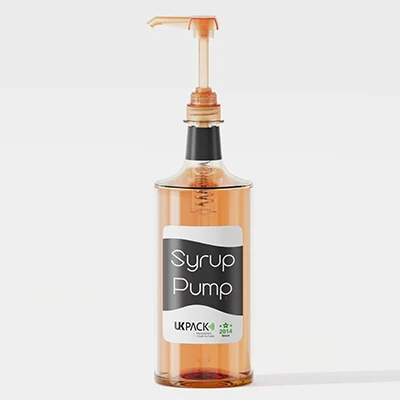
Specifically designed for beverage preparation, these pumps are built to fit the narrow necks of standard syrup bottles (e.g., Monin, Torani, DaVinci). They are engineered to deliver small, precise doses, typically between 5–10 mL (0.17–0.34 fl oz), essential for recipe consistency.
- Ideal for: Coffee syrups, flavoring for teas, cocktail mixers, and other liquid flavorings where exact measurements are critical.
- Common Applications: Coffee shops, espresso bars, cocktail bars, juice bars.
Pros:
- Exact Recipe Consistency: Ensures every drink tastes the same, minimizing waste from over-pouring.
- Brand Compatibility: Many are designed to perfectly fit popular syrup brands, preventing leaks.
- Lightweight & Easy to Use: Typically made from food-grade plastic, they are simple to operate and clean.
Cons:
- Specific Fit: Often bottle-brand or neck-size specific, limiting interchangeability.
- Low Volume: Designed for small doses, not suitable for high-volume sauce dispensing.
5. Gallon Jug & Jerry Can Pumps
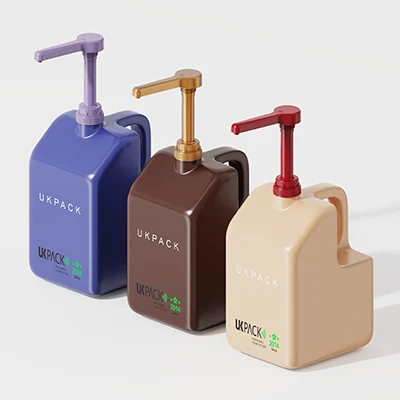
These are robust pumps designed for much larger containers, specifically 1-gallon (128 oz) jugs or larger industrial-sized “jerry cans” of condiments. They feature longer, wider dip tubes and often a more substantial pump head to handle the deeper containers and potentially higher volumes.
- Ideal for: Back-of-house prep, bulk ingredient dispensing, or operations with exceptionally high daily condiment usage.
- Common Applications: Large institutional kitchens, school cafeterias, catering services, manufacturing facilities.
Pros:
- High Capacity: Significantly reduces refill frequency, saving labor time.
- Durability: Built to withstand the demands of heavy-duty, industrial-scale use.
- Cost-Effective: Utilizing gallon jugs or jerry cans can often be more economical for bulk purchasing.
Cons:
- Bulkier Footprint: The larger containers and pumps require more storage and counter space.
- Less Aesthetic: Primarily functional, not designed for front-of-house presentation.
6. Pouch Sauce Pumps (Bag-in-Box Systems)
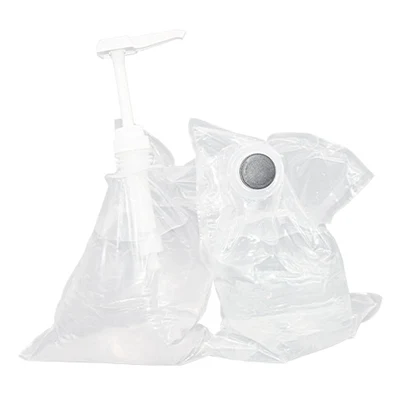
Pouch sauce pumps represent a significant leap in hygiene and efficiency. These systems connect directly to sealed, flexible sauce pouches (typically 1.5–3 liters or larger “bag-in-box” formats). The sauce remains entirely enclosed within the pouch until dispensed, never exposed to ambient air.
- Ideal for: High-volume sauces where hygiene and extended shelf life are paramount, such as nacho cheese, hot fudge, chili, or high-volume salad dressings.
- Common Applications: Quick-service restaurant (QSR) chains, cinemas, concession stands, convenience stores.
Pros:
- Superior Hygiene & Food Safety: Eliminates contamination risk by keeping sauce sealed.
- Extended Shelf Life: Reduces spoilage and waste by preventing air exposure.
- Minimal Waste: Pouches collapse as sauce is dispensed, maximizing product yield.
- Faster Changeovers: Simply swap out an empty pouch for a full one.
Cons:
- Requires Compatible Pouches: You are tied to suppliers offering sauces in this specific packaging format.
- Higher Initial Investment: The pump mechanisms can be more specialized and costly.
7. Drop-In Pump Wells
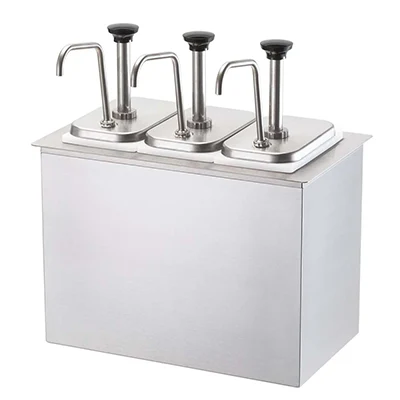
Drop-in pump wells offer a sleek, integrated solution for custom-built counter spaces. These units are installed flush with the countertop, creating a seamless and professional look. The condiment containers sit discreetly within the counter, with only the pump head and spout visible. They can be configured as ambient, chilled, or heated wells to maintain optimal sauce temperatures.
- Ideal for: Upscale self-serve stations, custom buffet lines, high-end deli counters, and operations prioritizing aesthetics.
- Common Applications: Hotel buffets, corporate cafeterias, premium salad bars, custom build-out restaurant designs.
Pros:
- Superior Aesthetics: Delivers a clean, built-in, and highly professional appearance.
- Temperature Versatility: Easily integrates with ambient, chilled, or heated wells for precise sauce control.
- Space Saving: Frees up countertop space by housing containers below the surface.
- Enhanced Hygiene: The contained design minimizes external exposure.
Cons:
- Complex Installation: Requires professional installation and custom countertop fabrication.
- Highest Initial Cost: Due to installation and specialized components.
- Less Flexible: Once installed, relocation or reconfiguration is challenging.
8. Heated Sauce Pumps
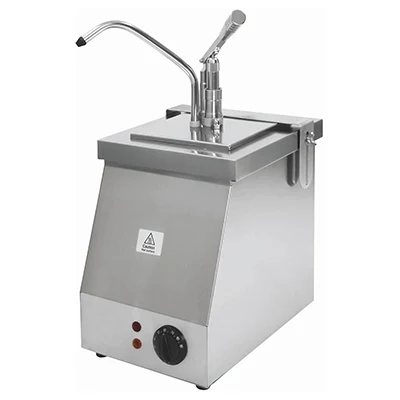
Heated sauce pumps are specialized units designed with integrated warming elements to keep viscous sauces at their ideal serving temperature. This could involve a water bath or dry heat element surrounding the sauce container. The consistent warmth prevents sauces like nacho cheese, hot caramel, or gravy from clumping, solidifying, or separating, ensuring a smooth, ready-to-dispense consistency.
- Ideal for: Any thick sauce that needs to be served warm to maintain optimal texture and flavor.
- Common Applications: Cinemas, concession stands, stadiums, dessert bars, food trucks, and anywhere warm, pourable sauces are a signature offering.
Pros:
- Optimal Consistency: Ensures smooth, easily dispensable sauce every time. Enhanced Flavor: Keeps warm sauces at their peak taste and texture.
- Prevents Waste: Reduces clumping and blockages that can lead to product loss.
Cons:
- Energy Consumption: Requires a power source and incurs electricity costs.
- Increased Maintenance: Heating elements and temperature controls require regular inspection.
- Higher Cost: More expensive than ambient pumps due to integrated heating technology.
Portion Control Options
Consistency is everything in foodservice. Precise portion control not only manages food costs effectively but also guarantees every dish, coffee, or nacho tray tastes the same, building customer loyalty. Commercial pumps typically offer several portion control mechanisms:
- Fixed Outputs: Many pumps are designed to dispense a specific, unchangeable volume with each press, such as ½ oz (approximately 15 mL) or 1 oz (approximately 30 mL). This simplifies training and ensures strict adherence to recipes.
- Adjustable Collars/Rings: Some advanced pumps feature adjustable collars or rings that allow operators to select from multiple preset sizes. A simple twist or click can change the dispensed volume, offering versatility for different menu items.
- Restrictor Nozzles: For fine-tuning flow, especially with varying sauce viscosities, some pumps use interchangeable restrictor nozzles. These small inserts can be swapped to control the flow rate and final portion, ensuring optimal performance for both thick and thin sauces.
Choosing the right portion size not only saves money by preventing over-portioning but critically maintains the consistent quality that keeps customers returning.
Matching Pumps to Sauce Viscosity
The thickness of your sauce is arguably the most critical factor in pump selection. Matching the pump’s design to the sauce’s viscosity prevents clogs, leaks, and inconsistent dispensing. To better understand the specific “thickness” of various common condiments and food products, you might find a helpful viscosity of common liquids chart invaluable when making your selection.
Low Viscosity (Thin Liquids)
For low viscosity or thin liquids, such as coffee syrups, hot sauces, soy sauce, oils, and pulp-free salad dressings, the sauces flow easily. Pumps designed for these liquids often require narrow nozzles and lighter springs to prevent drips and ensure precise, controlled dispensing. Most standard bottle-top or GN pan pumps are well-suited for this consistency.
Medium Viscosity (Standard Sauces)
Medium viscosity sauces include common condiments like ketchup, mustard, BBQ sauce, and some creamy salad dressings that flow steadily. For these standard sauces, typical piston pump assemblies are generally ideal, providing an effective balance of suction and pressure for consistent dispensing.
High Viscosity (Thick Sauces & Spreads)
High viscosity sauces, which are dense and flow slowly, include items like mayonnaise, tartar sauce, certain cheese sauces, peanut butter, and thick gravies. Pumps for these require heavy-duty construction with wider nozzles, more robust springs for stronger suction and expulsion, and often larger internal chambers. For specific items such as nacho cheese or hot fudge, heated bases are frequently essential to maintain optimal flow and prevent solidification.
Chunky Sauces (Sauces with Particles)
Chunky sauces contain visible particles, for example, salsa with diced tomatoes, certain fruit preserves, or some chunky salad dressings. Standard piston pumps typically struggle with these larger particles, which can easily clog the dispensing mechanism or even damage internal components. For such sauces, specialized pumps with extra-wide orifices or a dedicated hand-scooping method may be necessary. While some manufacturers offer pumps specifically designed for chunky ingredients, careful selection and testing are vital to ensure reliable operation.
Materials & Hygiene
The materials used in sauce pumps directly impact their durability, ease of cleaning, and adherence to food safety standards.
Stainless Steel
Stainless steel is often considered the gold standard for heavy-duty commercial food service. Stainless steel pumps are exceptionally durable, resistant to corrosion, easy to sanitize, and typically dishwasher safe. They offer a professional appearance and are frequently preferred for high-traffic areas or where pumps integrate with heated or chilled wells.
Food-Grade Plastic
Lightweight and cost-effective, food-grade plastics, primarily polypropylene (PP) or high-density polyethylene (HDPE), are excellent for syrups, cold sauces, or applications where budget is a primary concern. To ensure their safety for food contact, these plastics undergo rigorous testing and often require compliance with various certifications, such as FDA Test Reports (for the US market), California Proposition 65 (CP65) Test Reports, Phthalates Test Reports, and European Regulation (EC) No 1935/2004 Test Reports. These comprehensive material test reports confirm the safety and compliance of the food-grade plastic materials themselves. While generally easy to clean, they may not withstand the same level of heavy-duty use or high-temperature dishwashing as stainless steel over time.
Cleaning & Maintenance Best Practices
Proper cleaning and maintenance are not just about aesthetics; they are critical for food safety, extending the life of your equipment, and ensuring consistent performance.
- Daily Disassembly & Washing: At the end of each day or shift, completely disassemble the pump head, valve, and nozzle. Wash all components thoroughly with hot, soapy water. Use small, specialized brushes to clean dip tubes and narrow internal parts where sauce can accumulate.
- Sanitization: After washing, soak all parts in an approved food-grade sanitizing solution according to manufacturer instructions. This step is crucial for eliminating bacteria and preventing cross-contamination.
- Thorough Drying: Allow all components to air dry completely before reassembling. Moisture can lead to bacterial growth and affect pump performance.
- Regular Inspection: Weekly, or as part of your routine maintenance schedule, inspect O-rings, springs, and seals for wear, cracks, or damage. Replace any worn parts immediately to prevent leaks and maintain portion accuracy.
- Manufacturer Guidelines: Always consult and follow the pump manufacturer’s specific cleaning and maintenance instructions.
Tip: Consider keeping a spare pump for each type of sauce. This allows for uninterrupted service during cleaning cycles or if a pump requires unexpected maintenance.
Buying Checklist: Making the Right Investment
Before making a purchase, ask yourself these crucial questions to ensure you select the best sauce pump for your business:
- What sauces and viscosities will you be dispensing? (Thin, medium, thick, chunky?)
- What is your daily volume requirement? (Low, medium, high?)
- Where will the pump be located? (Front-of-house self-serve, back-of-house prep, coffee bar?)
- Do you have specific temperature needs? (Ambient, chilled, or heated sauces?)
- What container types are you using or willing to use? (#10 cans, GN pans, specific brand bottles, gallon jugs, pouches?)
- What portion sizes do you require for cost control and recipe consistency?
- Are the pump’s materials certified for food contact safety (e.g., FDA, EU food-grade standards)?
- What is your budget for initial purchase and ongoing maintenance/parts?
- Given the common practice of single-use or limited-use for plastic pumps, how important is the ease of initial setup and disposal for your staff?
Armed with a clear understanding of your requirements, finding the perfect pump becomes straightforward. Explore UKPACK’s extensive collection of food-grade plastic sauce pumps, meticulously designed for durability, hygiene, and precise dispensing. For tailored advice and professional solutions perfectly matched to your unique operational needs, consult with UKPACK’s experts today.
Conclusion
From the simple elegance of a syrup pump on a coffee bar to the robust efficiency of a heated nacho cheese dispenser at a stadium, commercial sauce pumps come in a diverse array of shapes, sizes, and functionalities. Picking the right one is about meticulously matching portion control capabilities, sauce viscosity, necessary temperature management, and container compatibility to your specific menu and operational workflow.
Whether your establishment needs a precise syrup pump for a bustling café, a hygienic pouch system for a high-volume QSR chain, or a sleek drop-in solution for a custom buffet, understanding these distinct types will empower you to make informed investment decisions. The right sauce pump not only saves costs by reducing waste and optimizing labor but also significantly improves consistency and keeps your customers satisfied, reinforcing your brand’s commitment to quality and efficiency.
FAQs
Q1. What portion sizes do commercial sauce pumps typically deliver?
Most commercial pumps offer a range from 5 mL (for syrups) to 30 mL (for thicker sauces) per press. Many also feature adjustable collars or internal mechanisms to fine-tune these preset volumes.
Q2. Can I use one pump for different sauces?
While technically possible, for optimal hygiene, food safety, and flavor integrity, it’s strongly recommended to dedicate one pump per sauce. This prevents cross-contamination and unwanted flavor mixing.
Q3. Do I need heated pumps for cheese sauces or hot fudge?
Yes, heated dispensers are highly recommended for sauces like nacho cheese, hot fudge, and caramel. The warmth maintains their viscosity, prevents clumping, and ensures a smooth, consistent dispense, enhancing both product quality and customer experience.
Q4. Which is better—#10 cans or pouch systems for bulk sauces?
#10 cans are simple, widely available, and often a lower initial cost. Pouch systems offer superior hygiene, extended shelf life, and minimal waste as the pouch collapses. The “better” choice depends on your specific operational priorities, sauce type, and budget.
Q5. Are stainless steel pumps always better than plastic pumps?
Not always, but generally for commercial durability. Stainless steel is more robust, corrosion-resistant, and provides a professional look, ideal for heavy use and heated/chilled applications. Food-grade plastic is lighter, more cost-effective, and perfectly adequate for lighter use, cold sauces, or syrups. Choose based on your usage frequency, presentation needs, and budget.