Sauce Pump Guide: Everything You Need to Know

Founder of UKPACK, chief packaging engineer and designer with 18 years of experience, and Red Dot Award winner. I work on cosmetic packaging structure, material selection, mold feasibility, decoration processes, and leak-risk control, helping brands turn packaging ideas into reliable production-ready solutions. See my senior packaging engineer qualification.

In foodservice, the details make the difference. Whether you run a burger stand, a family restaurant, or a catering company, condiments can either streamline your operations or slow everything down. Imagine a lunch rush with staff struggling to squeeze bottles or customers making a mess at a self-service counter. Not only does this hurt efficiency, but it also increases waste and frustrates customers.
This is exactly where the sauce pump comes in. From ketchup and mustard to mayo, dressings, and even thick sauces like BBQ, these simple but highly effective dispensers solve multiple problems at once. They reduce waste, keep stations cleaner, ensure portion control, and speed up service.
In this ultimate guide, we will cover every aspect of sauce pumps in detail. You will learn what they are, how they work, the different types available, the pros and cons of materials, size and output options, cleaning and maintenance practices, buying considerations, customization opportunities, and industry trends. Along the way, we will also highlight how sauce pumps compare with syrup pumps used in coffee shops.
By the end, you will not only know which pump fits your needs but also how to maintain it, customize it, and future-proof your foodservice operations.
What Is a Sauce Pump?

At its core, a sauce pump is an ingenious mechanical device engineered for the controlled dispensing of liquid condiments and sauces. Moving beyond the inefficiencies of squeeze bottles or ladles, it empowers staff and customers to effortlessly release a pre-measured amount of sauce with a simple press of the pump head. This seemingly minor change offers profound operational advantages.
The Benefits of Sauce Pumps
Implementing sauce pumps brings a wealth of advantages to any foodservice environment, significantly optimizing operations and enhancing the overall customer experience.
Consistency
The cornerstone of quality in foodservice. With a sauce pump, every single portion is precisely the same size, eliminating the variability of manual pouring. Imagine a bustling sandwich shop: a consistent 15 ml of mayonnaise on every sandwich ensures brand taste integrity and customer loyalty. This consistency eliminates guesswork for staff, reduces training time, and minimizes human error, ensuring a uniform culinary experience for every guest, every time.
Hygiene
In today’s health-conscious environment, hygiene is paramount. Sauce pumps ensure that hands never directly touch the product, significantly reducing the risk of cross-contamination. This keeps condiment stations cleaner, safer, and more appealing for both staff and self-serving customers, contributing to a more sanitary overall environment.
Speed
Time is money, especially during peak service hours. Sauce pumps enable staff and customers to dispense sauces far faster than traditional methods. During a lunch rush, the difference between quickly pressing a pump and struggling with a half-empty squeeze bottle can shave precious seconds off each order, collectively translating into a substantial increase in throughput and reduced customer wait times.
Cost Control
This is where sauce pumps truly shine for your bottom line. By delivering a fixed, measured portion, they drastically reduce over-pouring and waste—two significant drains on profitability. A 2025 market study confirms that pump condiment dispensers are widely adopted in commercial kitchens and fast-casual settings to improve cost-per-serving management, minimize waste, and enhance hygiene standards (GII Research, 2025). This direct impact on margins makes them an invaluable investment.
How Does a Sauce Pump Work?
While its operation appears straightforward, the underlying engineering of a sauce pump is meticulously designed for maximum efficiency, reliability, and precision. It leverages basic principles of fluid dynamics and mechanical action to deliver a consistent dose with each press.
Step-by-Step Process
- Press: When the user applies downward force to the pump head, this action compresses an internal spring and pushes a piston into a precisely sized chamber.
- Dispense: As the piston descends, it creates pressure within the chamber, forcing a fixed volume of sauce through an outlet valve and out of the nozzle. A one-way check valve typically prevents the sauce from flowing back into the container during this phase.
- Reset: Once the user releases the pump head, the compressed spring rapidly expands, pushing the piston back to its original position. This upward movement creates a vacuum, drawing fresh sauce from the container (via the dip tube) back into the chamber, priming it for the next use.
Key Components: The Anatomy of a Dispenser
- Pump Head: The ergonomic top part pressed by hand, designed for comfortable and repeated use.
- Spring: The crucial element that provides resistance during the press and facilitates the rapid return of the piston to its resting state, drawing in the next portion.
- Piston/Chamber: This precisely engineered component temporarily holds the measured volume of sauce before dispensing. Its dimensions dictate the pump’s output volume.
- Dip Tube: A long, slender tube extending from the pump head into the sauce container, responsible for drawing sauce up into the chamber.
- Nozzle/Spout: The exit point for the dispensed sauce, often designed to prevent drips and ensure a clean cut-off.
- Check Valves: Internal mechanisms (often ball valves or flap valves) that control the direction of sauce flow, ensuring it only moves towards the nozzle during dispensing and towards the chamber during refilling.
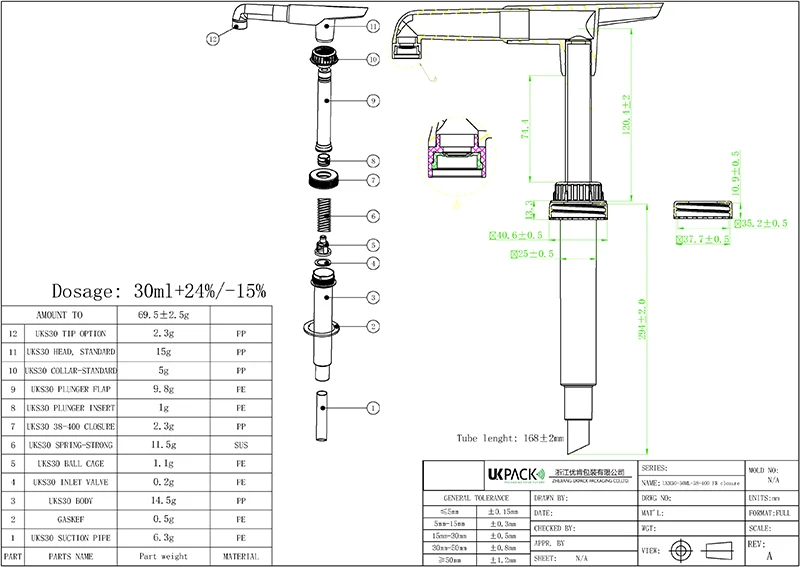
In-Depth Look at Our Engineering:
To further illustrate the robust construction and meticulous design of our sauce pumps, the detailed technical drawing above provides an exploded view of every component. This comprehensive diagram specifies not only the precise dimensions of each part but also the exact materials utilized (such as food-grade PP, PE, and durable SUS for critical functional elements). It also highlights our commitment to accurate dispensing, showcasing a consistent 30ml dosage with carefully defined tolerances. This level of engineering detail underscores our dedication to product quality, performance, and longevity.
Thin vs Thick Sauces
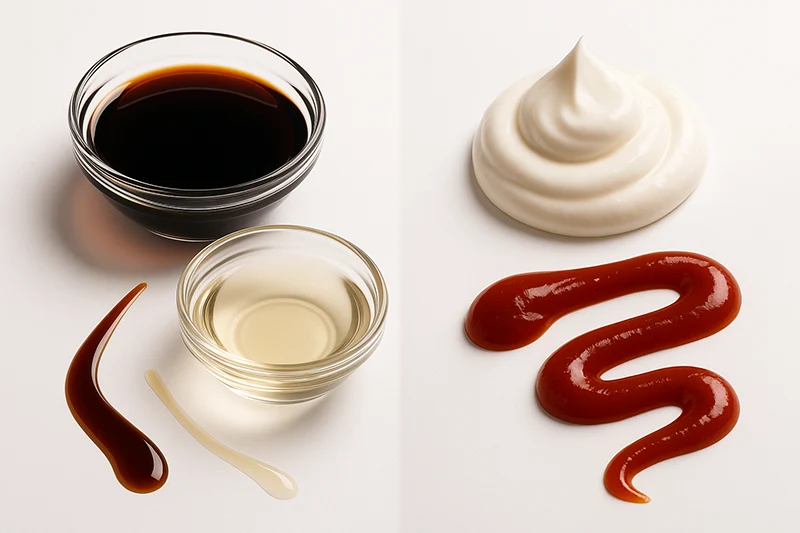
The viscosity of the sauce is a critical factor in pump design.
Thin liquids like soy sauce, vinegar, or very thin vinaigrettes require precise engineering to prevent dripping and ensure accurate small portions. These pumps often feature narrower dip tubes and nozzles, and lighter springs, designed for rapid flow and minimal resistance.
Thicker sauces such as mayonnaise, BBQ sauce, ranch dressing, or even cheese sauces, demand a more robust design. They require stronger springs to handle the greater resistance, wider dip tubes to prevent clogging, and larger internal chambers to accommodate the slower flow. Without these specific design considerations, pumps for thick sauces would either clog frequently or require excessive force to operate, leading to user frustration and potential damage. This engineering ensures optimal performance across a wide range of product textures.
Types of Sauce Pumps
The diverse landscape of foodservice demands a variety of sauce pump designs. Choosing the correct type is paramount, depending on your operational setting, projected volume, and the specific sauces you intend to dispense.
Manual Sauce Pumps

- Operation: Entirely hand-operated.
- Characteristics: These are the most common and cost-effective pumps, widely available and simple in design.
- Best For: Small to medium-volume operations, individual table service, or areas where power access is limited.
- Example: Consider a classic American diner. Each table might feature a durable manual pump for ketchup and mustard, offering customers direct, easy control. While perfectly adequate for individual servings, a large family reunion at a self-service buffet might find manual pumps too slow for rapid collective dispensing, highlighting the need for higher-volume solutions in different contexts.
- Advantages: Affordable, easy to deploy, simple to clean.
- Limitations: Slower for very high volumes, relies on user effort.
Automatic or Electric Sauce Pumps

- Operation: Motorized or sensor-based, eliminating manual effort.
- Characteristics: These pumps deliver fast, consistent, and often touchless service.
- Best For: High-volume restaurants, quick-service chains, food courts, or back-of-house prep stations where speed and consistency are critical.
- Example: In a high-volume quick-service restaurant, an automatic pump can dispense a precise amount of special sauce onto hundreds of burger buns per hour, dramatically increasing speed and reducing labor costs. This is particularly valuable during peak hours where even a few seconds saved per order translates into significant operational gains and improved order accuracy.
- Advantages: Extremely fast, highly consistent, hygienic (especially touchless models), reduces labor.
- Limitations: Higher initial cost, requires power, more complex maintenance.
Countertop Sauce Pumps

- Placement: Designed to sit securely on counters, condiment stations, or buffet lines.
- Characteristics: Often feature a stable base and are built for customer self-service.
- Best For: Buffets, salad bars, cafeterias, coffee stations, or any area requiring accessible self-service condiment options.
- Example: At a hotel breakfast buffet, countertop pumps dispensing maple syrup, fruit compotes, and various jams offer a clean, elegant, and efficient self-service solution. Customers appreciate the ease of use, and staff benefit from reduced mess and less frequent refilling compared to open bowls or ladles.
- Advantages: Customer-friendly, compact, easy to monitor and refill.
- Limitations: Takes up valuable counter space, can be prone to tampering if not secured.
Wall-Mounted Sauce Pumps
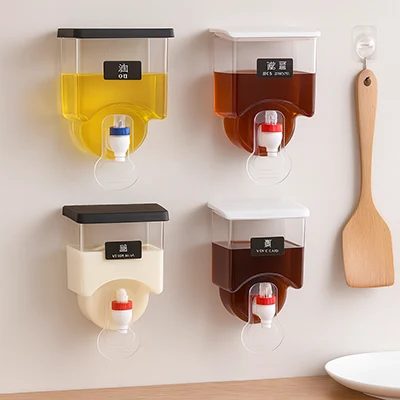
- Placement: Fixed vertically to a wall, saving counter space.
- Characteristics: Typically robust and designed for heavy use, often connecting to large bulk containers.
- Best For: Commercial kitchens, catering facilities, back-of-house prep areas, or industrial settings where space optimization and durability are key.
- Example: A large catering company might utilize wall-mounted stations to dispense gallon-sized sauces or dressings for mass food preparation, allowing staff to quickly and hygienically portion ingredients without cluttering prep surfaces.
- Advantages: Saves counter space, highly durable, reduces clutter, often compatible with large containers.
- Limitations: Less flexible placement, installation required, may require longer dip tubes for very large containers.
Bulk Container Pumps

- Compatibility: Specifically designed to fit large containers such as gallon jugs, 5-gallon buckets, or even industrial-sized drums.
- Characteristics: Heavy-duty construction, often with extended dip tubes and robust pump mechanisms to handle large volumes.
- Best For: Industrial foodservice operations, food manufacturing lines, large-scale catering, or any setting requiring efficient dispensing from very large quantities of sauce.
- Example: In a factory line producing ready-to-eat meals, bulk container pumps efficiently dispense precise amounts of sauces directly into packaging, ensuring production speed, cost control, and consistent product quality across thousands of units.
- Advantages: Extremely efficient for large batches, cost-effective for bulk purchasing, robust.
- Limitations: Too large and specialized for small operations, may require specific container neck sizes.
| Type | Best For | Advantages | Limitations |
|---|---|---|---|
| Manual Pump | Restaurants, cafés | Affordable, easy to use | Slower for high volumes |
| Automatic Pump | Large kitchens, chains | Fast, hygienic, consistent | Higher cost, needs power |
| Countertop Pump | Buffets, salad bars | Customer-friendly, compact | Takes up counter space |
| Wall-Mounted Pump | Catering kitchens | Durable, saves space | Less flexible placement |
| Bulk Pump | Manufacturers, catering | Efficient for large batches | Too large for small operations |
Related: Different Types of Sauce Pumps Explained.
Materials – Stainless Steel vs Plastic
The choice of material for your sauce pump is a critical decision that directly influences its lifespan, ease of cleaning, food safety compliance, and overall return on investment. The two primary materials are stainless steel and food-grade plastic, each with distinct advantages and ideal applications.
Stainless Steel Pumps
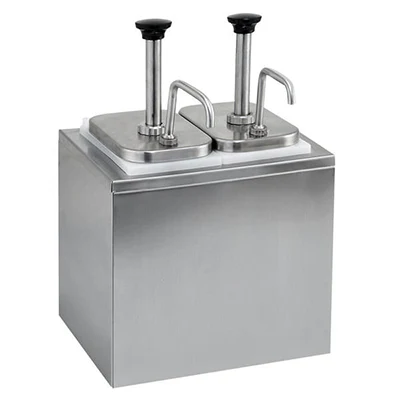
Durability: Stainless steel is renowned for its exceptional strength and resilience. These pumps are built to withstand the rigors of heavy commercial use, resisting dents, corrosion, and wear over years of continuous operation. A high-quality stainless steel pump can easily last 3-5 years or even longer with proper maintenance.
Hygiene & Cleaning: Stainless steel is non-porous, meaning it does not harbor bacteria or absorb odors and flavors. It is highly resistant to heat and a wide range of cleaning chemicals, making it exceptionally easy to sanitize. Most stainless steel pumps are entirely dishwasher safe, simplifying cleaning protocols in busy kitchens and ensuring the highest standards of food safety.
Food Safety: Stainless steel is inherently inert and does not react with acidic or alkaline condiments, preventing any chemical leaching into your sauces. Reputable stainless steel pumps are often NSF certified (National Sanitation Foundation), FDA approved (Food and Drug Administration) for food contact, and may also meet international standards like LFGB (German Food and Feed Code), providing a guarantee of safety and quality.
Appearance: Stainless steel offers a professional, sleek, and high-end aesthetic that can enhance the presentation of any condiment station, particularly in upscale dining or hotel buffet environments.
Long-Term Value: While the initial investment in stainless steel is higher, its extended lifespan and lower replacement frequency often result in a lower total cost of ownership over time. A single stainless steel pump might outlast 5-10 plastic sauce pumps, making it a more sustainable and economically sound choice for long-term operations, reducing both replacement costs and environmental impact.
Example: A luxury hotel buffet, serving hundreds of guests daily, would almost exclusively use stainless steel pumps for everything from ranch and Caesar dressings to specialty vinaigrettes, ensuring durability, impeccable hygiene, and a sophisticated presentation.
Plastic Sauce Pumps

Cost-Effectiveness: Plastic sauce pumps offer a significantly lower upfront cost, making them an attractive option for businesses with tighter budgets or those requiring a large quantity of pumps.
Weight: They are considerably lighter than their stainless steel counterparts, which can be an advantage for portability or when minimizing the weight of condiment stations.
Material Composition & Safety: Typically manufactured from food-grade polypropylene (PP) or other high-quality, durable plastics. It is crucial to ensure any plastic sauce pump is BPA-free and certified for food contact to prevent chemical leaching, especially with acidic or oil-based condiments. As a testament to our unwavering commitment to safety and quality, UKPACK provides all these essential test reports, including FDA Test Reports (for U.S. market compliance), CP65 Test Reports (for California Proposition 65 compliance), Phthalates Test Reports, and Regulation (EC) No 1935/2004 Test Reports (for European market compliance), assuring the safety and integrity of the materials we use.
Durability: While generally less durable than stainless steel, modern food-grade plastics are robust enough for many applications. However, they are more susceptible to wear, cracking, and staining over time, particularly with heavy use or exposure to strong chemicals. An average lifespan is typically 6-12 months before replacement is needed.
Cleaning: While many plastic sauce pumps can tolerate commercial dishwashers, hand washing is often recommended to prevent warping or degradation of seals, which can occur with high heat cycles.
Best Use: Best suited for lighter sauces, less frequent use, smaller operations, or as a cost-effective temporary solution.
Example: A small, independent food stall or a busy take-out counter might opt for plastic sauce pumps for high-turnover condiments like ketchup and mustard, balancing cost efficiency with sufficient durability for their operational scale.
| Feature | Stainless Steel | Plastic |
|---|---|---|
| Durability | Exceptional, 3–5 years or more, corrosion-resistant | Moderate, 6–12 months average, susceptible to wear |
| Food Safety | NSF/FDA/LFGB approved, non-reactive | Food-grade PP, BPA-free, ensure certifications |
| Cleaning | Dishwasher safe, high heat/chemical resistant | Hand wash preferred to prevent warping, less chemical resistant |
| Cost | Higher initial investment, lower long-term cost | More affordable upfront, higher long-term replacement cost |
| Aesthetic | Professional, sleek, high-end | Functional, practical, versatile in color |
| Best Use | Restaurants, catering, high-volume, upscale | Small cafés, food stalls, budget-conscious |
Sizes and Output Volumes
The portion size dispensed by a sauce pump is one of the most critical yet frequently overlooked details. It directly impacts customer satisfaction, taste consistency, and crucially, your food cost. Selecting the correct output volume can significantly influence profitability and reduce waste.
Standard Sizes
While some specialty dispensers may offer smaller volumes for very thin liquids or specific applications, typical sauce pumps designed for condiments and dressings generally start at 10 ml and extend upwards. Our standard offerings include:
- 10 ml pumps: These pumps are the workhorse for standard, portion-controlled condiments. They are perfect for delivering a precise dollop of ketchup, mustard, or mayonnaise onto a burger, sandwich, or hot dog. This size is ideal for preventing waste while ensuring customers receive an adequate, consistent amount, making them a staple in fast-food chains and casual dining restaurants.
- 15 ml pumps: Stepping up in volume, 15 ml pumps are ideal for slightly thicker sauces, richer dressings, or when a more generous serving is desired. Think of ranch dressing on a salad, a hearty Italian vinaigrette, or a substantial portion of tartar sauce for seafood. This size balances generosity with portion control.
- 20 ml pumps: Suited for bulkier applications, 20 ml pumps are excellent for dispensing larger portions of very thick sauces or when a substantial amount is required per serving. This could include rich marinara sauces for pasta, generous servings of BBQ sauce for ribs, or even thicker cheese sauces for nachos and loaded fries. For back-of-house operations, it can be ideal for quickly portioning ingredients into recipes.
- 25 ml pumps: Moving into the realm of larger commercial and industrial uses, 25 ml pumps are designed for maximum output per press. These are often found in large catering operations, food production facilities, or very high-volume self-service stations where customers are expected to take a significant amount of dressing or sauce. They are perfect for highly viscous sauces that require a substantial volume to be impactful.
- 30 ml pumps: Representing the largest standard output for sauce pumps, 30 ml pumps are typically reserved for extreme bulk dispensing. These are not commonly seen in front-of-house settings but are invaluable in industrial kitchens, large institutional catering, or food processing environments where very large, consistent portions are needed to quickly fill containers or integrate into large-batch recipes.
| Output Volume | Best For | Example Use Case |
|---|---|---|
| 10 ml | Standard condiments, precise portions | Ketchup/mustard for burgers in fast-food chains |
| 15 ml | Dressings, medium-thick sauces, generous portions | Ranch dressing at a salad bar, tartar sauce for fish |
| 20 ml | Thicker sauces, larger servings, back-of-house prep | BBQ sauce for ribs, cheese sauce for nachos |
| 25 ml | Very large portions, industrial, catering | Gravy in food manufacturing, large dressing portions |
| 30 ml | Maximum bulk dispensing, institutional | Large-batch recipe integration, institutional meal prep |
Applications and Use Cases
The adaptability of sauce pumps makes them invaluable across a wide spectrum of foodservice environments. Their ability to deliver consistent, hygienic, and cost-controlled portions translates into tangible benefits, regardless of the scale or specific demands of the operation.
Fast-Food Restaurants: The Engine of Efficiency
Standard Use: Ketchup, mustard, mayonnaise, special sauces, and tartar sauce. These high-turnover condiments are the lifeblood of fast-food.
Benefits: In a sector where speed and consistency are paramount, sauce pumps are non-negotiable. They ensure every burger, fry, and sandwich receives the exact same amount of condiment, standardizing taste and significantly reducing waste.
Case Study: A major burger chain implemented 10 ml pumps for all its front-of-house ketchup and mustard stations. Within six months, they reported a 15 percent reduction in condiment waste and a 7 percent increase in customer throughput during peak hours, directly impacting their bottom line and improving customer experience. The uniform portion also led to fewer customer complaints about “too much” or “not enough” sauce.
Buffets and Salad Bars: Elevated Self-Service
Typical Use: Ranch, vinaigrette, Italian dressings, olive oil, balsamic vinegar, and various specialty sauces.
Benefits: Sauce pumps transform self-service areas into hygienic, attractive, and user-friendly stations. They eliminate the mess and potential cross-contamination associated with open bowls and ladles, enhancing customer confidence and minimizing staff cleanup time.
Practical Tip: Pair your countertop pumps with clear, labeled containers and drip trays to maintain a clean aesthetic and capture any accidental drips, further improving the customer experience and reducing labor.
Catering Services: Precision at Scale
Use Case: Dispensing sauces, gravies, and dressings from gallon containers or larger bulk vessels at large events, banquets, and mobile catering setups.
Benefits: For catering, consistency and speed are vital when serving hundreds or thousands of guests. Sauce pumps ensure efficient and consistent portioning, maintaining food quality and presentation across all servings, even in challenging off-site environments.
Example: A large wedding caterer uses wall-mounted 20 ml pumps to efficiently dispense a rich demi-glace and a creamy mushroom sauce for plated dinners, ensuring every guest receives the same elegant presentation and flavor profile, even as dozens of plates are assembled simultaneously. This also drastically cuts down on individual bottle handling, speeding up the plating process.
Food Manufacturers: Industrial Precision and Cost Control
Typical Use: Industrial portioning of sauces, marinades, and fillings in the production of ready-to-eat meals, packaged goods, and specialty food items.
Benefits: In manufacturing, precision and speed are directly linked to profitability and product quality. Industrial-grade sauce pumps ensure exact ingredient measurements, optimizing recipes, preventing costly over-filling, and significantly increasing production line efficiency.
Data Point: A leading frozen meal manufacturer integrated 25 ml pumps into its assembly line for a new range of pasta dishes. This resulted in a 99.5% portion accuracy rate for their sauce components, reducing ingredient giveaway by 12% and leading to substantial annual savings. The consistent quality also boosted consumer trust and repeat purchases.
Cleaning and Maintenance
Maintaining impeccable hygiene is paramount in any foodservice operation. For sauce pumps, cleanliness isn’t just about meeting health codes; it’s also critical for ensuring the pump’s longevity, optimal performance, and preventing costly clogs or malfunctions. A well-maintained pump operates smoothly, dispenses accurately, and reflects positively on your establishment’s commitment to quality.
Daily Cleaning Steps: Essential for Operational Readiness
- Disassemble Pump Components: Before cleaning, carefully dismantle the pump. This typically involves separating the pump head, spring, piston, and dip tube. Ensure all parts are accessible for thorough cleaning.
- Rinse and Soak: Immediately after use, rinse all components under warm running water to remove loose sauce residue. For stubborn or dried-on sauces, soak the parts in warm, soapy water for 15-30 minutes. This helps to loosen any remaining product, especially in crevices and inside the dip tube.
- Wash Thoroughly: Using a soft brush (a bottle brush works well for dip tubes) and a food-safe detergent, scrub all surfaces of each component. Pay close attention to the inside of the dip tube, the pump chamber, and the nozzle where sauce can accumulate. Ensure no residue remains.
- Rinse with Clean Water: Rinse all parts meticulously under fresh, clean, running water to remove all traces of soap. Any soap residue left behind can affect the taste of the next batch of sauce or lead to chemical buildup.
- Air Dry Completely: Place all components on a clean drying rack or use a clean cloth to thoroughly air dry. It is crucial that parts are completely dry before reassembly to prevent bacterial growth and to avoid diluting the next batch of sauce.
Weekly or Deep Cleaning: For Extended Lifespan and Peak Performance
- Sanitize with Approved Solution: In addition to daily washing, perform a weekly sanitization. After cleaning, soak all pump components in an approved food-grade sanitizing solution (e.g., a diluted bleach solution or commercial sanitizer) according to the manufacturer’s instructions. This step is vital for eliminating any lingering bacteria or pathogens.
- Inspect for Wear and Tear: During deep cleaning, take the opportunity to visually inspect all parts. Check the spring for rust or deformation, examine seals and O-rings for cracks or hardening, and look for any signs of damage on the dip tube or pump head.
- Replace Worn-Out Parts: Do not hesitate to replace worn-out springs, seals, or damaged dip tubes. These small components are crucial for the pump’s proper function and accuracy. Proactive replacement prevents unexpected breakdowns and ensures consistent performance. Keeping a small stock of common replacement parts can save significant downtime.
Dishwasher vs. Hand Wash: Choosing the Right Method
Stainless Steel Pumps: Generally, high-quality stainless steel pumps are built to withstand the rigorous temperatures and detergents of commercial dishwashers. This offers a highly efficient and effective cleaning method, ensuring sanitization and saving labor. Always check the manufacturer’s specific guidelines to confirm dishwasher compatibility.
Plastic Sauce Pumps: Most plastic sauce pumps are best cleaned by hand. While some may claim dishwasher compatibility, repeated exposure to high heat cycles in commercial dishwashers can lead to warping, weakening of plastic, or degradation of seals over time. Hand washing helps to extend their lifespan and maintain their structural integrity. If using a dishwasher, place them on the top rack and avoid high-heat drying cycles.
Maintenance Tip: Implement a color-coding system for pumps used with different types of sauces (e.g., red for ketchup, yellow for mustard, green for ranch). This can help prevent cross-contamination and ensure that pumps are always used with their designated product after cleaning.
Buying Guide – How to Choose the Right Sauce Pump
Selecting the ideal sauce pump for your operation is a strategic decision that extends far beyond the initial price tag. A well-chosen pump can enhance efficiency, improve hygiene, control costs, and ultimately contribute to a more positive customer experience. Consider these key factors to make an informed choice.
Key Factors to Consider
1. Sauce Viscosity (Thin vs. Thick): This is perhaps the most crucial factor
Thin Sauces (e.g., soy sauce, hot sauce, thin vinaigrettes): Require pumps with tighter tolerances, often smaller dip tubes, and lighter springs to prevent drips and ensure precise, smaller output volumes.
Thick Sauces (e.g., mayonnaise, BBQ sauce, ranch, cheese sauce): Demand more robust pumps with stronger springs, wider dip tubes, and larger internal chambers to prevent clogging and allow for smooth dispensing. An incompatible pump will quickly frustrate staff and lead to frequent breakdowns.
Practical Advice: If you dispense a wide range of viscosities, look for pumps specifically designed for “thick sauces” or those with adjustable components that can accommodate different product types.
2. Material (Stainless Steel vs. Plastic)
Stainless Steel: Ideal for high-volume operations, hot sauces, corrosive ingredients, or environments where durability, long-term hygiene, and a premium aesthetic are priorities. The higher initial investment pays off through extended lifespan and lower total cost of ownership.
Plastic (Food-Grade PP): A cost-effective solution for lighter use, budget-conscious operations, or for specific sauces where frequent replacement is acceptable. Ensure it is BPA-free and certified for food contact. Its safety and integrity are further assured by essential documentation, including FDA, CP65, Phthalates, and EU food-contact compliance test reports.
3. Output Volume (10 ml, 15 ml, 20 ml, 25 ml, 30 ml)
Match the pump’s output to your desired portion size for each condiment. Over-dispensing leads to waste; under-dispensing leads to customer dissatisfaction.
- 10 ml: Perfect for standard condiments like ketchup, mustard, and mayo on individual servings.
- 15 ml: Great for salad dressings, slightly thicker sauces, or when a more generous individual portion is preferred.
- 20 ml: Suited for hearty BBQ sauces, thicker gravies, or back-of-house portioning for recipes.
- 25-30 ml: Primarily for bulk dispensing in catering, industrial manufacturing, or large institutional settings.
4. Usage Frequency and Environment
Daily Heavy Use: For bustling fast-food chains or high-volume buffets, invest in heavy-duty, commercial-grade pumps, typically stainless steel, designed for continuous operation and easy maintenance.
Occasional Use: For smaller cafes or specialty condiment stations, a durable plastic sauce pump might suffice, offering a good balance of cost and performance.
Outdoor/Mobile: Consider material resistance to weather and ease of portability.
5. Food Safety Certifications
Always prioritize pumps with recognized food safety certifications. Look for NSF, FDA approval, or international equivalents like LFGB (for European markets). These certifications guarantee that the materials are safe for food contact and that the pump design meets stringent hygienic standards, crucial for passing health inspections and ensuring customer safety. Adhering to ServSafe standards in your operation also implies using certified equipment.
6. Cleaning Needs and Ease of Maintenance
Dishwasher Safe: If your operation relies heavily on commercial dishwashers for efficiency, stainless steel pumps are generally the best choice.
Easy Disassembly: Regardless of material, choose pumps that can be easily disassembled into a few components for thorough cleaning, minimizing labor time and ensuring all parts can be properly sanitized. Complex designs can lead to forgotten crevices and bacterial buildup.
7. Container Compatibility
Ensure the pump’s dip tube length and collar size are compatible with your existing bulk sauce containers (gallon jugs, buckets, pouches). Many manufacturers offer pumps with adjustable dip tubes or various collar adapters to fit a range of container types.
8. Brand Reputation and Support
Purchase from reputable manufacturers and suppliers who offer clear product specifications, strong customer support, and readily available replacement parts. This ensures reliability and peace of mind.
Customization and OEM/ODM Options
For food brands, restaurant chains, or distributors looking to differentiate their products and enhance their brand identity, a sauce pump can be far more than just a functional dispenser. It becomes an extension of the brand experience. Customization and working with Original Equipment Manufacturer (OEM) or Original Design Manufacturer (ODM) partners offer powerful opportunities to achieve this.
Customization Options: Elevate Your Brand
Logo Printing for Brand Recognition: Imprint your company logo or specific product branding directly onto the pump head or body. This subtle yet effective branding reinforces your identity every time a customer dispenses sauce, transforming a utilitarian item into a marketing tool.
Brand Colors for Consistency: Match the pump’s color to your brand guidelines or product packaging. This creates a cohesive and professional look across all your touchpoints, from the kitchen to the customer’s table. Imagine a specific shade of red for your signature hot sauce pump.
Ergonomic Pump Heads for Enhanced User Experience: Design a unique, comfortable, and easy-to-press pump head. An ergonomically designed pump can significantly improve user satisfaction, especially in self-service environments or high-volume kitchens where repeated use is common. This subtly communicates attention to detail and user comfort.
Outputs for Precision Portion Control: While standard pumps offer fixed outputs, the choice of a specific output volume (e.g., 10 ml, 15 ml, 20 ml) during the customization process ensures precise portion control tailored to your exact product and serving requirements. This allows for dedicated pumps designed for consistent, specific portion sizes, eliminating guesswork and maintaining uniformity.
Custom Packaging for Retail-Ready Presentation: For pumps sold as standalone products or bundled with specialty sauces, custom packaging (e.g., branded boxes, blister packs) can elevate perceived value and make them retail-ready, attracting consumers on store shelves.
Specialized Materials or Finishes: Beyond standard stainless steel or plastic, explore unique finishes (e.g., matte, brushed, specific textures) or even specialized food-grade materials for niche applications, enhancing both aesthetics and function.
OEM/ODM Process: Bringing Your Vision to Life
Working with an experienced OEM/ODM partner allows you to develop a sauce pump that perfectly meets your unique specifications, from design to functionality. This process is ideal for creating proprietary designs, large-scale branded solutions, or highly specialized dispensing systems.
- Concept and Requirement Collection: This initial phase involves detailed discussions about your vision, specific needs, target audience, sauce type, desired output volumes, materials, branding requirements, and budget. The more detail provided, the more accurate the design.
- 3D Design and Mockups: Based on the requirements, the OEM/ODM team develops detailed 3D renderings and technical drawings. This allows for visual review and iterative feedback, ensuring the design aligns perfectly with your expectations before physical prototyping begins.
- Sample Approval and Testing: Prototypes are manufactured for your evaluation. This critical stage involves rigorous testing for functionality (e.g., pump output accuracy, ease of use, durability with your specific sauce viscosity), material safety, and aesthetic appeal. Any necessary adjustments are made here.
- Mass Production: Once the sample is approved, the design moves into full-scale manufacturing. Quality control measures are implemented throughout the production process to ensure every unit meets the agreed-upon standards.
- International Delivery and Logistics: The final products are packaged and shipped to your specified locations, often with options for global logistics and customs clearance support.
Case Study: A gourmet organic dressing brand wanted a unique pump that not only dispensed their thick vinaigrettes accurately but also conveyed their natural, high-quality image. They partnered with UKPACK to develop a pump with a custom-designed, bamboo-textured pump head and a specific output volume of 15 ml, ensuring both aesthetic alignment and functional precision. This distinctive pump became a key differentiator in their retail packaging, enhancing brand perception and customer experience.
FAQ Section
Q1: Why is my sauce pump not working?
Common issues include clogging (especially with thick sauces), a worn or damaged spring, a blockage in the dip tube, or air trapped in the system. Thorough cleaning, inspecting for damage, and ensuring proper reassembly usually resolves the issue. If parts are worn, replacement is often necessary.
Q2: Are sauce pumps dishwasher safe?
High-quality stainless steel pumps are typically dishwasher safe. However, plastic sauce pumps are generally best cleaned by hand to prevent warping or degradation from high heat and harsh detergents, which can compromise seals and functionality over time. Always check the manufacturer’s specific instructions.
Q3: Can one sauce pump be used for multiple condiments?
Yes, but absolutely thorough cleaning and sanitization are essential between different condiments to prevent cross-contamination, flavor transfer, and allergic reactions. It’s often recommended to have dedicated pumps for specific sauces, especially for allergens.
Q4: How long do sauce pumps last?
The lifespan varies significantly by material and usage. High-grade stainless steel pumps can last 3 to 5 years or even longer with proper maintenance. Food-grade plastic sauce pumps typically have a shorter lifespan, averaging about 6 to 12 months, especially with heavy use. Regular maintenance extends the life of any pump.
Q5: Where can I buy wholesale sauce pumps?
You can purchase wholesale sauce pumps directly from trusted manufacturers and specialized foodservice equipment suppliers, such as UKPACK. Look for companies that provide food safety certifications (NSF, FDA, LFGB), offer a range of materials and output volumes, and provide custom or OEM options for branding.
Q6: What sauces can be dispensed with pumps?
A vast array of sauces can be dispensed, including ketchup, mustard, mayonnaise, BBQ sauce, hot sauce, salad dressings (ranch, Italian, vinaigrette), tartar sauce, cheese sauce, gravies, soy sauce, oils, and various specialty condiments. The key is selecting a pump designed for the specific viscosity of your sauce.
Q7: How do I know if my pump is food safe?
Look for clear labeling and certifications from recognized food safety organizations such as NSF International, the U.S. Food and Drug Administration (FDA), or international equivalents like LFGB (Germany). These certifications ensure the materials are safe for food contact and the design meets hygienic standards.
Conclusion
Sauce pumps may appear to be minor components in the grand scheme of foodservice operations, but as this ultimate guide has demonstrated, their impact is anything but trivial. They are indispensable tools that significantly enhance efficiency, drastically reduce waste, improve overall hygiene, and ensure unparalleled consistency in every serving. For restaurants, catering services, and food manufacturers alike, investing in the right sauce pump is a strategic decision that directly contributes to profitability, operational excellence, and an elevated customer experience.
From understanding the intricate mechanics and diverse types to making informed choices about materials, output volumes, and embracing future-forward trends, you now possess the comprehensive knowledge to optimize your condiment dispensing systems. By prioritizing durability, hygiene, and precision, you can transform a simple squeeze into a seamless, cost-effective, and professional operation.
As a professional sauce pump manufacturer and wholesale supplier, we are committed to providing top-tier dispensing solutions. We offer a comprehensive range of high-quality stainless steel and food-grade plastic sauce pumps, alongside extensive OEM/ODM capabilities to craft custom solutions perfectly tailored to your unique business needs and brand identity.
Explore our complete collection of sauce pumps today to find the perfect fit for your business. Or, if you’re ready to innovate and customize, contact us for a free consultation with our experts. Let us help you elevate your foodservice operations to new heights of efficiency and quality.