Soft Touch Finishes in Cosmetic Packaging: Ultimate Guide

Founder of UKPACK, chief packaging engineer and designer with 18 years of experience, and Red Dot Award winner. I work on cosmetic packaging structure, material selection, mold feasibility, decoration processes, and leak-risk control, helping brands turn packaging ideas into reliable production-ready solutions. See my senior packaging engineer qualification.
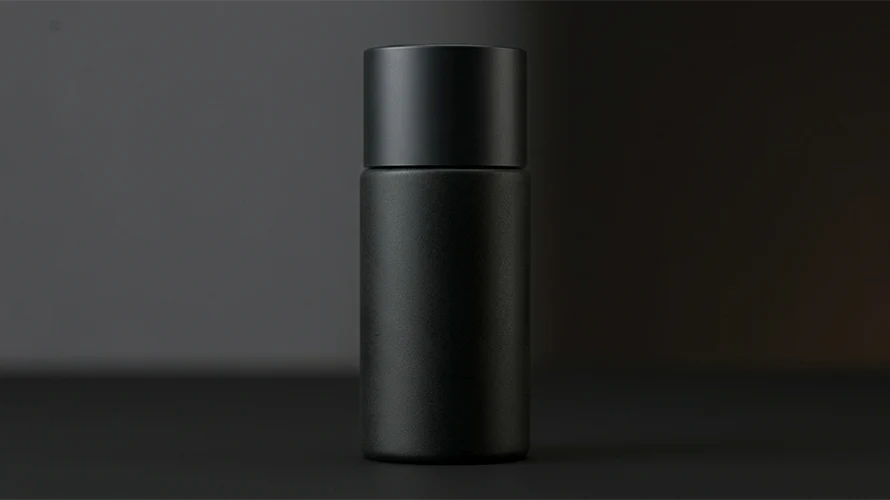
Soft-touch is widely used in cosmetic packaging to create a softer, more premium hand feel. But in real packaging development, it is more than a visual upgrade. It can involve different coating systems, material routes, and production methods, which means the right soft-touch solution depends on how the effect is created, where it is applied, and how the packaging will actually be used.

What Is a Soft-Touch Finish?
A soft-touch finish is a surface treatment that gives packaging a softer, finer, and more rubber-like hand feel than a standard smooth or matte surface. It is often used to create a low-gloss, more premium tactile effect on cosmetic bottles, jars, caps, tubes, and cartons.
In cosmetic packaging, soft-touch is commonly used when a brand wants the pack to feel more premium, more sensory, and more intentional in hand. It is especially suitable for skincare, prestige beauty, wellness, and gift-oriented product lines where the first physical impression of the package matters almost as much as the formula itself.
A standard matte finish mainly changes the way a surface reflects light. A soft-touch finish goes further by changing the way the surface feels during handling. Two packs may both look matte from a distance, but one may feel dry and plain while the other feels velvety, cushioned, or lightly rubberized in hand.
That distinction matters because soft-touch is usually chosen for sensory positioning, not only for shelf appearance. In practical packaging development, it is often a hand-feel decision as much as a visual one.
How Soft-Touch Effects Are Actually Achieved in Packaging
In packaging production, soft-touch is not limited to one single process. Depending on the component, substrate, and target hand feel, the effect can be created through spray coating, TPE overmolding, material-layer design, or ink-based surface treatment.
Soft-touch may sound like one finish, but in production it can refer to several different routes. Some create a stronger rubber-like touch. Some deliver a finer and milder tactile effect. Some are based on coating chemistry. Others are built into the material structure itself.
Spray-applied soft-touch coatings
In many packaging projects, soft-touch is essentially a rubber-like coating applied through a spray process. Like ordinary spray decoration, it follows a production route, but the final result depends much more on film build, curing behavior, and formulation design.
In practical use, two common spray routes are traditional baking-type soft-touch coatings and UV-curable elastic coatings.
Baking-type soft-touch coatings
For a traditional baking-type soft-touch system, the coating usually needs a relatively high film build in order to create a clear rubber-like tactile effect. In one practical process route, the dry film target is often 35 μm or above, followed by a standing or leveling period of around 15 minutes, then low-temperature curing at about 60°C for roughly 2 hours. After drying, the surface develops the more obvious rubber-like hand feel.
The tactile effect does not come from color alone. It comes from how the coating builds, settles, and cures on the actual part.
UV-curable elastic soft-touch coatings
UV elastic soft-touch coatings can create a similar tactile direction through a different curing path. In one practical approach, the spray film build is also kept at 35 μm or above, followed by a short standing period of about 5 to 8 minutes, after which the surface is directly cured by UV exposure.
Compared with baking-type systems, the main difference is not the tactile goal but the curing logic. One relies on leveling plus thermal curing, while the other relies on a shorter leveling window followed by UV curing.
What creates the soft-touch feel in the coating itself?
In coating-based soft-touch systems, the final hand feel is largely influenced by the balance of resins and flexibilizing additives in the paint formulation. The tactile effect does not come from matte appearance alone. It comes from how the coating chemistry, elasticity, film build, and curing behavior work together.
For that reason, a soft-touch finish should be treated as a process-controlled tactile system rather than as a simple color spray. A pack may look acceptable visually but still fail to deliver the intended hand feel if the coating build, leveling, or cure is not right.
TPE overmolding for soft-touch parts
Beyond spray coating, soft-touch can also be achieved through TPE overmolding on injection-molded parts. In this route, the softer tactile effect is created by the overmolded material itself rather than by a paint layer applied afterward.
This is a different development path. Instead of adding a tactile coating to the finished surface, the soft-touch quality is built into the structure of the part. From a packaging engineering standpoint, that makes it a material-and-structure solution rather than only a decoration solution.
Material-based soft-touch outer layers
In some packaging formats, the outer layer itself can be made from a soft-touch material, allowing the tactile effect to come directly from the material layer. Once the tactile feel is built into the material layer, the behavior of the surface may differ from a sprayed coating in both feel and performance.
This is not simply a coating alternative. It is a different process route with its own cost structure, processing logic, and handling behavior.
Soft-touch materials for tubes
In tube applications, the soft-touch effect can also come from the material system itself. Practical examples used in the industry include formulations such as PE Q300 + 1810G or Basell PE Q300-F when a stronger soft-touch tube feel is required.
For most brand owners, the main takeaway is not the resin code itself. The more important point is that in some tube projects, the tactile effect is achieved through the resin route rather than only through post-print or post-coating decoration.
Soft-touch inks for tubes and flexible packs
Tube packaging can also use soft-touch inks to create a softer and finer tactile surface. However, in practical use, the hand feel is usually more delicate and less intense than what can be achieved with a dedicated soft-touch material route.
This distinction matters in real development. Not every project needs the strongest possible rubber-like touch. Some brands only want a mild tactile upgrade. In those cases, an ink-based route may be enough. But if the target is a stronger, more obvious soft-touch sensation, material-based solutions usually perform more clearly.
Not All Soft-Touch Solutions Feel the Same
Different soft-touch routes do not create exactly the same hand feel. In practical packaging development, material-based soft-touch structures often feel stronger than ink-based effects, while coating-based solutions usually sit somewhere in between depending on formulation, film build, and application quality.
For that reason, brands should not approve a “soft-touch” concept based on wording alone. The actual route being used and the real sample in hand matter much more than the label itself.
Technical note: Exact process conditions can vary depending on formulation, substrate, equipment, line conditions, and supplier system, so the figures above should be treated as practical reference points rather than universal production standards.
Where Is Soft-Touch Used in Cosmetic Packaging?
Soft-touch can be used on both primary and secondary packaging, but the reason for using it is not always the same. On primary packaging, it is usually chosen to improve hand feel and sensory identity. On secondary packaging, it is often chosen to strengthen presentation and unboxing.

Bottles
Soft-touch can work well on cosmetic bottles when the brand wants the surface to feel more premium, more tactile, and less standard than an ordinary sprayed bottle. It is especially useful for skincare, serum, lotion, and body care lines where the bottle is expected to create a refined first impression in hand.
Jars
Jars are naturally compatible with soft-touch because they are often used for richer skincare products such as creams, masks, balms, and treatment products. A soft-touch jar can reinforce the perception of softness, care, and premium product experience.
Because jars are often held directly in the hand for opening and closing, the tactile effect can be more noticeable than on some other formats.
Caps and closures
Caps and closures are common targets for soft-touch because they are the first part many users touch. But they also need closer review because they are high-contact components.
A finish that works well on a bottle body may not behave the same way on a cap that is twisted, snapped, pressed, or carried around every day. This is one of the most common areas where appearance-led approval and real-use performance can diverge.
Tubes and sticks
Tubes and stick formats can also use soft-touch effects, especially when the goal is to add a more refined tactile layer to an otherwise simple pack format. Depending on the target effect, this may come from a coating, a soft-touch ink, or the tube material route itself.
These formats are often portable and frequently handled, so the finish should be evaluated with use intensity in mind. A mild tactile effect may be more practical than a stronger one in some cases.
Cartons and secondary packaging
Soft-touch on cartons and outer boxes is often judged more by presentation than by long-term wear. In these applications, the finish is often used to improve first impression, premium feel, and unboxing experience.
This is one reason soft-touch is widely accepted on secondary packaging. The surface can deliver strong sensory value without necessarily facing the same repeated handling pattern as a primary component.
Not every component should be treated the same way
A bottle body, a high-contact closure, and an outer carton are usually reviewed differently because the way they are touched and handled is not the same.
That means the question is not only whether a brand likes soft-touch. The real question is where the finish should be used, where it should be lighter, and where it may be better avoided.
Why Beauty Brands Choose Soft-Touch Finishes
Beauty brands choose soft-touch finishes because they can make packaging feel more sensory, more premium, and more intentional in hand. A simple pack can feel more considered without relying on high gloss or heavy decoration.
This kind of finish works especially well in skincare, prestige beauty, wellness, and gift-oriented product lines where the first handling experience supports the brand story.
Where Soft-Touch Works Best — and Where It Often Causes Problems
Soft-touch does not perform the same way across every packaging component. In some places it adds strong value. In others it introduces more risk than benefit.
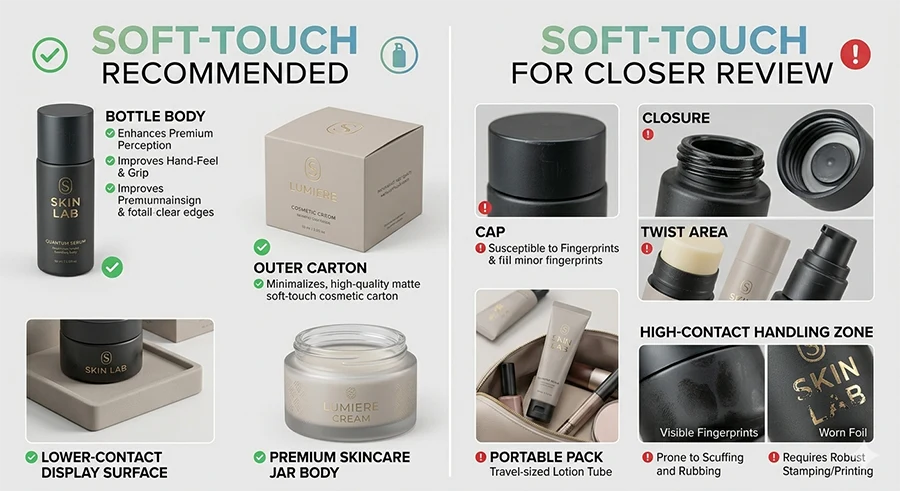
Lower-contact surfaces often offer more design freedom
Bottle bodies, selected display panels, and outer cartons usually offer more room to use soft-touch effectively because they are not always the highest-friction areas of the packaging system.
These surfaces are often better candidates when the goal is to maximize tactile presentation while keeping wear risk more manageable.
High-contact areas need closer review
Caps, closures, pressing areas, and twist zones need more careful review. These are the parts users touch most often, and they are also the places where wear, scuffing, visible rubbing, and appearance change may show up earlier.
This does not mean soft-touch should never be used there. It means those parts should not be approved by the same logic used for a lower-contact bottle body or carton surface.
Portable formats may reveal wear faster
Travel packs, bag-friendly formats, gym or outdoor use products, and daily portable items are more likely to experience rubbing and repeated contact. In these cases, the sensory gain of soft-touch has to be weighed more carefully against practical durability.
Secondary packaging is judged differently from primary packaging
On cartons, soft-touch is often judged first by presentation. On primary packaging, it is usually judged by handling.
A carton may only need to look and feel premium through the unboxing stage, while a bottle or cap may need to maintain its appearance through weeks or months of direct use.
What Brands Often Miss When Approving a Soft-Touch Finish
Many approval problems happen not because soft-touch is a bad finish, but because it is approved too simply.
Approving by feel alone
Brands often respond to soft-touch first through hand feel. That is natural. But a good-feeling sample is not always enough. The finish also needs to be reviewed for compatibility with decoration, handling, and production conditions.
Judging only a fresh sample
A fresh approval sample does not always reflect how the finish will look after printing, assembly, packing, transport, and repeated handling.
Ignoring the effect of dark colors
Dark soft-touch surfaces often require closer review because fingerprints, rub marks, and handling traces tend to become more visible. The same finish can behave very differently in black, charcoal, cream, or light beige.
Color choice is not only a design matter. It is also part of finish performance.
Treating decoration as a separate decision
Soft-touch should not be approved first and decoration reviewed later as if the two were unrelated. In real packaging development, screen printing, hot stamping, labels, and rub resistance often need to be assessed together with the finish.
Assuming all soft-touch finishes behave the same way
A coating-based soft-touch, a material-based soft-touch, a TPE overmolded part, and a soft-touch ink do not create the same result. Brands that use one term for all of them often underestimate the difference between routes.
What Are the Main Performance Risks of Soft-Touch Packaging?
Soft-touch can create strong sensory value, but it also introduces practical performance questions that should be reviewed early.

Scratch and scuff visibility
Some soft-touch surfaces are more likely to show visible rubbing, scuffs, or scratches than standard finishes, especially in darker colors or high-contact areas.
Fingerprint and stain pickup
Soft-touch can make fingerprints and handling marks easier to see on some colors and surface systems. This is one of the most common reasons brands rethink color or placement.
Wear on high-contact parts
A finish may perform acceptably on a bottle wall but wear faster on a cap, closure, or frequently pressed area. Component-specific review matters.
Chemical and alcohol exposure
If the product or its use environment involves contact with alcohol, oils, residue, or active formulas, the finish should be reviewed accordingly. Hand feel alone is not enough.
Decoration adhesion and rub resistance
Printing, foil, and label compatibility can all be affected by the soft-touch route being used. The finish and decoration system need to be developed together.
Mass-production consistency
A soft-touch concept that works in theory still needs to be repeatable in production. Consistency across batches, components, and color versions is part of the real packaging decision.
For many projects, the real question is not whether soft-touch looks premium on day one, but whether it still looks controlled after handling, shipping, and daily use.
How Does Soft-Touch Compare With Matte, Rubberized, and Material-Based Alternatives?
Soft-touch is often discussed too broadly. It is more useful to compare it with nearby alternatives.
Soft-touch vs standard matte finish
A standard matte finish focuses mainly on visual gloss reduction. Soft-touch adds more tactile character. If the project only needs a low-gloss look, matte may be enough. If the project needs a stronger hand-feel signal, soft-touch may be the better route.
Soft-touch vs rubberized feel
Some soft-touch finishes feel lightly rubber-like, but not all rubberized surfaces feel refined or elegant. Soft-touch usually aims for a cleaner and finer tactile impression rather than a heavy rubber effect.
Coating-based soft-touch vs material-based soft-touch
Coating-based soft-touch is created through surface treatment. Material-based soft-touch is created through the material system itself. They may serve a similar design goal, but they are not interchangeable in process logic or tactile outcome.
Soft-touch ink vs soft-touch material
In tube applications, soft-touch inks can create a finer and more subtle tactile effect, but they usually do not feel as strong as dedicated soft-touch material structures. That difference is important when a brand is choosing between mild sensory refinement and stronger tactile impact.
How to Choose the Right Soft-Touch Route for Your Packaging Project
There is no single best soft-touch route for every pack. The right choice depends on the component, the desired hand feel, the substrate, the decoration plan, and the expected use conditions.
A coating-based route is often suitable when the component already has a stable structure and the goal is to add a controlled tactile layer to the finished surface. A material-based route may be a better fit when the tactile effect is meant to be part of the component itself. TPE overmolding may be more suitable when the soft-touch area needs to be integrated into a molded part, while softer ink systems can work when the target is a lighter tactile refinement rather than a strong rubber-like feel.
The finish should be selected as part of the full packaging system, including structure, decoration, use intensity, and approval standards.
A Supplier’s Checklist for Developing Soft-Touch Cosmetic Packaging
Before final approval, brands should review more than the visual sample:
- Confirm the substrate first
- Define which component will carry the finish
- Decide whether the effect should come from coating, material, overmolding, or ink
- Review dark and light color behavior separately
- Check high-contact parts for wear risk
- Review printing, foil, or label compatibility
- Check handling and transport exposure
- Approve with physical samples, not visuals alone
A practical review should focus on whether the finish remains workable through decoration, production, shipment, and daily handling.
Why Work With UKPACK on Soft-Touch Packaging Development?
At UKPACK, we review soft-touch packaging together with component structure, substrate, decoration route, and production feasibility rather than treating it as a standalone styling request.
That helps brands make earlier decisions on where the tactile effect should be applied, which process route fits the pack best, and how the finish will work with printing, hot stamping, or other surface decoration.
We can support soft-touch packaging development across cosmetic bottles, cosmetic jars , tubes, sticks, and other packaging formats through:
- packaging structure review
- finish and decoration matching
- sample development before mass production
- production-oriented support from concept to launch
If you are developing a tactile packaging concept, UKPACK can help evaluate the finish together with the packaging system instead of treating it as an isolated surface effect. You can also learn more about our surface finishing capabilities and 3F Services for concept development, render review, and production-oriented sampling.
FAQs
1. What is a soft-touch finish in cosmetic packaging?
It is a surface effect designed to give packaging a softer, finer, and more rubber-like hand feel than a standard smooth or matte surface.
2. Is soft-touch always a coating?
No. It is often created through coating, but it can also be achieved through TPE overmolding, material-based outer layers, or soft-touch inks in some applications.
3. What is the difference between soft-touch and matte finish?
Matte mainly changes visual gloss. Soft-touch changes both visual softness and tactile feel.
4. Can soft-touch be achieved without spray coating?
Yes. Some packaging parts use overmolding or dedicated material layers rather than a sprayed coating.
5. Is soft-touch suitable for plastic bottles and jars?
Yes, but suitability depends on the packaging structure, the use area, the contact frequency, and the selected process route.
6. Do soft-touch inks feel the same as soft-touch materials?
Usually not. Soft-touch inks often create a milder effect, while material-based soft-touch solutions usually feel stronger.
7. Does soft-touch work well on caps and closures?
It can, but caps and closures need closer review because they are high-contact parts.
8. What should brands check before approving a soft-touch finish?
They should check the actual process route, component placement, color behavior, decoration compatibility, handling risk, and physical sample performance.
Final Thoughts
Soft-touch in cosmetic packaging is not one fixed finish and not one fixed process. It can be created through coating, overmolding, material structure, or ink-based surface treatment depending on the packaging format and tactile target.
That is why soft-touch should be evaluated as a packaging development decision rather than a styling keyword. The more clearly a brand understands how the effect is created, where it will be used, and how it will perform in real handling, the easier it is to choose a route that looks right, feels right, and remains workable in production.