Acrylic Airless Jar with Mirror for Foundation 15g 30g
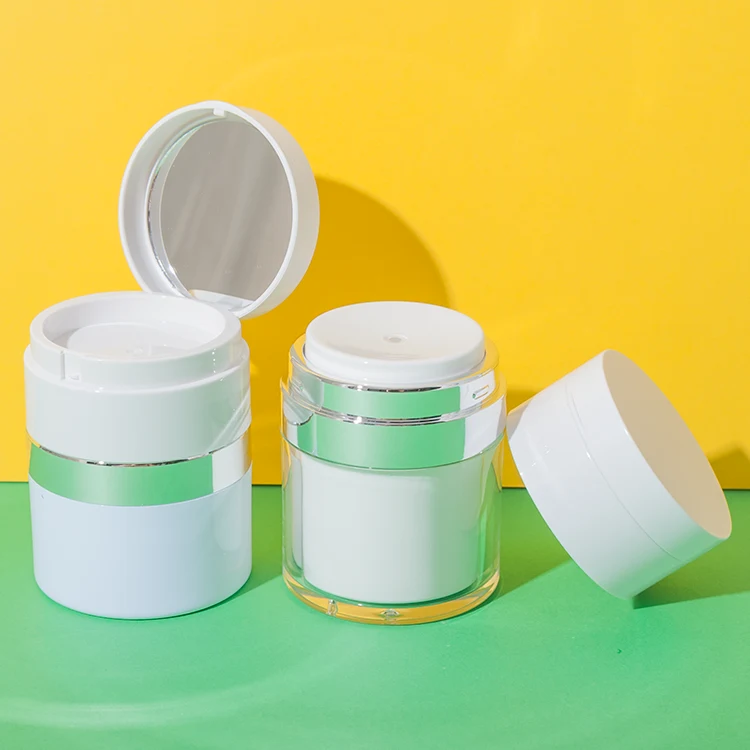
This airless jar with mirror is developed for foundation, concealer, primer and other cream-based makeup products. Available in 15g and 30g capacities, it combines an acrylic outer body, press-top dispensing plate and integrated mirror within the cap assembly. The dispensing structure releases a controlled portion of formula without requiring users to place their fingers inside the product chamber. Both sizes share a 53mm diameter, supporting a consistent packaging series for different base-makeup formats. Custom colors, metallized details, printing and other decoration options can be evaluated for cosmetic brands, private-label programs and coordinated makeup collections.
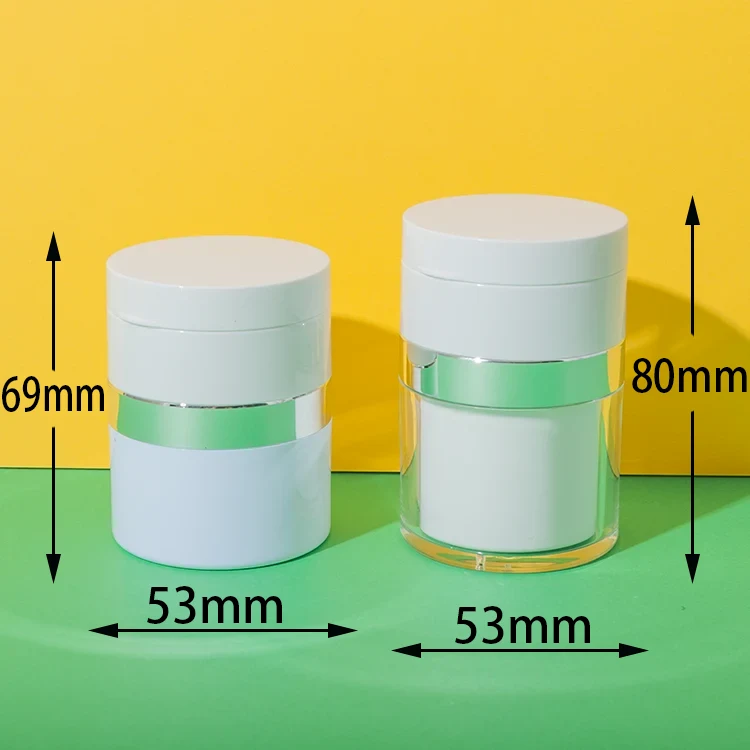
| Capacity | Material | OD | Heght |
|---|---|---|---|
| 15g | Acrylic outer sleeve, PP inner body | 53mm | 69mm |
| 30g | Acrylic outer sleeve, PP inner body | 53mm | 80mm |
Product Description
This airless jar with mirror is designed for cosmetic brands developing cream foundation, concealer, primer and other complexion products that require controlled dispensing and an integrated application mirror. The package combines an acrylic outer body, an internal formula chamber, a press-top dispensing plate and a mirror built into the hinged cap assembly. Available in 15g and 30g capacities, it provides a coordinated packaging format for targeted base-makeup products and standard retail foundation sizes.
The 15g model measures 53mm in diameter and 69mm in overall height. It is suitable for concealers, color correctors, concentrated complexion products, cream highlighters and premium trial formats. Its compact size supports products applied in relatively small quantities while still providing sufficient external area for branding and product identification.
The 30g version retains the same 53mm diameter and increases the overall height to 80mm. This capacity is more suitable for cream foundations, tinted moisturizers, BB creams, makeup primers and other full-size complexion products. Using the same diameter across both capacities helps brands maintain consistent proportions throughout a coordinated makeup collection.
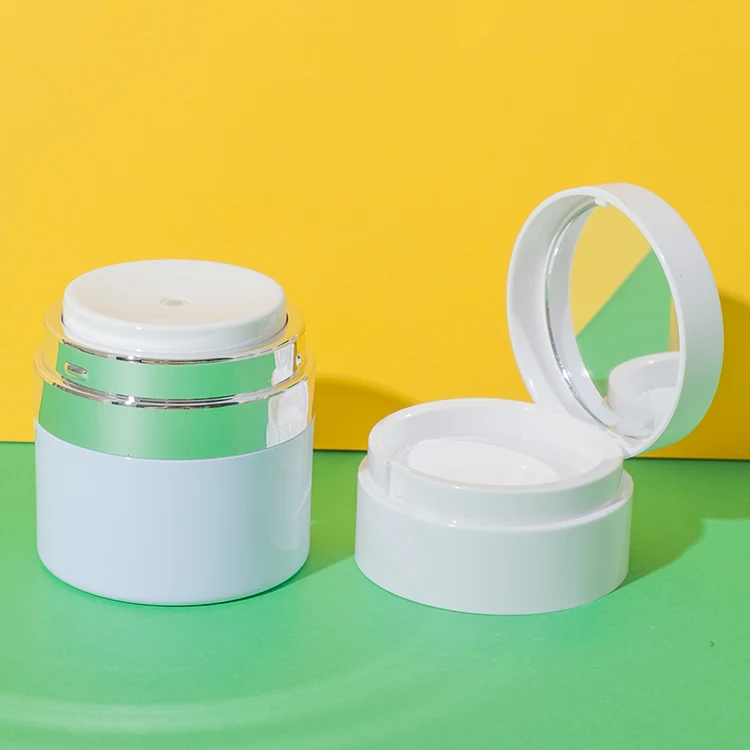
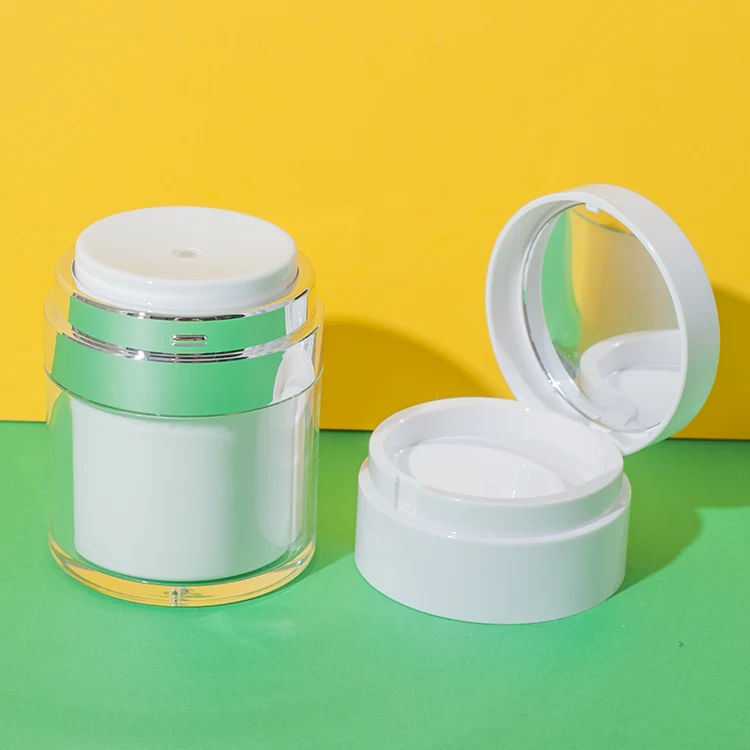
The formula is dispensed by pressing the upper plate, which releases product through the central outlet. This structure reduces the need to repeatedly insert fingers, spatulas or makeup tools into the primary formula chamber. It also allows the user to dispense a smaller amount first and add more product as required, helping brands create a more controlled application experience than a conventional open-mouth makeup jar.
The integrated mirror adds a functional feature for products intended for application or touch-ups away from a dressing table. It is positioned within the hinged upper cap assembly and remains separate from the formula-contact chamber. For packaging development, the mirror diameter, opening angle, hinge resistance and cap stability should be assessed during sampling to confirm that the package remains practical during use.
An external protective cover helps keep the mirror and dispensing area enclosed when the product is stored or transported. The relationship between the outer closure, hinged mirror section and dispensing plate should be checked for smooth operation. Closure fit and dimensional tolerances are particularly important because the package contains more functional components than a standard cream jar.
The acrylic outer body gives the package the visual depth and substantial wall thickness associated with premium cosmetic packaging. Brands can use transparent acrylic to show the internal structure or select customized outer and inner colors for a more opaque presentation. White, beige, nude, pink and other complexion-related shades can be developed to align the container with the formula range.
The collar, cap, inner chamber and dispensing plate can be color-matched or contrasted to establish product hierarchy. A brand may use one common external finish across the range while assigning different collar colors to foundation shades, formula types or coverage levels. Metallized or reflective accents can also be evaluated for the collar area, subject to the required finish and production conditions.
Decoration options may include screen printing, hot stamping, labeling and selected coating processes. Artwork placement should account for the transparent acrylic wall, internal component color and the available viewing area when the outer cap is installed. Branding should be evaluated on physical samples because the visual result may differ from flat artwork once it is viewed through the acrylic body.
Formula compatibility testing is required before commercial production. Foundation and concealer formulas may contain pigments, oils, silicones, waxes and suspended particles that affect dispensing behavior. The actual formula should be tested for priming, output consistency, plate movement and product flow through the dispensing outlet.
Testing should also cover leakage resistance, closure performance, mirror durability, hinge cycling, transportation stability and formula interaction with all contact components. The filling facility should confirm the correct filling and assembly procedure before mass production, particularly where the dispensing plate and mirror-cap components are assembled separately.
This packaging format is suitable for makeup brands, private-label developers, contract manufacturers and cosmetic packaging distributors seeking differentiated airless pump jars for foundation, concealer and other cream-based complexion products.