PP Refillable Rotary Airless Jar 50ml for Face Cream
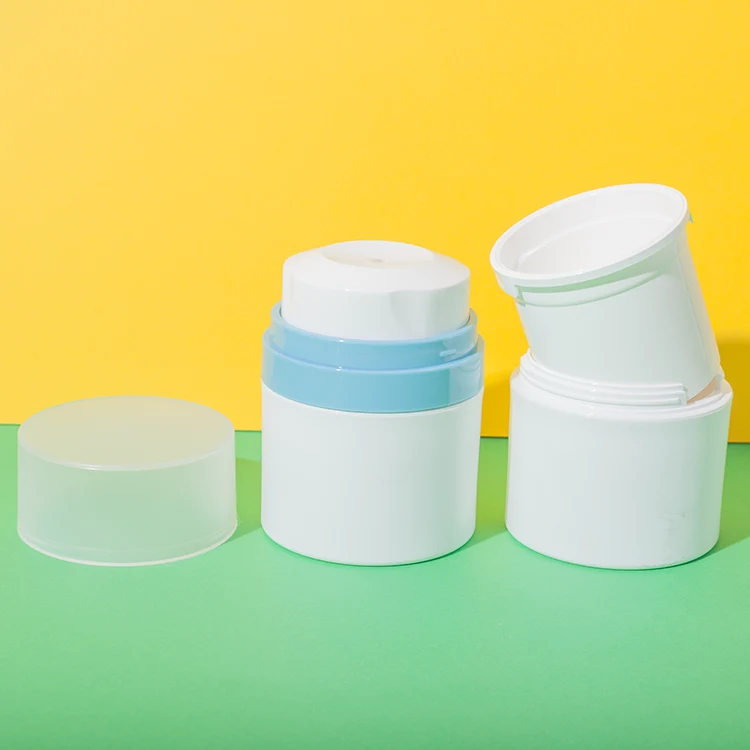
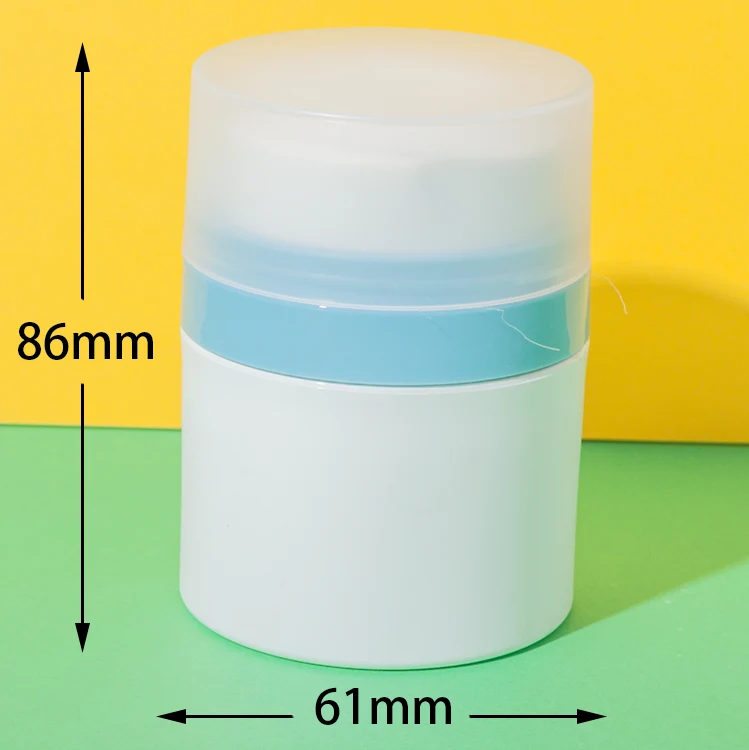
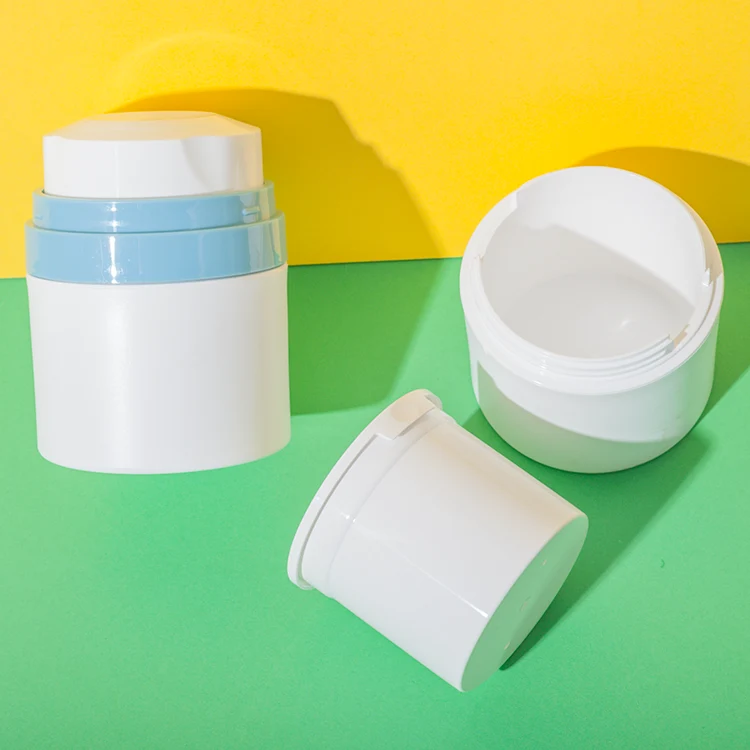
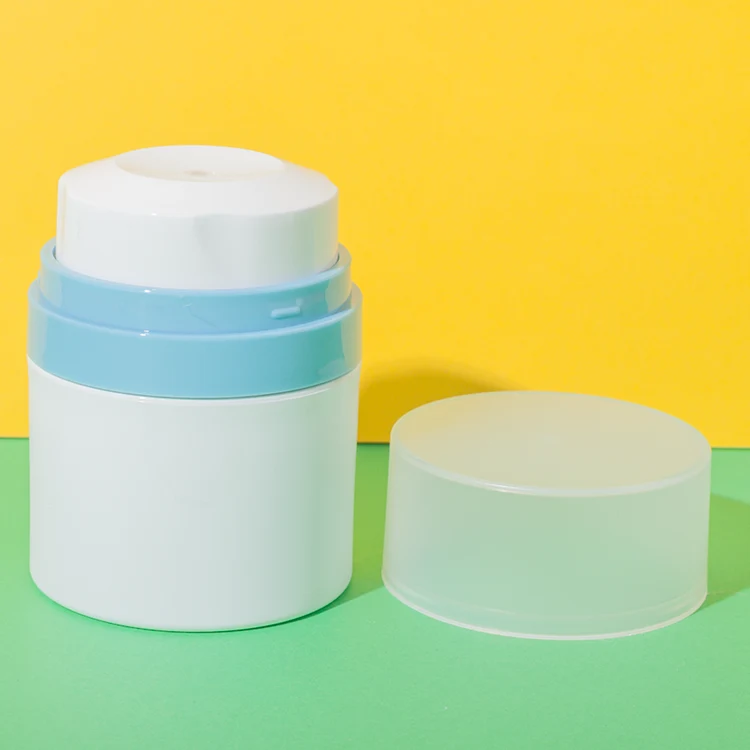
This rotary airless jar is a 50ml PP packaging solution developed for moisturizers, face creams and other medium- to high-viscosity skincare formulas. Unlike a conventional press-down airless jar, product is dispensed by rotating the upper actuator clockwise, allowing formula to emerge through the central outlet without pressing a pump. The removable inner cup supports refill-based packaging programs while the external jar can remain in use. With a 61mm diameter and 86mm overall height, the package provides a compact cylindrical format for skincare lines. Custom molded colors, printing, labeling and selected decoration options can be evaluated for branded and private-label projects.
| Capacity | Material | OD | Heght |
|---|---|---|---|
| 50ml | PP | 61mm | 86mm |
Product Description
This rotary airless jar is developed for skincare brands that want a dispensing mechanism different from conventional press-down airless packaging. Instead of pushing an actuator vertically, the user rotates the upper dispensing component clockwise to deliver formula through the central outlet. The 50ml package combines this twist-to-dispense mechanism with a removable inner cup and PP construction, making it suitable for moisturizers, face creams, treatment creams and other medium- to high-viscosity skincare products.
The finished package measures approximately 61mm in diameter and 86mm in overall height. The cylindrical format provides sufficient front-facing area for brand graphics while keeping the footprint compact enough for standard secondary cartons, retail displays and e-commerce shipping configurations. A 50ml capacity also aligns with a common commercial size for facial moisturizers and daily treatment creams.
The rotary dispensing mechanism is the main structural difference from standard airless jars. To dispense product, the upper actuator is turned clockwise rather than pressed downward. As the actuator rotates, formula is delivered through the outlet positioned in the center of the top surface. This creates a distinct user interaction and can help brands differentiate the package from conventional press-plate jars.
Because the product is dispensed through the top outlet, consumers do not need to repeatedly insert their fingers directly into the main formula chamber. For creams intended for regular daily use, this provides a more controlled way to access the formula than a traditional open-mouth jar.
The refillable structure adds another functional layer. The internal product cup can be removed from the outer package, allowing brands to develop a primary pack plus replacement refill system. The external body and dispensing components can therefore remain in use while the formula-containing inner cup is replaced, subject to the final refill design and assembly configuration.
For brands planning a refill program, the complete system should be evaluated rather than treating the removable cup as a standalone sustainability claim. The refill pack, protective closure, transportation format, consumer replacement process and expected number of reuse cycles should all be considered during development.
PP is used as the primary packaging material. Compared with thick-wall acrylic jars, PP provides a lighter construction and is well suited to molded color customization. Brands can develop white, neutral, pastel or stronger custom colors across the body, actuator and refill components to match different product categories or brand systems.
The simple cylindrical surface also supports practical decoration development. Depending on artwork and order quantity, options such as screen printing, labeling, hot stamping or selected surface treatments can be evaluated. If the outer body is intended for repeated use, decoration durability should be included in the validation process, particularly for printed or coated finishes that will experience repeated handling.
The removable refill should also be checked for dimensional fit and retention. It needs to remain stable during filling, assembly, shipping and repeated dispensing, while still being removable when the consumer replaces the product. Refill locking force, removal force and component tolerances should therefore be confirmed during sampling.
Formula testing is particularly important with the rotary dispensing mechanism. Cream viscosity, density, oil content and rheological behavior can affect the amount of product delivered during rotation. A lightweight gel cream may behave differently from a dense moisturizer or balm-like treatment, so testing should always be carried out with the intended commercial formula.
Brands should evaluate dispensing consistency over repeated cycles, the amount released per rotation, formula cutoff at the outlet, leakage resistance and residual product remaining inside the refill cup. The rotational torque should also be checked to ensure that dispensing is neither too loose nor too difficult during normal use.
The filling partner should confirm the correct filling and assembly sequence before production. The refill cup, dispensing component and outer body need to be assembled within approved tolerances to avoid problems such as poor rotation, incomplete dispensing or component interference.
This model is suited to skincare brands, private-label developers, contract manufacturers and packaging distributors seeking differentiated airless pump jars with a refillable PP structure and twist-to-dispense user experience.