Acrylic Refillable Airless Jar 15g 30g 50g
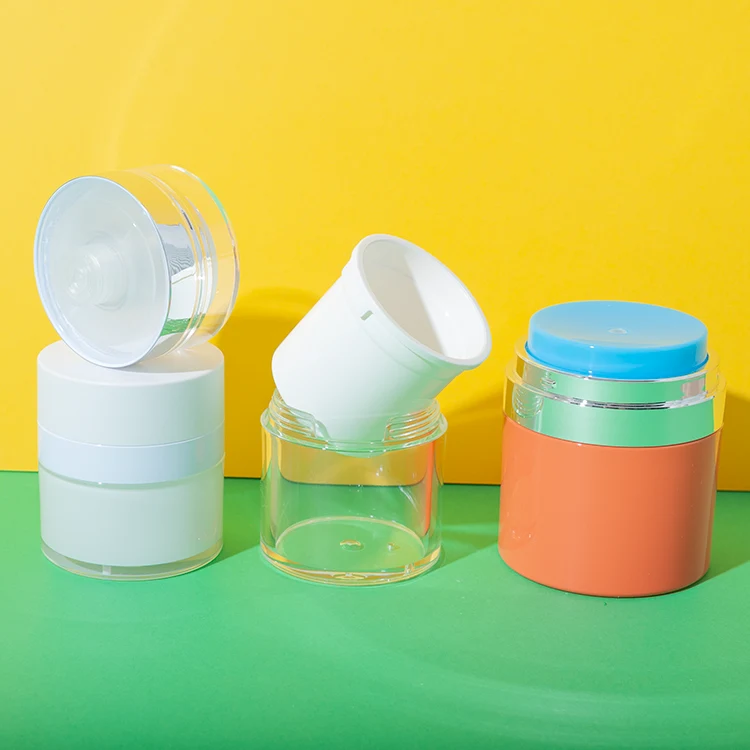
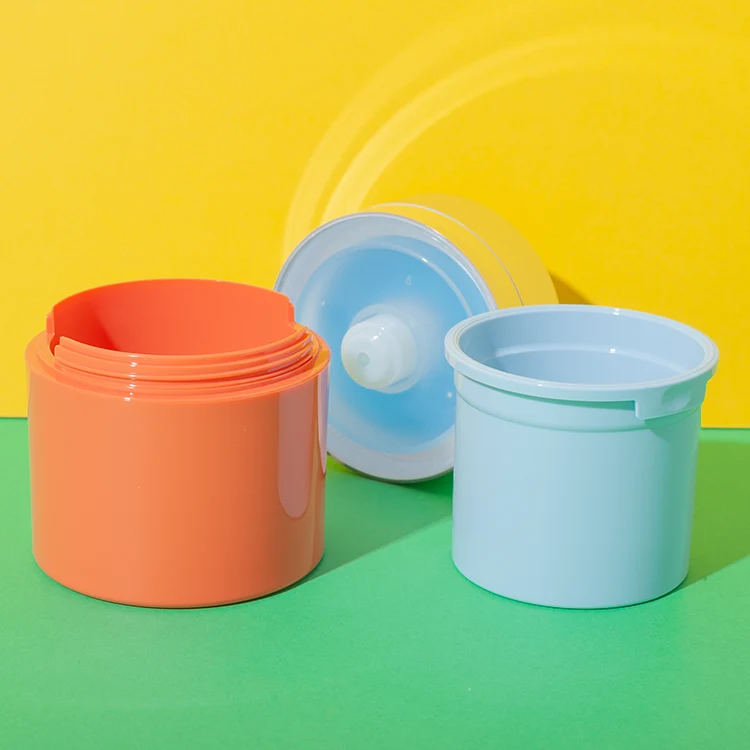
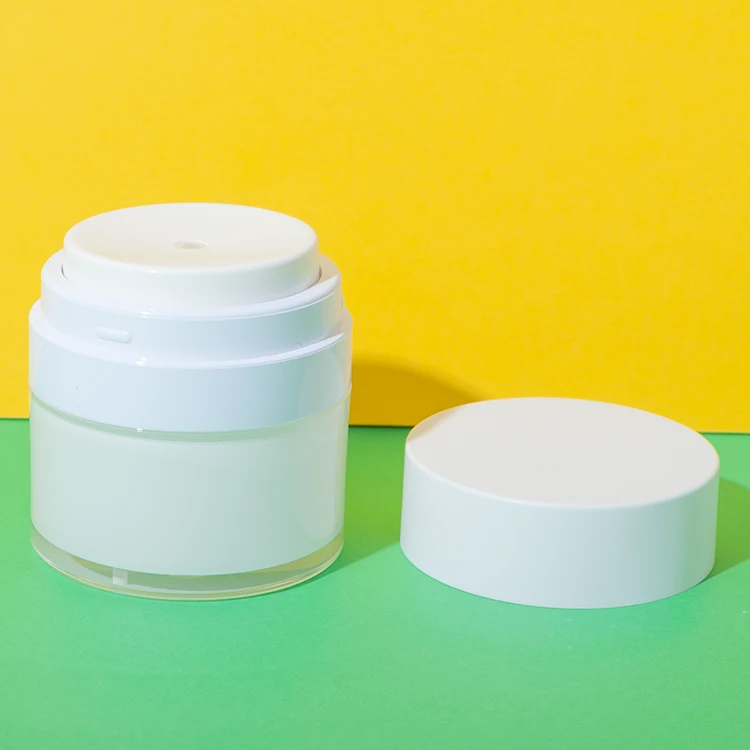
This refillable airless jar combines a reusable acrylic outer body with a removable inner product cup for skincare brands developing refill-based packaging systems. Available in 15g, 30g and 50g capacities, the range supports eye creams, treatment creams, moisturizers and other medium- to high-viscosity formulas. The press-top dispensing plate releases product through the central outlet while reducing direct finger contact with the formula chamber. Brands can retain the decorated outer package and replace the internal cup after use. Custom colors, metallized collars, printing and other decoration processes can be evaluated for coordinated skincare collections and private-label projects.
| Capacity | Material | OD | Heght |
|---|---|---|---|
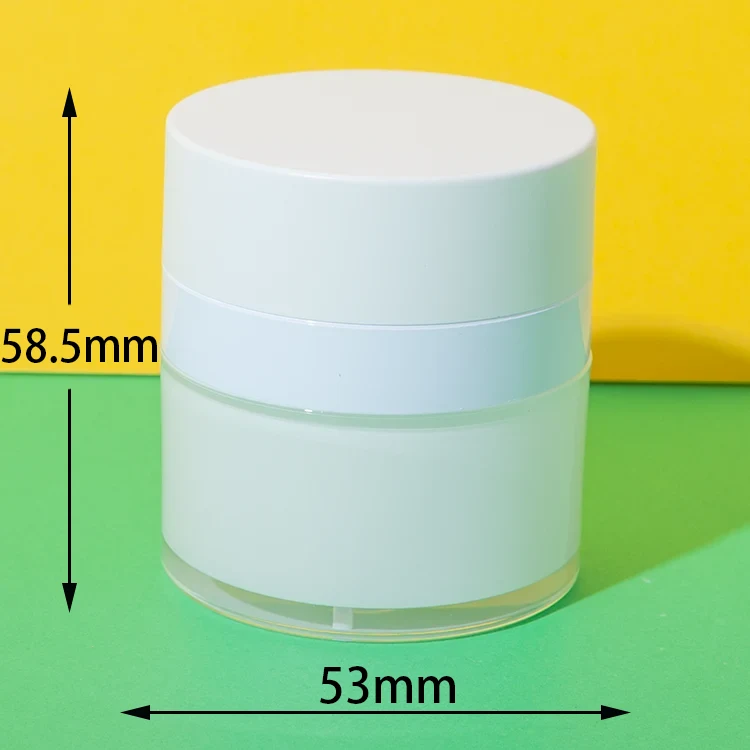
| 15g | Acrylic outer sleeve, PP inner body | 53mm | 58.5mm |
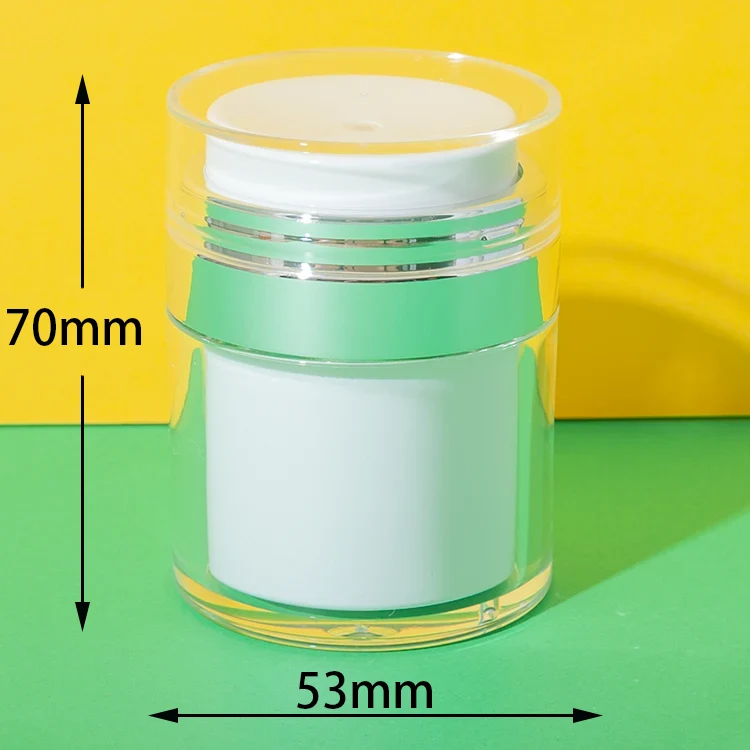
| 30g | Acrylic outer sleeve, PP inner body | 53mm | 70mm |
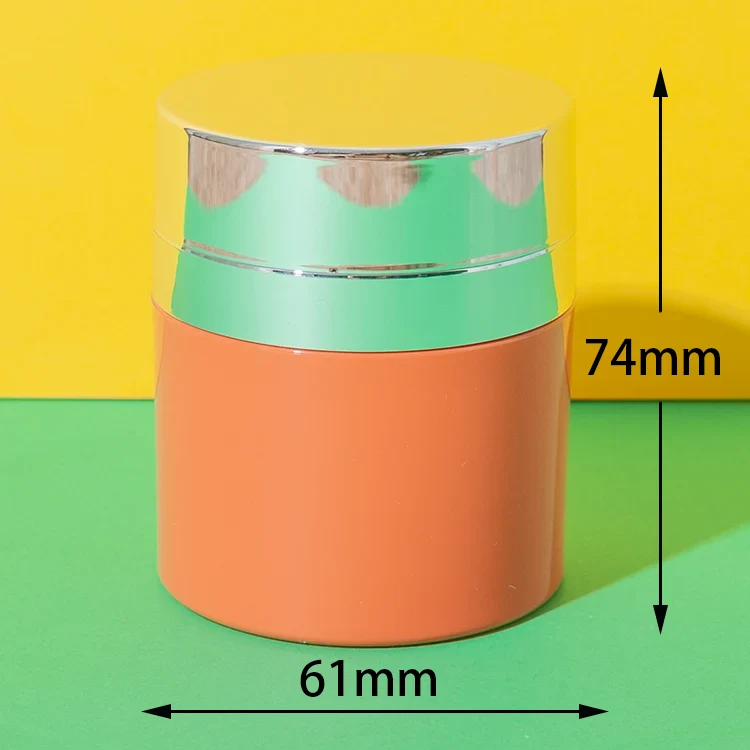
| 50g | Acrylic outer sleeve, PP inner body | 61mm | 74mm |
Product Description
This refillable airless jar is designed for skincare brands that want to separate the long-life decorative package from the formula-contact refill component. The structure combines an acrylic outer body, a removable inner cup and a press-top dispensing plate. Available in 15g, 30g and 50g capacities, it can support coordinated packaging programs for eye treatments, facial creams, moisturizers and other medium- to high-viscosity skincare formulas.
The refill system allows the outer package to remain in use while the internal product cup is replaced. For brands, this creates an opportunity to develop a primary jar and compatible refill format within the same product line. The environmental benefit depends on the complete refill program, including the number of reuse cycles, refill distribution method, component weights and actual consumer participation. These factors should be assessed before making specific sustainability claims.
The 15g model measures 53mm in diameter and 58.5mm in overall height. Its compact format is suitable for eye creams, concentrated facial treatments, targeted repair products and premium trial sizes. The wider jar profile provides a more substantial presentation than many small-capacity airless bottles and gives brands additional space for decoration.
The 30g version retains the 53mm diameter and increases the overall height to 70mm. It is suitable for intensive moisturizers, treatment creams, neck creams and products positioned between a concentrated serum and a full-size daily moisturizer. Sharing the same diameter as the 15g model helps create a visually consistent packaging family.
The 50g jar measures 61mm in diameter and 74mm in height. This capacity is intended for standard retail moisturizers, night creams, sleeping masks and barrier-support formulas. Its larger outer body provides additional branding area and stronger shelf presence while maintaining the same refill and dispensing architecture as the smaller sizes.
Product is delivered through the central outlet by pressing the upper dispensing plate. This structure reduces the need for users to place their fingers directly inside the formula chamber. It also allows brands to position the package as a controlled-dispensing alternative to a conventional wide-mouth cream jar.
The removable inner cup is the key structural feature of the packaging. Refill removal and installation should be straightforward enough for the intended consumer while remaining secure during transportation and normal use. The locking interface, dimensional tolerance and assembly force should therefore be evaluated during sampling and pilot production.
The acrylic outer body provides the thick-wall appearance commonly used in premium skincare packaging. Depending on the selected model, the exterior can be developed with a transparent, frosted or colored appearance. The collar and upper components can use matching colors, contrasting shades or metallized finishes to establish a stronger visual hierarchy.
Decoration can be applied to the outer body or upper components according to the available print area and artwork requirements. Screen printing, hot stamping, labeling and selected coating processes can be evaluated. Because the outer package is intended for repeated use, decoration durability should be considered alongside appearance. Printed graphics and surface finishes should be tested for handling, abrasion and exposure to the intended use environment.
A successful refill program requires more than a removable cup. The brand should define whether refills will be supplied with the dispensing plate, closure or other protective components. Refill hygiene, transportation protection, tamper evidence and installation instructions should be resolved before commercial launch. The refill should also be clearly distinguishable from the complete primary package in cartons, warehouse records and filling documentation.
Formula compatibility testing remains necessary. Cream viscosity, oil content, density, filling temperature and rheological behavior can affect dispensing performance. The actual formula should be tested for priming, output consistency, plate movement, leakage resistance and residual product levels.
The filling partner should confirm the correct filling and assembly sequence for both the primary jar and refill unit. Quality control should cover dimensional fit, refill retention, dispensing output, closure performance and package stability after temperature and transportation testing.
This model is suitable for skincare brands, private-label developers, contract manufacturers and packaging distributors building refill-based facial-care collections. It can be combined with other airless jars to create a wider packaging portfolio across different capacities, structures and positioning levels.