Acrylic Square Airless Jar 30ml 50ml
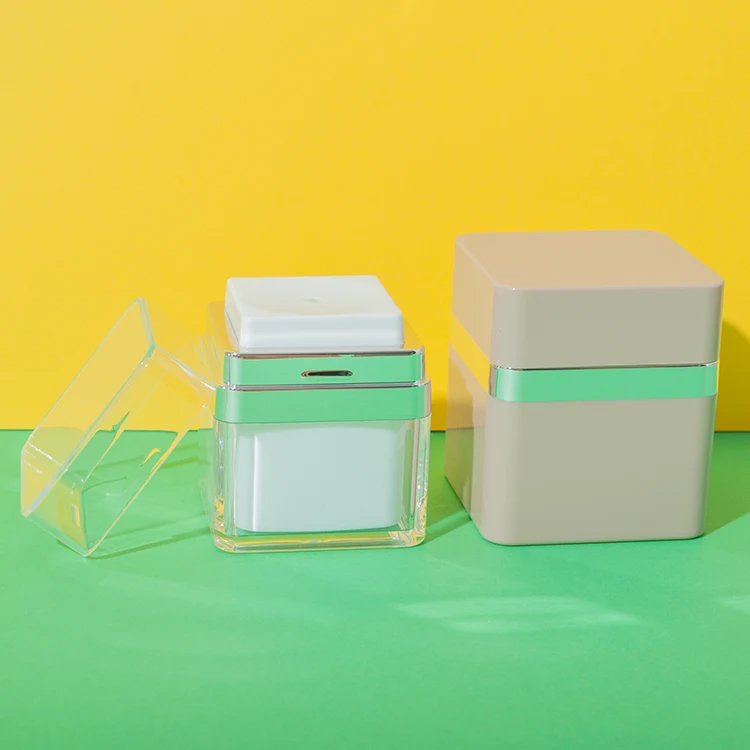
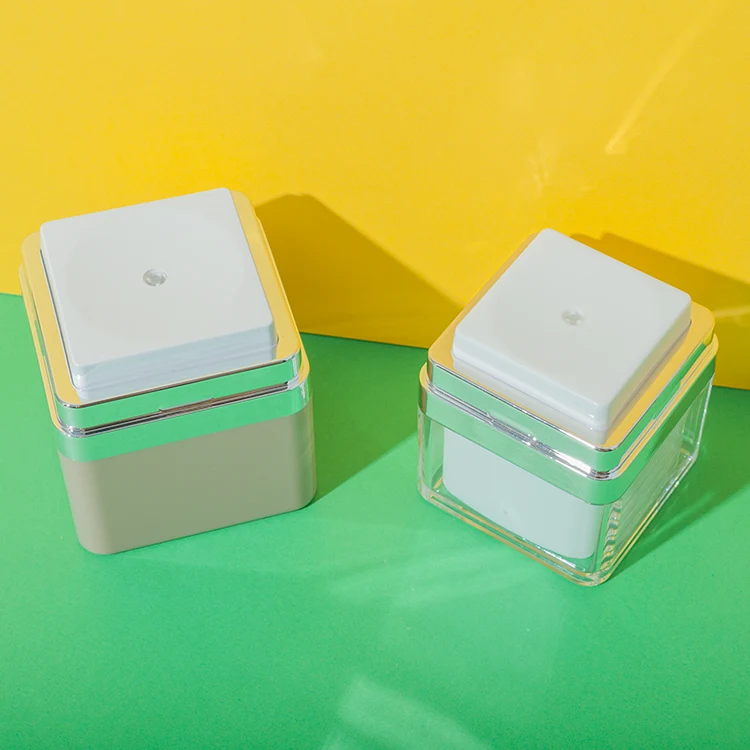
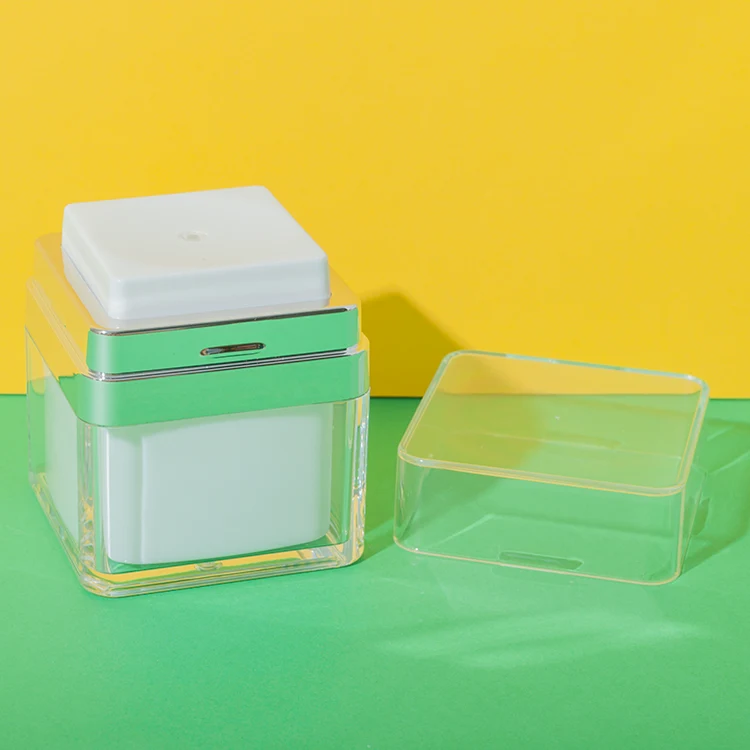
The square airless jar range combines a geometric acrylic outer shell with a press-top dispensing system for moisturizers, treatment creams and other medium- to high-viscosity skincare formulas. Available in 30ml and 50ml capacities, the two formats support coordinated product lines while maintaining distinct dimensions for different formula volumes. Pressing the dispensing plate releases product through the central outlet, reducing direct finger contact with the formula remaining inside the chamber. The clear thick-wall exterior provides a premium appearance, while customizable inner colors, collars and decoration options allow skincare brands to differentiate product categories within the same packaging collection.
| Capacity | Material | OD | Heght |
|---|---|---|---|
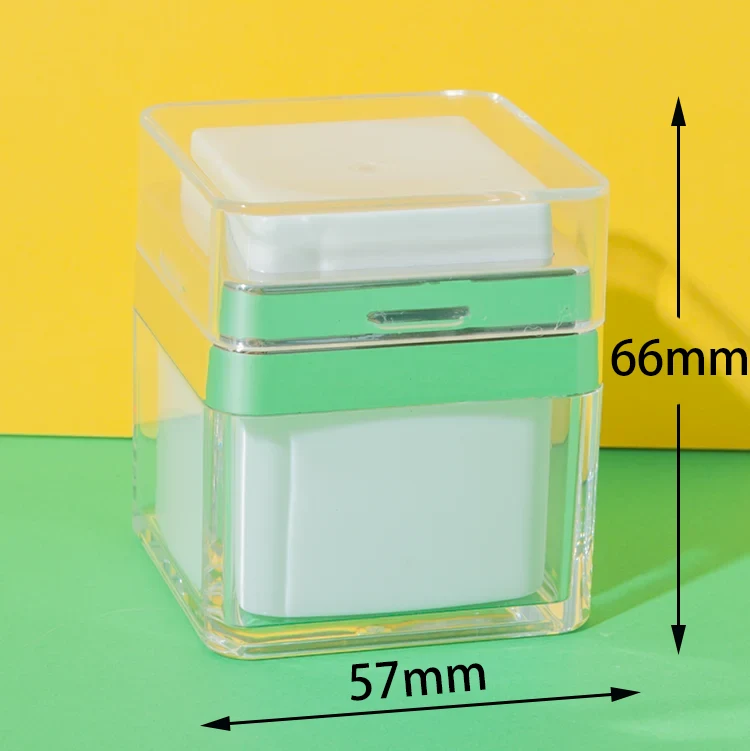
| 30ml | Acrylic outer sleeve, PP inner body | 57mm | 66mm |
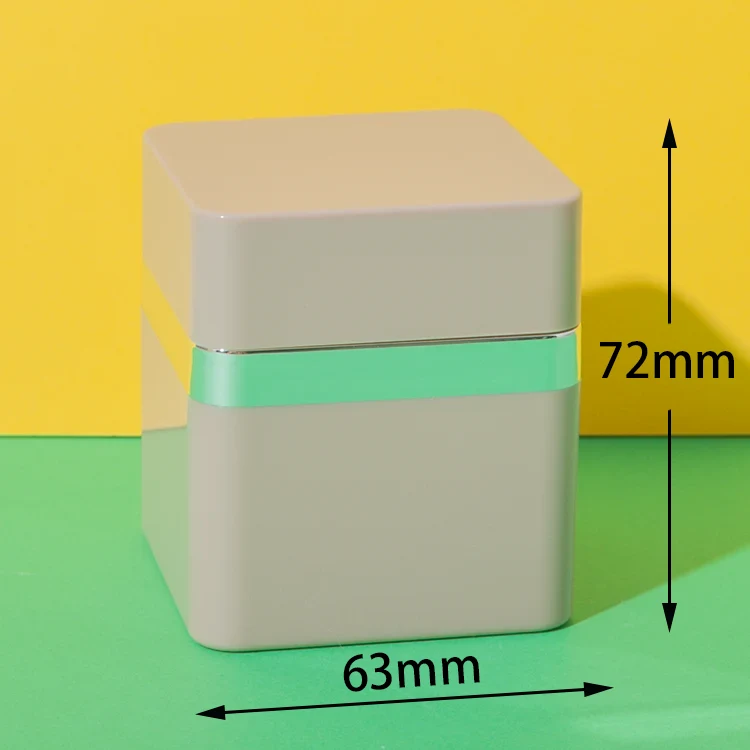
| 50ml | Acrylic outer sleeve, PP inner body | 63mm | 72mm |
Product Description
This acrylic square airless jar is developed for skincare brands seeking a more architectural packaging format than a conventional round cream jar. Its square profile, clear thick-wall outer shell and recessed internal chamber create a structured presentation suited to premium moisturizers, treatment creams, night creams and other facial care products.
The range is available in 30ml and 50ml capacities. The 30ml model measures approximately 57 × 57mm with an overall height of 66mm. It is suitable for concentrated moisturizers, facial treatments, specialty creams and products positioned above a standard serum but below a full-size daily cream.
The 50ml model measures approximately 63 × 63mm and has an overall height of 72mm. This capacity is better suited to standard facial moisturizers, night creams, sleeping masks and other daily-use skincare products. Using both sizes allows brands to maintain one packaging language across a coordinated product line without placing every formula in the same volume.
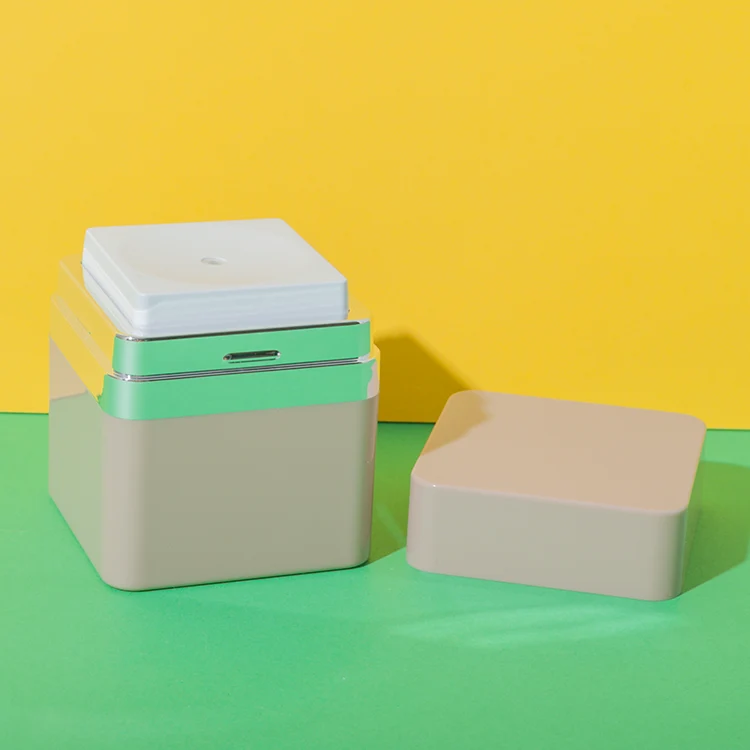
The package uses a press-top dispensing plate rather than a conventional open-mouth jar structure. When the user presses the upper plate, the formula is delivered through the central outlet. This dispensing method reduces the need to insert fingers or a spatula directly into the main product chamber during routine use.
For skincare brands, the structure provides a practical distinction between the external brand presentation and the internal dispensing components. The transparent acrylic exterior creates visual depth and gives the jar a substantial shelf presence. The inner chamber, collar and dispensing plate can be developed in contrasting or coordinated colors to establish product hierarchy across a collection.
For example, a brand may use one neutral outer configuration across its skincare line while changing the internal component color for hydrating, brightening, anti-aging or barrier-care formulas. This approach creates visible differentiation without requiring separate structural molds for every product category.
The square form also provides defined front-facing panels for artwork placement. Depending on the artwork, production quantity and finish requirements, branding can be evaluated through screen printing, hot stamping, labeling or other decoration processes. The collar can be used as an accent area for metallic-style finishing, contrasting colors or collection-specific details.
Because the outer wall is transparent, the relationship between printed artwork and the internal component color should be reviewed during the design stage. Dark inner colors may reduce the visibility of certain graphics, while lighter inner components can provide a cleaner background for printed logos and product names.
The square footprint should also be considered during secondary packaging development. Carton dimensions, internal inserts, shipping trays and display layouts should be matched to the jar’s actual width and corner geometry. Compared with a round jar, the square format can create a more aligned presentation in retail displays, although packing density and corner protection should be confirmed before finalizing the carton structure.
Formula testing remains necessary before commercial production. Cream viscosity, oil content, density and filling temperature can affect filling performance and product delivery through the dispensing plate. The complete package should be evaluated with the intended formula rather than with a generic test medium.
Testing should confirm dispensing consistency, plate movement, formula compatibility, leakage resistance, storage stability and performance after transportation. The filling partner should also verify the correct filling and assembly sequence because airless-style jars require the internal chamber and dispensing components to be installed without trapping excessive air.
This model is suitable for established skincare brands, private-label developers, contract manufacturers and cosmetic packaging distributors. It can be combined with other airless jars to build a broader packaging range covering different capacities, shapes, materials and market positions.