How to Design Cosmetic Packaging: From Brand Strategy to Production-Ready Mockup

Founder of UKPACK, chief packaging engineer and designer with 18 years of experience, and Red Dot Award winner. I work on cosmetic packaging structure, material selection, mold feasibility, decoration processes, and leak-risk control, helping brands turn packaging ideas into reliable production-ready solutions. See my senior packaging engineer qualification.
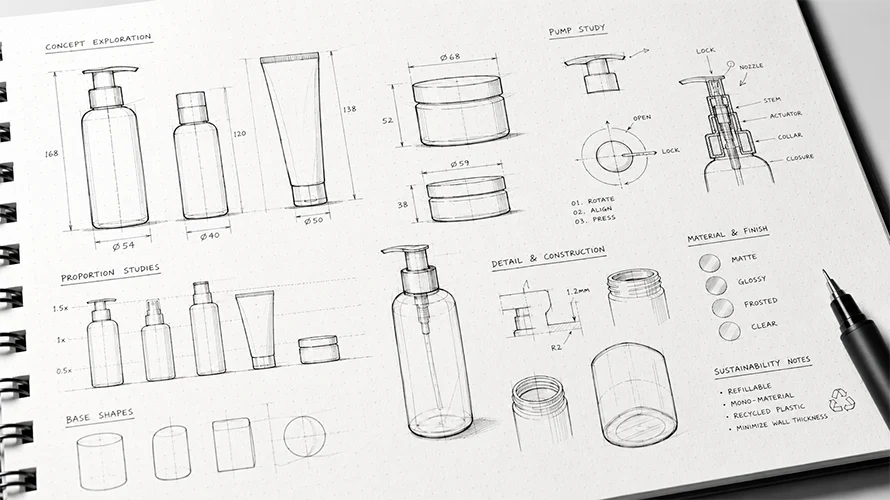
- What Does Cosmetic Packaging Design Include?
- Start With a Packaging Strategy Before You Design
- Choose the Right Packaging Format, Structure, and Materials
- Design the Product Structure Before the Visual Design
- Create a Visual Design That Looks On-Brand and Sells
- Create 3D Renders Before Sampling
- Turn the Render Into a Physical Mockup
- Design Labels, Dielines, and Compliance-Ready Artwork
- Prototype, Test, and Prepare for Production
- Common Mistakes in Cosmetic Packaging Design
- How UKPACK Helps Brands Design Cosmetic Packaging
- FAQ
If you are wondering how to design cosmetic packaging, start with the product formula, target customer, brand positioning, sales channel, and labeling requirements. From there, choose the packaging format, material, closure, dispensing system, decoration method, and label layout before moving into 3D renders, physical mockups, testing, and production. A strong cosmetic package should not only look attractive; it must protect the formula, support compliant labeling, work with filling and shipping, and be manufacturable at scale.
This is the process UKPACK uses when helping beauty brands turn early packaging ideas into 3D renders, mockups, samples, and production-ready cosmetic packaging. In this guide, we break down the full workflow from brand strategy and material selection to visual design, label layout, testing, and mass production.
What Does Cosmetic Packaging Design Include?
Cosmetic packaging design is the process of developing the container, closure, material, label, decoration, and user experience for skincare, makeup, fragrance, or personal care products. It covers both the visual presentation of the package and the technical decisions that make the package functional, compliant, and ready for production.
A complete packaging design project usually includes three types of decisions:
- Structural system: container format, material, capacity, pump, cap, sprayer, dropper, or other closure.
- Visual system: color, finish, label layout, logo placement, and decoration method.
- Production system: 3D rendering, mockup development, compatibility testing, quality control, and mass production preparation.
This is why cosmetic packaging design should not be treated as graphic design only. Artwork defines how the package looks, but the full packaging development process also determines how the package performs. If structure, material, dispensing, decoration, or printable area is not checked early, the final package may face compatibility, readability, leakage, shipping, or production issues.
Start With a Packaging Strategy Before You Design
The first step in cosmetic packaging design is not choosing a color palette. It is building a clear packaging strategy. Before artwork, 3D renders, or mockups are created, the brand needs to define what the package must communicate and what practical requirements it must support.
A useful packaging strategy should answer these questions:
- Who will buy the product?
- Where will the product be sold?
- What price level does the packaging need to support?
- What product category does the package belong to?
- What brand personality should the packaging express?
- How should the product look beside competitors?
- How should the package appear in e-commerce images, retail shelves, and social media content?
These answers shape the packaging direction. A clinical skincare brand, a natural body care brand, a luxury fragrance line, and a mass-market cleanser may all use bottles, but the structure, material, surface finish, decoration method, label hierarchy, and dispensing system should match different brand positions and sales environments.
For example, clinical skincare may use clean airless packaging, precise typography, and controlled dosage to communicate efficacy. Natural body care may use soft colors, matte texture, refillable formats, or PCR plastic to support a lower-impact positioning. Luxury skincare may use heavier packaging, metallic details, custom color, and refined decoration to increase perceived value.
In many UKPACK projects, customer briefs begin with a reference image, moodboard, or an existing package the brand wants to upgrade. Before developing the structure or preparing 3D renderings, our team first clarifies the formula type, target capacity, market position, sales channel, preferred format, closure style, and expected finish. These details help determine whether the project should use an existing mold, customized decoration, or a new structural design before mockup and sampling.
This type of development path can also be seen in our cosmetic packaging case studies, where different brands used custom bottles, jars, pumps, spray bottles, and airless packaging for real product launches. The more specific the brief is, the easier it is to create packaging that looks consistent with the brand, fits the product requirements, and works in production.
Choose the Right Packaging Format, Structure, and Materials
Once the packaging strategy is clear, the next step is choosing the right format, structure, and material. This is where many cosmetic packaging projects succeed or fail.
A serum, cream, lotion, cleanser, balm, powder, facial oil, fragrance, and sunscreen may all require different packaging systems. The wrong format can lead to leakage, poor dispensing, contamination risk, filling problems, or a weak user experience.
| Packaging Type | Best For | Why It Works | Watch Outs |
|---|---|---|---|
| Airless pump bottle | Serum, lotion, active skincare | Better hygiene and controlled dosage | Higher cost, compatibility testing needed |
| Jar | Cream, balm, mask | Easy filling and premium feel | More exposure to air and fingers |
| Tube | Cleanser, sunscreen, lotion | Lightweight and portable | Decoration area and material matter |
| Dropper bottle | Serum, facial oil | Precise dispensing and premium look | Not suitable for all viscosities |
| Spray bottle | Mist, toner, setting spray | Fine application and easy coverage | Sprayer compatibility is important |
| Refillable packaging | Skincare, body care | Strong sustainability story | Structure must be durable |
| Compact or powder case | Makeup, pressed powder | Portable and category-specific | Hinge, insert, and mirror quality matter |
For serums, lotions, and active skincare formulas, brands can compare UKPACK’s airless pump bottles when controlled dosage, reduced air exposure, and a more hygienic dispensing system are required.
After the format is selected, the structure needs to be checked before graphic design begins. Cosmetic packaging structure should confirm the container shape, capacity, neck finish, closure, dispensing system, printable area, material compatibility, and production constraints.
Important structural details include:
- Capacity and bottle diameter
- Shoulder shape and wall thickness
- Neck size
- Pump or cap compatibility
- Closure height
- Label panel and printable area
- Filling-line compatibility
- Shipping strength and decoration limitations
Material selection is equally important. Cosmetic packaging materials should not be chosen by appearance only. They should be evaluated by formula compatibility, decoration compatibility, durability, cost, recyclability, and production availability.
Common cosmetic packaging materials include:
- PET: clear, lightweight, widely used for bottles
- PP: durable, chemical-resistant, often used for jars, caps, and airless systems
- PETG: high clarity and premium appearance, often used for thicker-wall packaging
- Acrylic: glass-like appearance, common in premium cosmetic jars and bottles
- Glass: premium feel and strong barrier properties, but heavier and more fragile
- PCR plastic: recycled plastic content, useful for sustainability positioning
- Mono-material packaging: designed to improve recyclability by reducing mixed materials
When brands ask for sustainable cosmetic packaging, the discussion should go beyond whether the package “looks eco-friendly.” UKPACK reviews material availability, decoration compatibility, filling requirements, durability, recyclability, and cost before recommending PCR, mono-material, refillable, or lightweight packaging options.
Sustainable packaging also requires careful claim control. Claims such as “eco-friendly,” “recyclable,” “green,” or “sustainable” should be supported by evidence and should match the actual material, target market, and disposal system. For brands comparing lower-impact options, UKPACK’s sustainable cosmetic packaging solutions can help review recyclable, refillable, PCR, biobased, mono-material, and lightweight directions.
Design the Product Structure Before the Visual Design
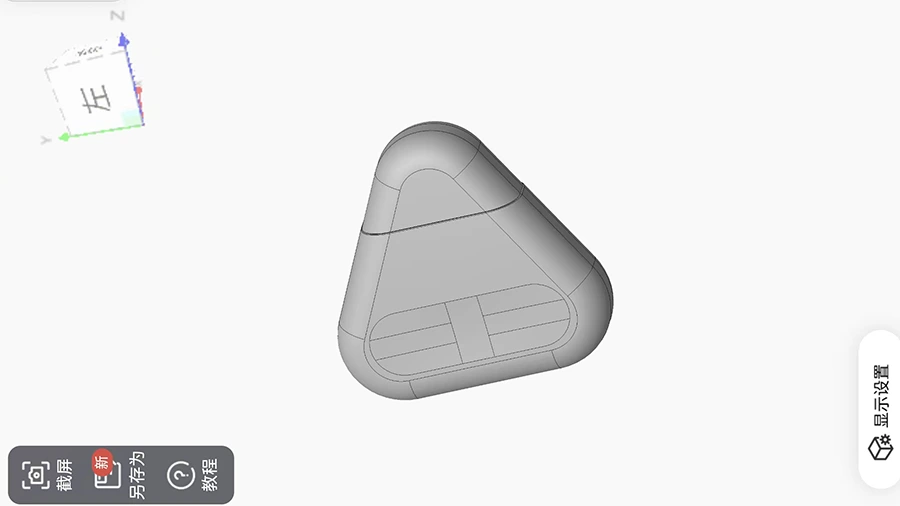
Before the visual design begins, the packaging structure needs to be defined. In cosmetic packaging development, this may include the container shape, capacity, wall thickness, shoulder profile, neck finish, cap or pump fit, actuator position, inner component layout, sealing structure, and assembly method.
This step is different from creating a marketing render. A 3D render shows how the package may look, while a structural 3D file, such as a STEP or STP file, helps engineers review how the package is built. It can be used to check dimensions, part relationships, mold feasibility, component matching, and whether the package can be manufactured reliably.
For custom cosmetic packaging, structural design may need to confirm:
- Overall capacity and dimensions
- Bottle, jar, tube, or airless body shape
- Neck finish and closure fit
- Pump, sprayer, actuator, or cap assembly
- Wall thickness and material distribution
- Sealing structure and leakage control
- Printable or decoration area
- Filling and assembly requirements
- Mold feasibility and production constraints
This is an important step because visual design cannot solve structural problems later. If the neck size does not match the pump, the wall thickness is not suitable, the actuator is difficult to assemble, or the sealing structure is weak, the package may fail during sampling, filling, or mass production.
At UKPACK, structural design helps connect the brand idea with a manufacturable packaging solution. Once the structure is confirmed, the project can move more confidently into visual design, 3D rendering, mockup development, and sample testing.
Create a Visual Design That Looks On-Brand and Sells
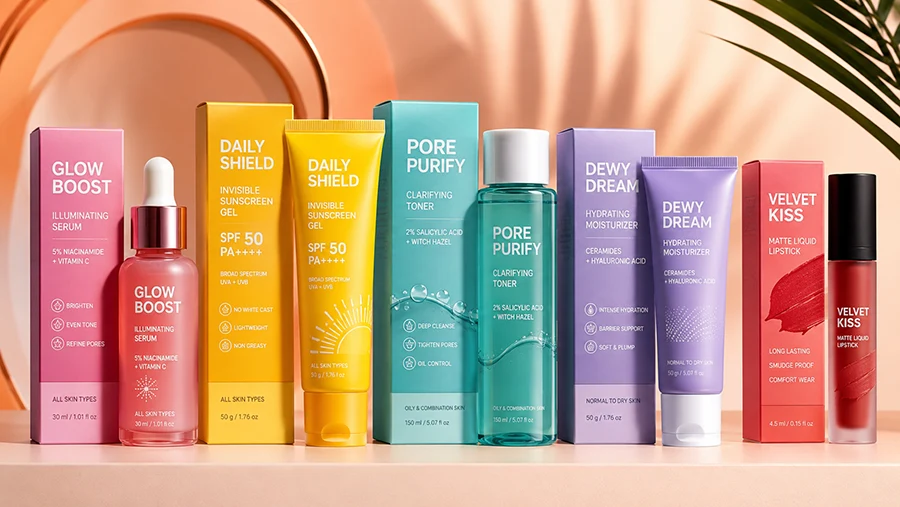
After the strategy, structure, and material direction are clear, the visual design can begin. At this stage, the goal is to make the package recognizable, readable, brand-consistent, and realistic for the selected container and decoration process.
Cosmetic packaging visual design usually includes:
- Color palette and typography
- Logo placement
- Product name and claims hierarchy
- Icons, symbols, illustration, or pattern
- White space and layout
- Surface texture and decoration effects
- Product line consistency
Different brand positions often require different visual decisions:
- Mass-market skincare: bold contrast, clear benefit claims, and fast recognition.
- Clinical skincare: white space, precise typography, simple colors, and technical wording.
- Natural skincare: soft tones, matte finishes, botanical cues, and lighter decoration.
- Luxury cosmetics: deeper colors, metallic details, hot stamping, embossing, or heavier packaging.
- Makeup: stronger color coding, bolder graphics, and more social media-friendly visual impact.
The design should also work in real selling environments, including product photography, retail shelves, e-commerce thumbnails, and social media content. Small text, weak contrast, complex layouts, and multilingual label requirements should be planned early, not forced into the design later.
Common decoration and finishing options include silk screen printing, hot stamping, label application, spray coating, UV coating, matte or glossy finish, frosted finish, metallic finish, soft-touch finish, embossing, and debossing.
If you are planning a new launch or packaging refresh for the coming year, it also helps to compare your visual direction with current cosmetic packaging design trends 2026, especially around minimalism, tactile finishes, controlled color, refillable systems, and applicator-led packaging.
The visual design should match what the package can realistically support. For example, a small curved bottle may not be suitable for a very detailed label, and a metallic finish may look premium but create glare in product photography.
Create 3D Renders Before Sampling
3D rendering is one of the most useful steps in cosmetic packaging design because it helps brands review the packaging concept before physical sampling. At this stage, the goal is to check whether the design direction works visually and structurally before time and cost are invested in mockups or samples.
A 3D render can help show:
- Bottle, jar, tube, or airless shape
- Product proportions
- Cap or pump relationship
- Color direction
- Logo placement
- Label layout
- Surface finish
- Decoration effect
- Product line consistency
- E-commerce and marketing visual direction
Before preparing a 3D render direction, UKPACK usually checks the product category, formula type, target capacity, packaging format, closure type, brand artwork, color references, surface finish, and decoration method. These details help ensure that the render reflects a realistic packaging direction rather than a purely visual concept.
A practical example from UKPACK is an upside-down airless bottle with a stamp-style dispensing structure, created to support cleaner application and reduce formula residue. During the concept stage, 3D rendering helped the team review the bottle proportion, cap structure, standing stability, logo placement, color direction, and dispensing logic before physical mockups were made.
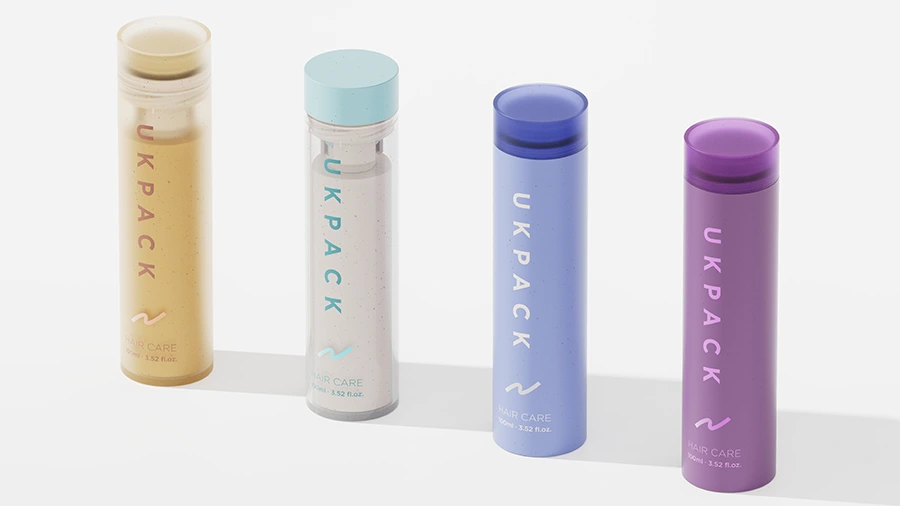
This type of visual review connects appearance with function before the project moves into sampling, mold adjustment, and production testing.
For brands that need early-stage packaging support, UKPACK’s 3F Services can help move an idea into free design support, 3D renders, and mockup preparation before sampling and production decisions are made.
Turn the Render Into a Physical Mockup
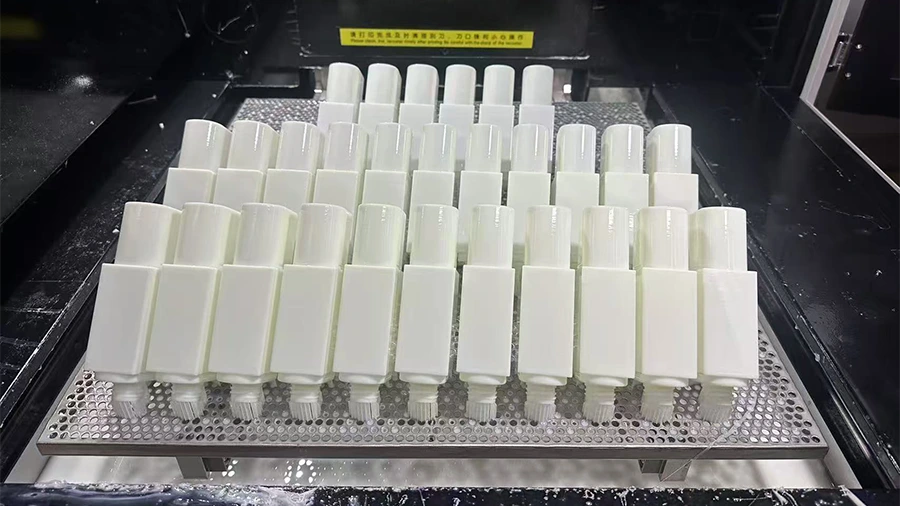
A 3D render is useful, but it cannot replace a physical mockup. A render helps review the design direction on screen, while a mockup allows the brand to judge how the package looks and feels in real life.
A cosmetic packaging mockup can help check:
- Real color appearance
- Logo readability
- Label size and placement
- Hand feel
- Cap, pump, or sprayer proportion
- Surface finish
- Material transparency
- Metallic reflection
- Shelf appearance
- Product photography effect
- Product line consistency
This stage often reveals details that are difficult to judge in flat artwork or 3D renders. A logo may look large enough on screen but too small on a curved bottle. Metallic decoration may look premium in a render but too reflective in real lighting. A label may appear balanced in artwork but become distorted after application. A cap may look correct in isolation but too heavy or too light when paired with the actual bottle.
Depending on the project, a mockup may be a blank sample, color sample, decoration sample, digital printed mockup, surface finish sample, engineering sample, or pre-production sample.
Skipping the mockup stage may save time at first, but it can create later changes if the real package does not match the expected color, finish, proportion, readability, or presentation.
Design Labels, Dielines, and Compliance-Ready Artwork
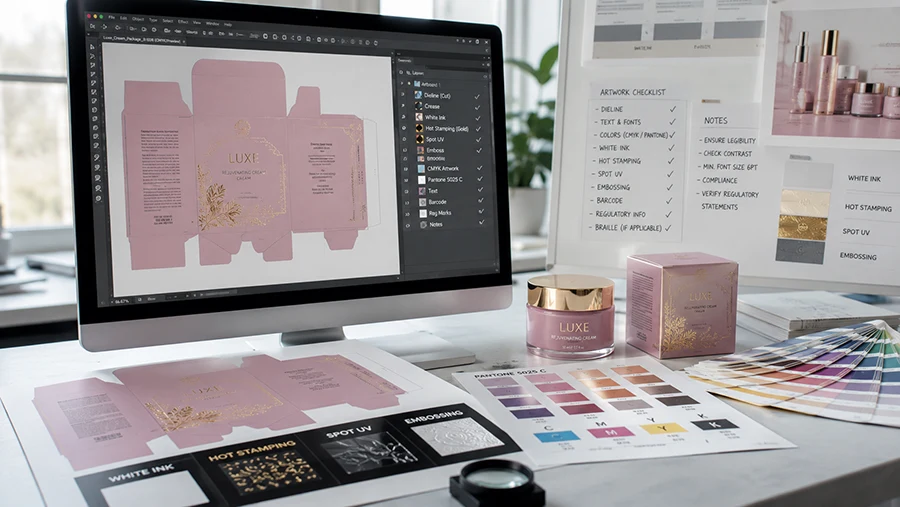
Cosmetic packaging labels should be designed after checking the labeling rules of the target market. In general, labels need to clearly show what the product is, how much product is inside, who is responsible for the product, how it should be used, and what warnings or ingredient information may be required. For products sold in the United States, brands can refer to the FDA’s Cosmetics Labeling Guide for official labeling guidance.
Label design is not only an aesthetic task. It is also a compliance and production task. A label may look clean in a design file, but it still needs to fit the actual printable area, meet market-specific requirements, and work with the selected decoration method.
Common cosmetic label elements may include:
- Product identity and product function
- Net contents
- Ingredient list
- Directions for use and storage instructions
- Warnings, when required
- Batch code, expiration date, or PAO symbol
- Country of origin and responsible business information
- Barcode and recycling symbols
- Sustainability or product claims
Label requirements differ by market. The United States, European Union, United Kingdom, and other regions may require different information, wording, languages, responsible party details, ingredient presentation, and warning statements. For products placed on the EU market, brands should review Regulation (EC) No 1223/2009, especially Article 19 on cosmetic product labeling.
Production artwork also needs to be prepared correctly. Before sampling or mass production, brands and packaging suppliers should confirm the dieline, bleed, cut line, safe zone, barcode quiet zone, CMYK or Pantone color, white ink layer, hot stamping layer, spot UV layer, embossing or debossing layer, file format, decoration position, and approved sample reference. ISO 22715 also provides an international reference for cosmetic packaging and labeling requirements, including information intended for sale or free distribution.
This step is where visual design, compliance, and manufacturing meet. A beautiful label that is not print-ready can cause production delays. A compliant label that ignores the actual printable area may not work on the selected bottle, jar, tube, or airless package. A sustainability claim that sounds attractive but lacks support may create legal and trust risks. For environmental claims, brands can review the FTC’s Green Guides, which are designed to help marketers avoid misleading environmental claims.
Brands should work with regulatory specialists for final label compliance. Packaging manufacturers can support artwork placement, decoration feasibility, file preparation, and sample confirmation, but market-specific compliance should be reviewed carefully before launch.
Prototype, Test, and Prepare for Production
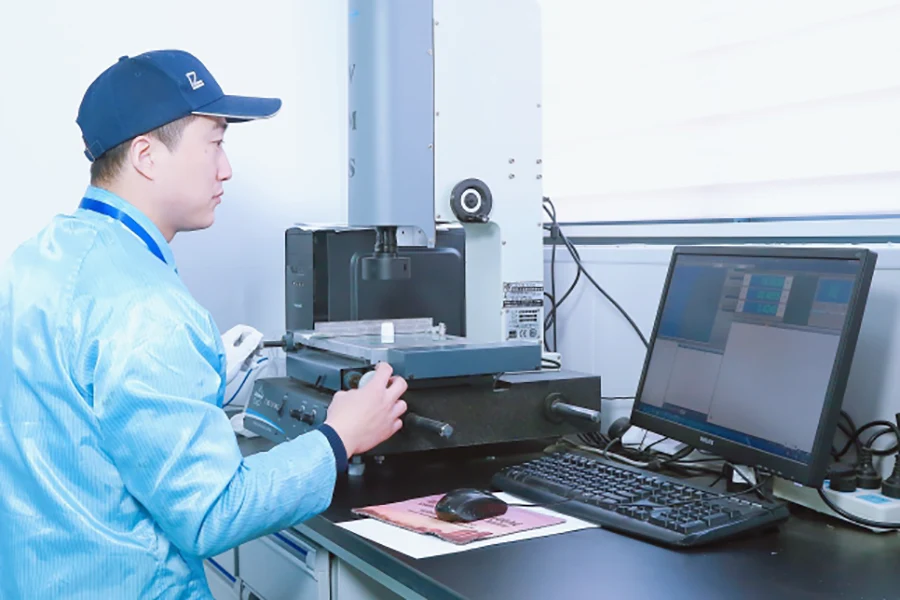
Before mass production, cosmetic packaging should be checked for formula compatibility, leakage, drop resistance, dispensing performance, decoration adhesion, label accuracy, filling-line suitability, packing method, and approved production samples. This step confirms that the package does not only look correct, but also works with the formula, filling process, shipping conditions, and quality requirements.
Important packaging tests may include:
- Formula compatibility test
- Leak test
- Drop test
- Pump dosage test
- Sprayer performance test
- Priming performance test
- Decoration adhesion test
- Cap torque test
- Transportation test
- Filling test
- Aging or stability observation
- Visual inspection
- Production sample approval
Testing is especially important for skincare, makeup, personal care, and fragrance packaging because the formula and package interact over time. A pump may look suitable but dispense too much or too little product. A sprayer may clog if the formula is too viscous. A label adhesive may fail on a curved or coated surface. A decoration method may scratch too easily. A bottle may pass visual review but leak during e-commerce shipping.
For example, in the Little Urchin 300ml kids sunscreen project, UKPACK needed to match the packaging with a high-viscosity clear zinc formula and a family-size outdoor use scenario. A standard lotion pump or squeeze bottle could create risks such as incomplete evacuation, inconsistent dosing, messy application, or poor formula protection. UKPACK recommended a 300ml big airless pump bottle based on the UKA22 platform, then reviewed pump performance, formula evacuation, actuator usability, matte surface quality, and production cost before moving into mass production.
During testing, the project checked the match between the formula and the packaging system, including whether the thick sunscreen could be dispensed smoothly through the airless pump structure. UKPACK also set a priming performance target, requiring the pump to start dispensing product within 10 presses or fewer. This helped confirm formula protection, smooth dispensing, and a practical first-use experience for parents and kids.
Brands should also prepare production information before confirming an order. This usually includes the final artwork, approved sample, Pantone code, decoration method, finish specification, material confirmation, closure confirmation, MOQ, unit price, mold cost if applicable, lead time, packing method, carton requirements, QC standards, and shipping plan.
For custom cosmetic packaging, production should not begin until the sample, decoration, material, closure, and artwork are approved. This reduces the risk of color mismatch, decoration errors, functional problems, production delays, and launch issues.
Common Mistakes in Cosmetic Packaging Design
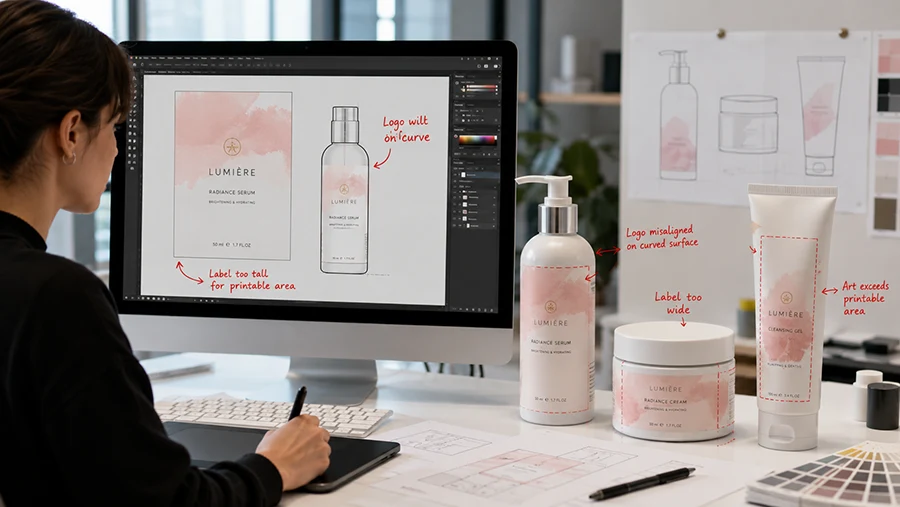
Many cosmetic packaging problems happen because design decisions are made in the wrong order. These are some of the most common mistakes.
1. Designing Artwork Before Confirming Structure
Flat artwork should not be finalized before the bottle, jar, tube, label area, closure, and decoration method are confirmed. Otherwise, the final package may not support the intended layout.
2. Choosing Material Only by Appearance
A material may look premium but fail in compatibility, cost, durability, or recyclability. Material selection should consider formula, filling, shipping, decoration, and target market.
3. Ignoring Formula Compatibility
The package and formula must work together. Oils, alcohol, active ingredients, fragrance, pigments, and preservatives may interact with certain plastics, pumps, seals, or coatings.
4. Using Sustainability Claims Without Evidence
Claims such as recyclable, sustainable, eco-friendly, or green should be specific, supportable, and suitable for the target market. Vague claims can create greenwashing risk.
5. Forgetting Label Compliance
A beautiful label can still fail if required information is missing, unreadable, incorrectly placed, or not adapted to the target market.
6. Making the Logo Too Small on Curved Surfaces
Curved bottles reduce readable space. Logo size, line thickness, and typography should be checked on a 3D render and physical mockup.
7. Not Testing Pump Dosage or Leakage
A pump, sprayer, dropper, or cap should be tested with the actual formula when possible. Function matters as much as appearance.
8. Approving a Render Without a Physical Mockup
A render is a strong review tool, but it cannot show all real-world details. Color, reflection, hand feel, material weight, and decoration quality should be checked with physical samples.
9. Ignoring Production Tolerances
There can be differences between render, mockup, sample, and mass production. Color, print position, material finish, and decoration effects should be controlled with approved samples and clear production standards.
How UKPACK Helps Brands Design Cosmetic Packaging
UKPACK helps beauty brands turn packaging ideas into production-ready solutions, covering structure review, material matching, 3D renders, mockups, samples, surface finishes, and manufacturing preparation.
For brands that need hands-on support, UKPACK’s cosmetic packaging design services can help develop airless pump bottles, cream jars, spray bottles, cosmetic tubes, refillable packaging, and custom packaging sets.
Contact UKPACK to discuss your formula, packaging format, 3D render, mockup, sample, or custom production project.
FAQ
How do you design cosmetic packaging step by step?
To design cosmetic packaging, start with the product formula, target customer, brand positioning, sales channel, and compliance requirements. Then choose the packaging format, material, closure, structure, decoration method, and label layout. After that, create 3D renders, develop mockups, test samples, approve production details, and prepare for mass production.
What is the first step in cosmetic packaging design?
The first step is creating a packaging strategy and design brief. Before choosing colors or graphics, brands should define the formula type, target customer, price level, sales channel, packaging format, brand positioning, and launch requirements. This helps the design stay practical and commercially relevant.
How do 3D renders help cosmetic packaging design?
3D renders help brands review packaging shape, color, finish, logo placement, cap proportion, and product line consistency before physical sampling. They make it easier to compare design options, identify visual issues, and reduce unnecessary sample revisions before moving into mockup development.
What is the difference between a mockup and a sample?
A mockup is usually used to review appearance, proportion, color, decoration, and brand presentation. A sample may be used for more detailed functional checks, such as material quality, pump performance, leakage, compatibility, and production feasibility. In many projects, both are needed before mass production.
How do I choose the best material for cosmetic packaging?
Choose cosmetic packaging material based on formula compatibility, appearance, durability, decoration method, recyclability, cost, and production availability. PET, PP, PETG, acrylic, glass, PCR plastic, and mono-material options all have different advantages. The best material depends on the product formula and market positioning.
What information is required on cosmetic packaging labels?
Cosmetic packaging labels usually need product identity, net quantity, ingredients, responsible business information, warnings when required, and directions for use or storage. Requirements differ by country or region, so brands should check the rules of the target market before finalizing label artwork.
How do you design sustainable cosmetic packaging without greenwashing?
Sustainable cosmetic packaging should be designed with specific, supportable decisions such as PCR plastic, mono-material structure, refillable systems, lightweight packaging, or improved recyclability. Avoid vague environmental claims. Claims should match the actual material, local recycling system, and available evidence.
How should I test cosmetic packaging before production?
Before production, cosmetic packaging should be tested for formula compatibility, leakage, drop resistance, pump dosage, sprayer performance, decoration adhesion, filling suitability, transportation durability, and label accuracy. Physical samples should be reviewed and approved before mass production begins.