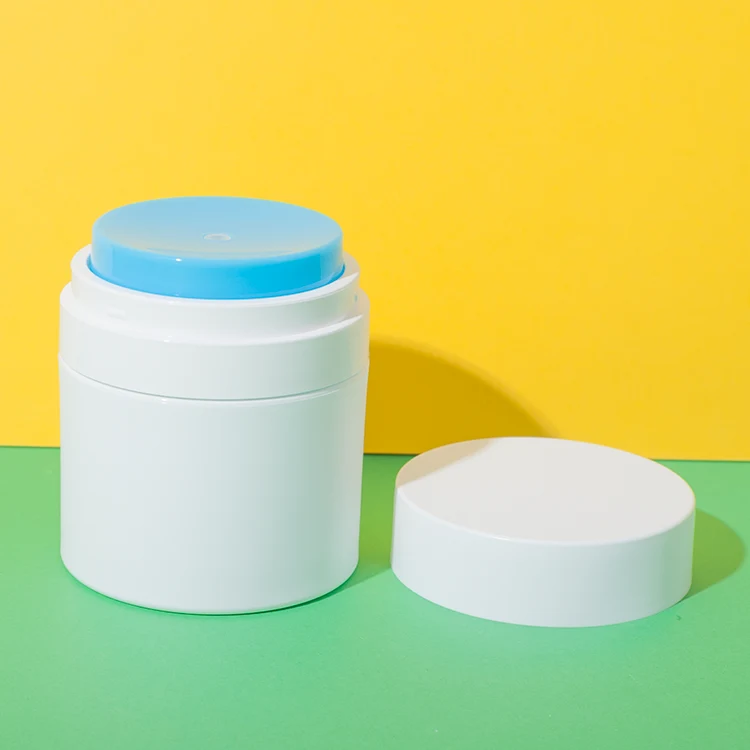
PP Refillable 1.7 fl oz Airless Jar for Cream
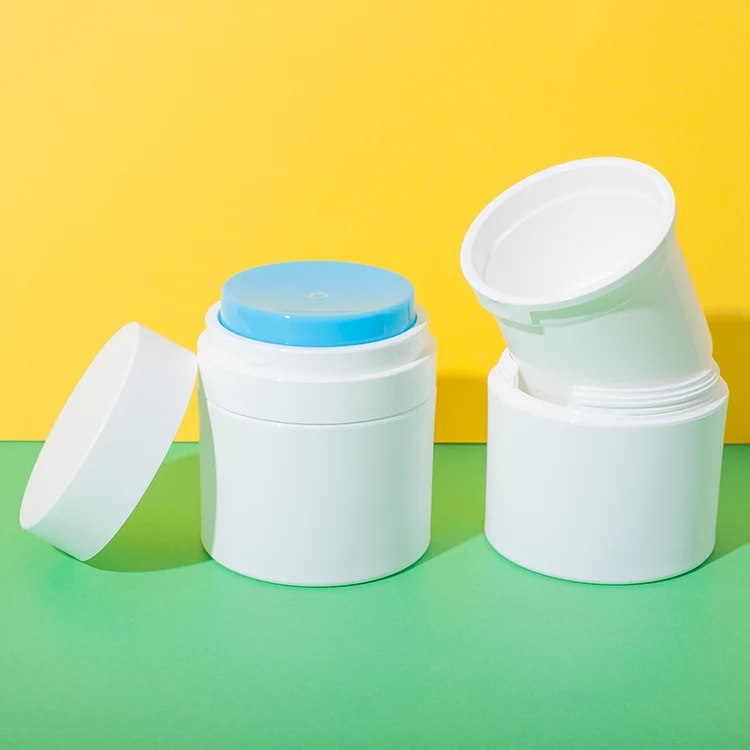
This 1.7 fl oz airless jar is a refillable PP packaging solution designed for face cream, moisturizer, night cream and other medium- to high-viscosity skincare formulas. The package combines a removable inner cup with a press-top dispensing structure, allowing product to be delivered through the central outlet while reducing repeated direct finger contact with the formula chamber. Its 50ml / 1.7 fl oz capacity fits a common retail size for facial-care products, while the PP construction supports lightweight packaging development and molded color customization. This format is suitable for skincare brands, private-label programs and contract manufacturing projects.
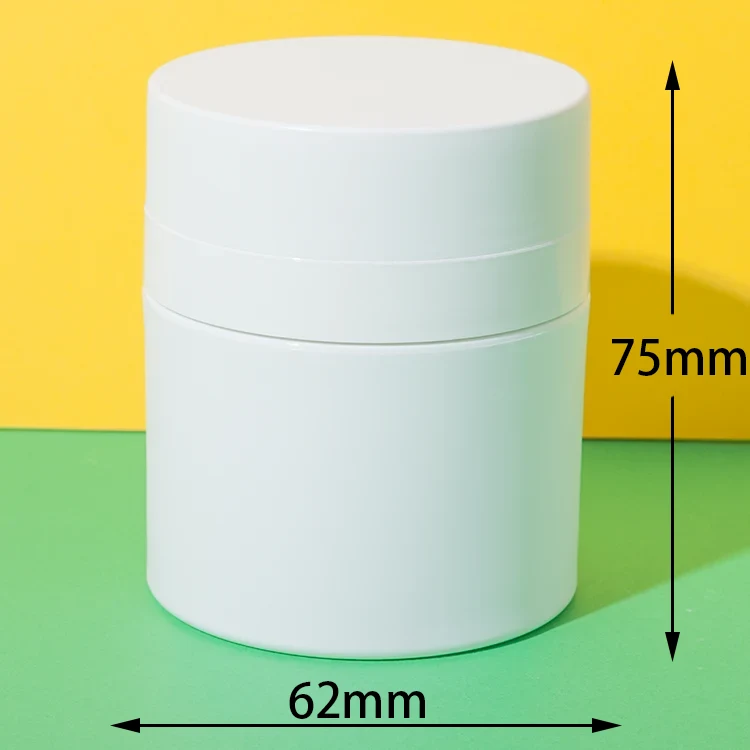
| Capacity | Material | OD | Heght |
|---|---|---|---|
| 50ml | PP | 62mm | 75mm |
Product Description
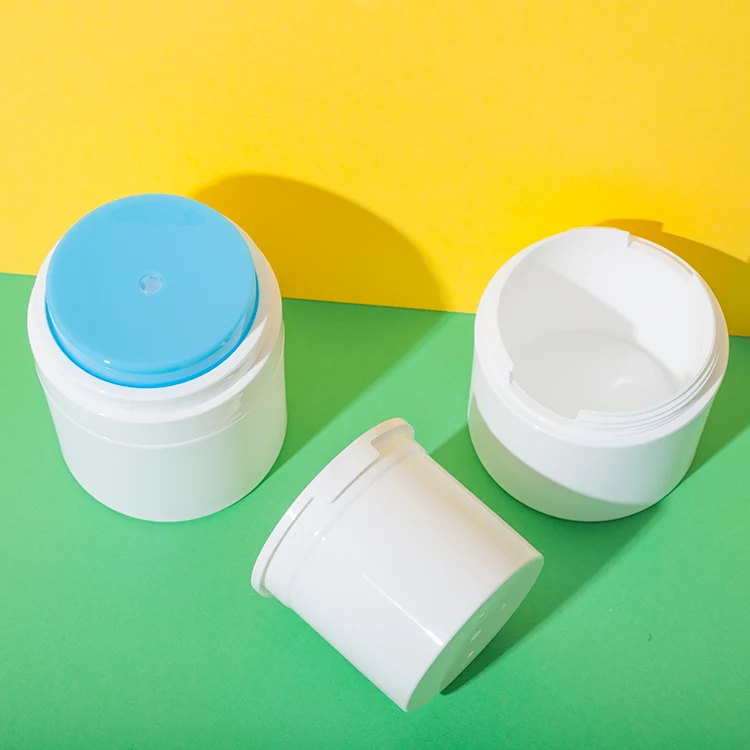
This 1.7 fl oz airless jar is developed for skincare brands that need a refillable cream package in a standard retail capacity. Made primarily from PP, the structure combines a removable inner cup, a press-top dispensing plate and a cylindrical outer body. It is suitable for face cream, moisturizer, night cream and other medium- to high-viscosity skincare formulas where brands want to combine controlled dispensing with a refill-based packaging concept.
The finished package measures approximately 62mm in diameter and 75mm in overall height. Its 50ml / 1.7 fl oz filling volume aligns with one of the most common sizes used for facial moisturizers and daily treatment creams. That makes it practical for both new skincare launches and line extensions where brands want a refillable alternative to a conventional jar.
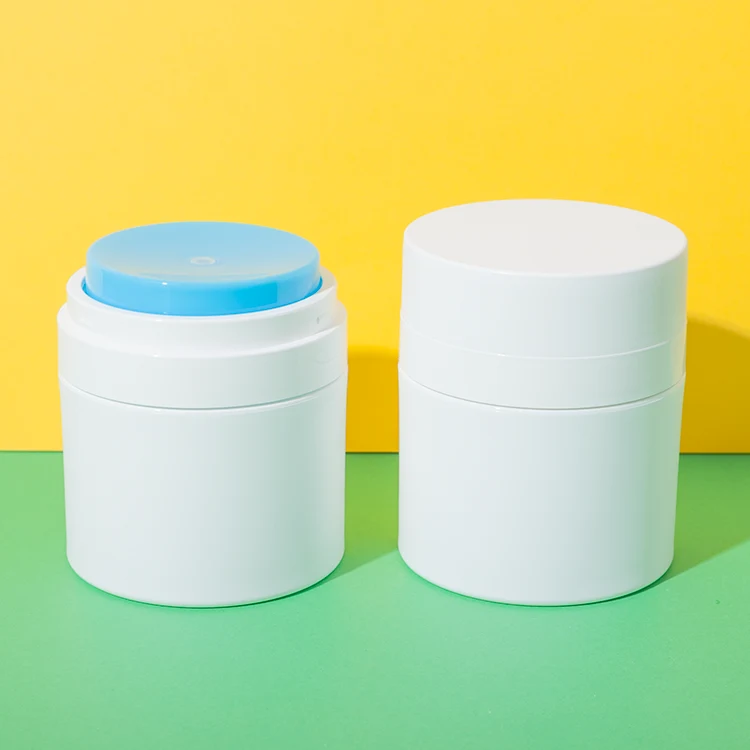
Unlike a traditional open-mouth cream jar, this structure dispenses product through the upper outlet. Pressing the top dispensing surface releases the formula in a more controlled way, reducing repeated direct contact between the user’s fingers and the remaining product in the chamber. For brands, this can support a cleaner usage experience while still keeping the familiar proportions of a face cream jar.
The removable inner cup is the core structural feature of the package. After the original formula has been used, the internal container can be removed and replaced while the outer body remains in service. This allows the brand to build a primary pack and refill program around the same component platform rather than requiring a full replacement package for every purchase.
For skincare brands comparing packaging options across a product range, this format can also be evaluated alongside UKPACK’s broader collection of airless jars to determine whether the same line should use different capacities, materials or dispensing structures for separate product types. That is particularly useful when a collection includes both core moisturizers and more specialized treatment creams.
PP is a practical material choice for this type of refillable pack. It offers a lighter construction than many thick-wall acrylic alternatives and supports molded color customization across the body, actuator and refill components. White, soft pastel tones, clinical neutrals or custom brand colors can all be developed depending on the intended market position and visual system of the product line.
The translucent outer cap can also contribute to the overall design. Brands may use one common body color and distinguish product variants through cap or inner component colors. This approach helps create a coordinated packaging family while still allowing consumers and distributors to identify different formulas more easily.
Decoration options can be reviewed according to artwork, production quantity and finish requirements. Depending on the project, screen printing, labeling, hot stamping and selected surface treatments may be suitable. Because the outer body is intended to remain in use through multiple refill cycles, decoration durability should be part of the validation process rather than treated only as an appearance issue.
The refill mechanism itself requires dimensional control. The inner cup must remain secure during filling, shipment and repeated use, while still being removable when a replacement unit is needed. Retention force, fit tolerance and assembly consistency should therefore be checked during sampling, pilot runs and routine production inspection.
Formula compatibility testing is also required before approval. Cream viscosity, density, oil phase, active content and filling temperature can all affect dispensing behavior. The actual commercial formula should be used to confirm priming, output consistency, actuator recovery and residual product levels. A light gel cream and a dense barrier cream may perform differently in the same package, so formula-specific testing is essential.
Additional validation should include leakage resistance, closure fit, storage stability and transportation performance. If the refill unit is sold separately, the brand should also define how that refill will be protected, labeled and installed by the end user. Clear differentiation between primary packs and refill-only units is important in both packaging design and warehouse control.
This PP refillable format is suitable for skincare brands, private-label developers, contract manufacturers and packaging distributors looking for a commercially practical cream jar with controlled dispensing and a replaceable inner container.