How to Choose a Cosmetic Jar for Your Formula

ผู้ก่อตั้ง UKPACK หัวหน้าวิศวกรและนักออกแบบบรรจุภัณฑ์ที่มีประสบการณ์ 18 ปี และผู้ชนะรางวัล Red Dot Award ฉันทำงานด้านโครงสร้างบรรจุภัณฑ์เครื่องสำอาง การเลือกวัสดุ ความเป็นไปได้ของแม่พิมพ์ กระบวนการตกแต่ง และการควบคุมความเสี่ยงจากการรั่วไหล ช่วยให้แบรนด์ต่างๆ เปลี่ยนไอเดียบรรจุภัณฑ์ให้เป็นโซลูชันที่พร้อมสำหรับการผลิตได้อย่างน่าเชื่อถือดูคุณสมบัติวิศวกรบรรจุภัณฑ์อาวุโสของฉันได้ที่นี่
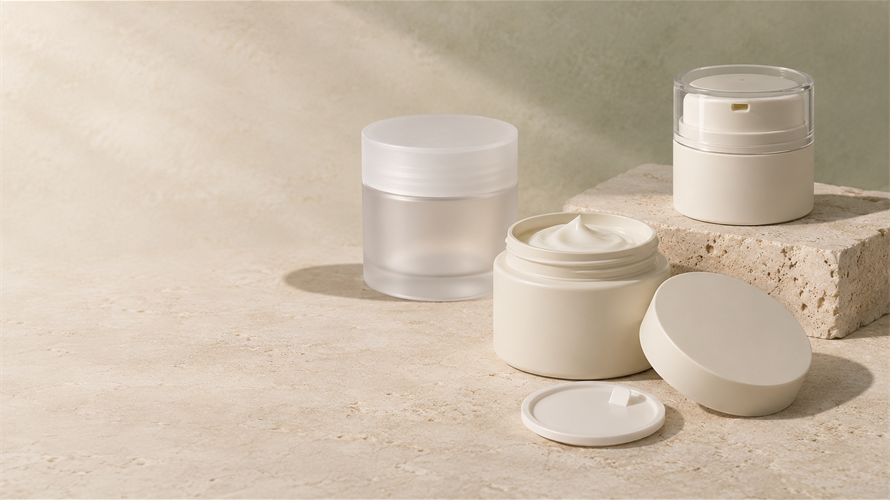
How to choose a cosmetic jar depends on whether its contact materials, working capacity and closure suit the formula and the way customers use it.
Have the filler test a production-intent assembly with the formula at the target net weight. Then compare fill height, cap seating and dispensing before approving decoration or tooling.
ประเด็นที่สำคัญ
- Match the jar opening and dispensing method to the formula’s texture and how customers use it.
- Identify every part the formula may contact, including the inner cup, liner and seal; test production-intent components with the actual formula.
- Estimate working capacity from target net weight and measured density, leaving room for the inner disc and closure.
- Test filled samples for closure fit, dispensing and transport before approving the finish and order details.
Is a Cosmetic Jar Right for Your Formula?
Judge the format by the customer’s action: can they remove a normal dose and reach the last portion without dragging product over the rim? If a fluid lotion smears during scooping, a pump bottle or tube may be a better sample than a jar.
| ผลิตภัณฑ์และการใช้งาน | First sample to request | อะไรที่สามารถตัดความเป็นไปได้นั้นออกไปได้ |
|---|---|---|
| Thick face cream applied by hand | Wide-mouth screw-cap jar | The opening or depth makes it hard to reach the last of the cream. |
| Face cream that needs a consistent dose | Airless press-top jar | The pump takes too many presses to prime or the dose drops off as the jar empties. |
| Firm cleansing balm with a planned refill | Refillable wide-mouth jar with a spatula | The insert lifts or turns as the user scoops the balm. |
| Body scrub used in the shower | Wide-mouth jar with a lid users can grip with wet hands | Granules build up on the rim or threads and keep the lid from seating. |
An airless jar may suit a formula that needs less air exposure during use. Airless dispensing does not tell you how much light the pack blocks. For a light-sensitive formula, check light transmission through the finished pack. See how an airless jar works to assess whether its dispensing method suits the formula.
UKPACK used its UKC56 refillable PP jar for The Beauty Crop’s Vitamin Babe cleansing balm. The spatula is integrated into the lid, so it stays with the pack. During sampling, scoop from the refill cup’s edge, then remove and refit the cup. Check that it stays seated during scooping and can be removed easily for refilling.
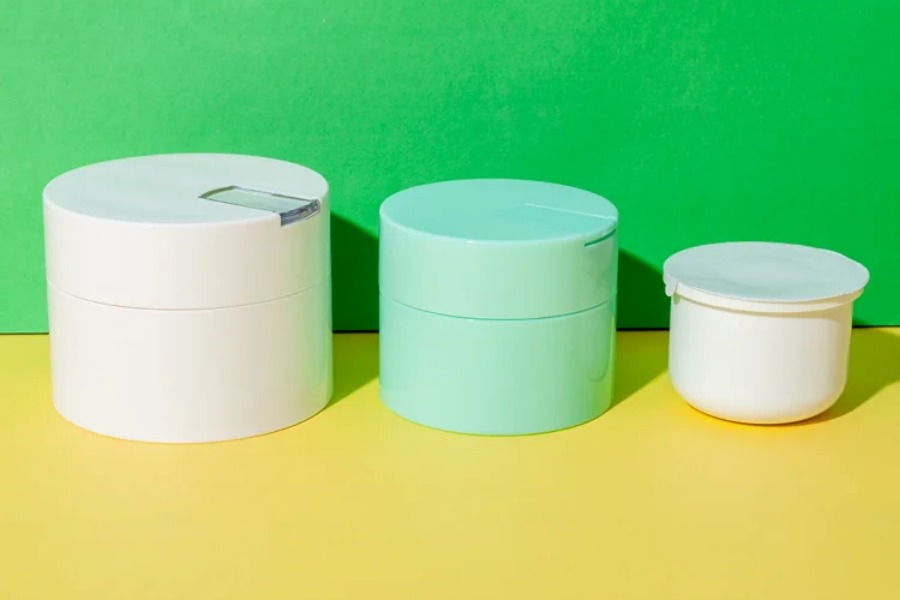
The UKC56 jar used for the Vitamin Babe cleansing balm is available in 50 g and 100 g sizes.
Which Materials Touch the Formula?
An outer shell does not identify every material in the contact path. A clear acrylic shell can surround an inner cup made from another resin, while the formula may also reach a liner or seal if the filled jar tips. Review the component list or drawing before specifying materials.
| วัสดุหรือโครงสร้าง | Why you might choose it | สิ่งที่ควรสอบถามก่อนทำการสุ่มตัวอย่าง |
|---|---|---|
| PP jar or inner cup | Low weight, with an opaque or translucent finish if the design calls for it. | What filling temperature is the specific grade and part designed for? Ask for a sample to check rim shape and fit after the filled jar cools. |
| Clear PET or PETG jar | You want the contents visible through a plastic wall. | Which resin and grade will the production jar use? Check that the finished pack has the clarity you need and holds its shape at the planned fill temperature. |
| เหยือกแก้ว | The brief calls for the weight and feel of glass. | What is the weight of the filled pack and which cap and liner fit the specified neck finish? Use the intended outer packaging for the transport trial. |
| Acrylic shell with a separate cup | You want a thick, clear outer wall around the product chamber. | What are the cup and liner made of, and how much working fill does the cup provide? Use the assembled outside dimensions for carton fit. |
Compatibility results apply only to the parts included in the trial. If the cup, liner or another product-contact part changes, retest the updated assembly. Use the guide to cosmetic packaging materials to compare material options, then confirm each production-intent component’s resin with the supplier before testing.
From Fill Weight to Working Capacity
Estimate fill volume from target weight and measured density. Brimful capacity ends at the rim; working capacity leaves room for an inner disc or another part that projects into the jar. Ask for the supplier’s working-fill recommendation with the intended closure fitted.
At an assumed density of 0.90 ก. / มล, 50 ก. of cream occupies about 55.6 มิลลิลิตร before clearance. Confirm that the jar holds this volume below the seated inner disc at the planned fill temperature.
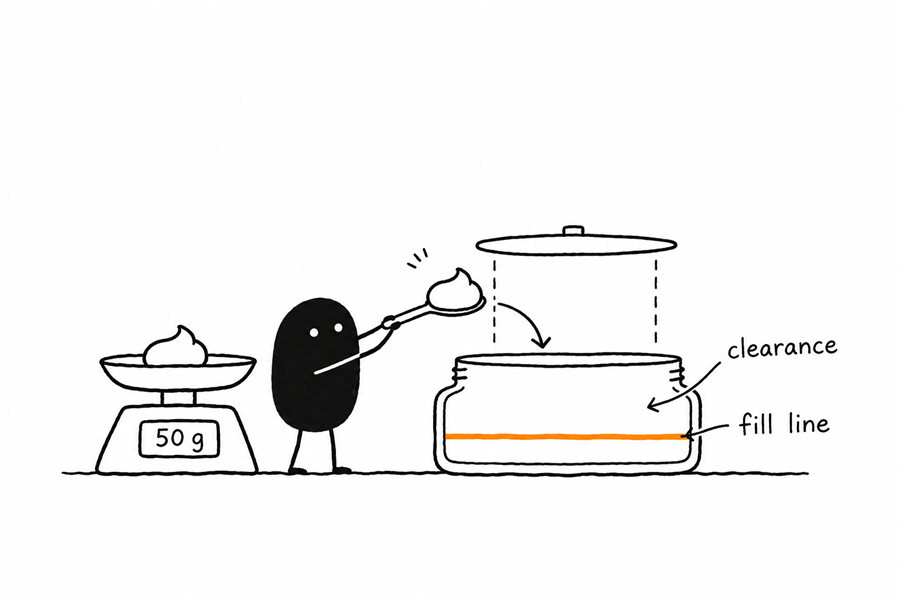
If cream transfers to the disc as you seat it, record the nozzle deposit point and the disc’s projection into the jar. Test a larger working volume or a compatible shallower disc, then repeat at 50 ก.. Holding the fill weight constant isolates the packaging change.
Do the Lid, Liner and Seal Work Together?
Treat the jar, cap, liner, inner disc and peel-off seal as one closure system. The threads position the cap, and the liner should seal against the rim as designed. On the sample, check that the peel-off seal opens cleanly, then test whether the cap closes consistently on repeat use.
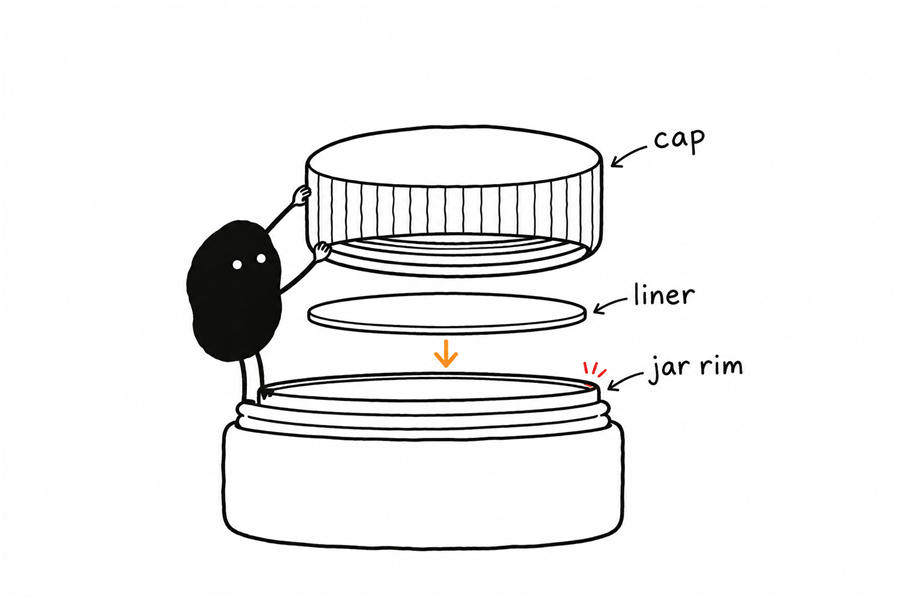
- Screw cap with a liner. Match the neck finish and cap. Inspect liner seating after repeatedly opening and closing the filled jar.
- Removable inner disc. Lift and refit it several times, noting whether the cup shifts. Confirm which part of the assembly seals the jar for shipping.
- Peel-off seal. Confirm rim coverage and line application. Test the cap separately after the customer removes the seal.
Sample Checks Before Approval
Label each sample with its jar, cap, liner and insert so the results map to the configuration you plan to order. Confirm repeatable filling and closure fit, then send filled assemblies through the agreed compatibility and transport checks. Use Cosmetics Europe and CTFA stability-testing guidance when setting the stability portion of the test plan.
| สิ่งที่คุณเห็นในตัวอย่าง | สิ่งที่ต้องตรวจสอบต่อไป |
|---|---|
| Cream marks the rim before you apply the cap. | Check the fill height and nozzle position before running a leak test. Record where the mark appears so you can distinguish a filling issue from seepage during the test. |
| Product is visible on the threads after transport testing. | Check cap application, liner seating and rim condition. Repeat with the intended shipping carton and the same fill weight after correcting the suspected cause. |
| The cream changes color or texture during a compatibility trial. | Have the formulation team review the result against its control and criteria before changing the jar material. Keep the liner and cup identified in the test record. |
| An airless jar dispenses well at first but leaves product near the end. | Record how much it dispenses per press at the beginning and near the end of use. Compare the amount left in each candidate at the same starting fill weight. |
After functional trials, approve the finish on an assembled sample, then confirm the minimum order and lead time for that configuration. Compare finalists at the same fill weight, with each candidate’s intended closure fitted. Then test them in the intended shipping configuration. If you are still comparing formats, review UKPACK’s cosmetic jar range against your formula, capacity and closure requirements.
To narrow the sample set, send UKPACK your jar shortlist with the formula type, texture and target fill weight. Include the measured density if available, filling temperature, sales channel and any special requirements, such as one-handed dispensing or a replaceable cup.